


Advocacy for Politics and Society Subject in Donegal Schools
In a move aimed at addressing the significant gender imbalance in local political representation, Donegal County Council aims to introduce Politics and Society as a Leaving Certificate subject across schools in the county. This initiative is prompted by concern over the underrepresentation of women in politics in Donegal.
Current Representation Statistics
Donegal ranks among the counties in Ireland with the lowest levels of female political representation. Presently, only three of the 37 serving councillors in Donegal are women. Furthermore, in the 2024 local elections, just 19 out of 91 candidates were female.
Historically, Donegal has seen only two female TDs in Dáil Éireann since 1918: former Fianna Fáil TD Cecilia Keaveney and former Tánaiste Mary Coughlan.
Calls for Educational Reform
During a recent council meeting, Councillor Niamh Kennedy highlighted the long-standing trend of gender imbalance in Donegal’s political landscape, describing it as “quite abysmal.” She noted the unique position of St. Eunan’s College in Letterkenny, an all-boys school that is currently the only institution in the area offering Politics and Society as a Leaving Certificate subject.
Cllr Kennedy emphasized the disadvantage faced by students in other schools who wish to study this subject, which carries an additional cost of approximately €2,000 annually along with the pressure of an extra examination.
“If we are interested in our democracy going forward, we need to ensure our young people are given every possible chance to go forward and stand for election with a good understanding and knowledge that will stand to them and the people who elect them,” she said.
Efforts Towards Change
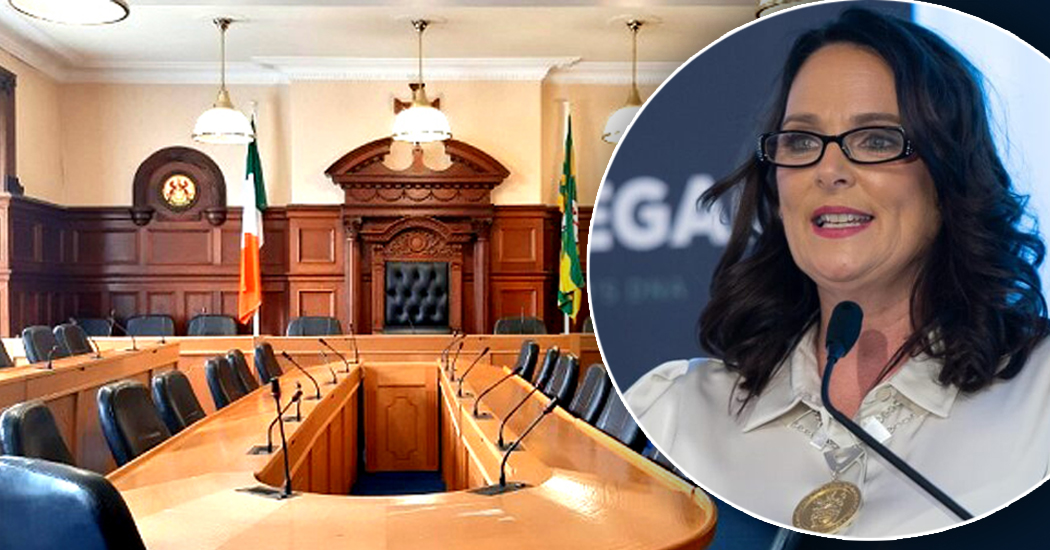
In a notable event earlier this year, Donegal County Council welcomed an unprecedented number of women into the County Chamber, with 33 women and four men participating. This shift led to a vote advocating for the Minister for Education to consider making Politics accessible in all secondary schools.
Cllr Kennedy proposed that financial bursaries could help students from lower-interest areas engage with the subject, suggesting collaborations with local schools to oversee practical project components.
“Every avenue should be explored to achieve better representation and balance, which appears to be more attainable in larger urban settings like Dublin,” she added.
Next Steps
The motion advocated by Cllr Kennedy was supported by Cllr Joy Beard and received unanimous approval from all councillors. The proposal will be forwarded to both the Minister for Housing and Local Government and the Minister for Education for further consideration.
