


Pioneering Scottish Women in Science
This article highlights significant contributions made by women connected to Scotland in various scientific fields, showcasing their remarkable achievements in entomology, virology, mathematics, and astronomy.
1. June Almeida: Virology Pioneer
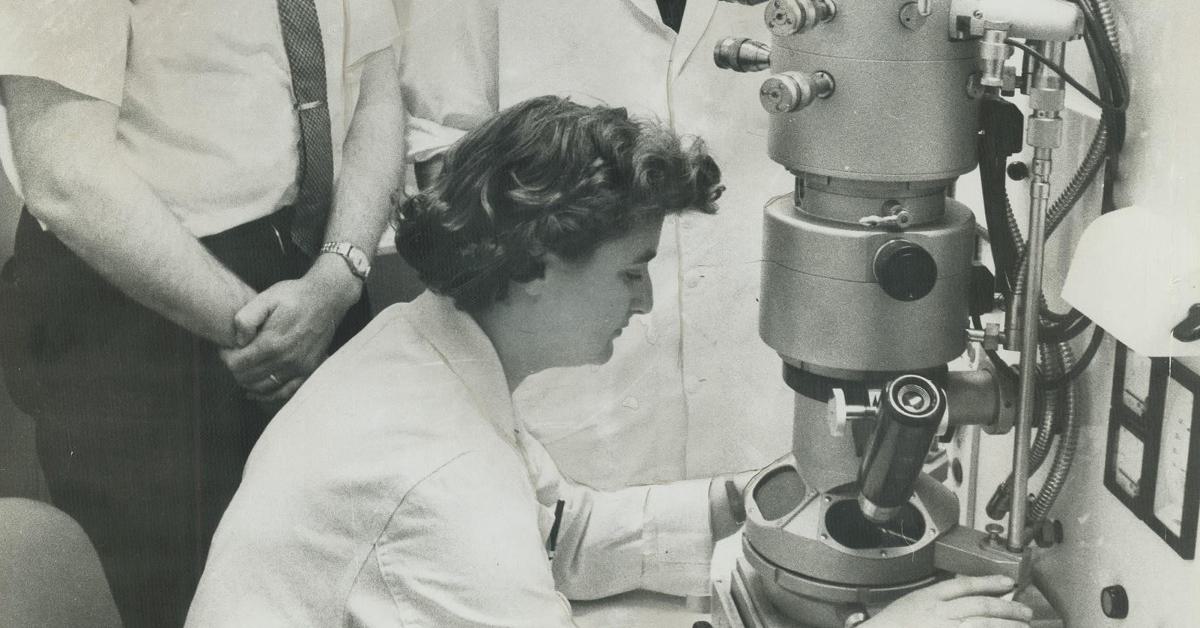
Born in Glasgow in 1930, June Almeida was a groundbreaking virologist credited with discovering the human coronavirus in 1964. Despite lacking formal qualifications, she began her career as a lab technician at Glasgow Royal Infirmary. Moving to Canada, Almeida honed her skills as an electron microscope technician, specializing in negative staining techniques essential for virus identification.
Almeida’s crucial work led to the visualization of various viruses, including rubella and hepatitis A. Initially, her discovery of the coronavirus, based on distinctive images showcasing spike proteins, was met with skepticism. However, her perseverance paid off, and her findings were published in 1967. Post-retirement, she continued contributing to science by producing some of the first images of HIV.
Her legacy is honored in the Injecting Hope: The Race for a COVID-19 Vaccine exhibition at the National Museum of Scotland.
2. Alice Blanche Balfour: Entomological Contributions
Alice Blanche Balfour (1850 – 1936) was an influential entomologist known for her extensive collection of nearly 10,000 Scottish moths, which she donated to National Museums Scotland. Most of these specimens were collected at her family estate in East Lothian. Balfour also conducted research linking genetics to the patterns of zebra stripes and became a member of the Royal Entomological Society in 1916.
Her collection, along with an original moth-catching net, is currently displayed in the National Museum of Scotland’s Collecting Stories exhibit.

3. Williamina Fleming: Astronomical Trailblazer
Williamina Fleming (1857 – 1911), originally from Dundee, became a pioneering astronomer after emigrating to the United States. Following a challenging personal life, she began working as a maid for Edward Pickering, director of Harvard College Observatory. Impressed by her capabilities, Pickering hired Fleming to catalog stars from photographic images. Her meticulous work led to the discovery of white dwarf stars.

4. Isabella Lovi: Glass Innovations
Isabella Lovi (d. 1826) was a skilled glassblower and chemical apparatus maker based in Edinburgh. Notably, she patented aerometrical beads, which were a significant advancement in measuring liquid densities. Her collection exceeded 350 beads, providing superior accuracy compared to existing sets and earning her recognition from the Royal Highland and Agricultural Society of Scotland.

5. Flora and Jane Sang: Long-Range Calculators
Flora (1838 – 1925) and Jane Sang (1834 – 1878), daughters of mathematician Edward Sang, contributed significantly to a comprehensive set of logarithmic tables. Initially reluctant to take credit, Flora ultimately embraced recognition for their work, which was vast yet too costly to print, thus limiting its practical application.
6. Maria Short: Popularizing Astronomy
Opened in 1835, Maria Short’s observatory on Calton Hill in Edinburgh featured a large camera obscura and a reflecting telescope. Aimed at making scientific knowledge accessible to the public, her establishment thrived even in the face of competition from other observatories.

7. Mary Somerville: Mathematician and Author
Mary Somerville (1780 – 1872) was an accomplished mathematician known for her writings on physical sciences and astronomy. A member of the Royal Astronomical Society, Somerville gained recognition for her contributions and is celebrated today, appearing on the Royal Bank of Scotland £10 note. Her education in Edinburgh equipped her with foundational skills that greatly influenced her scientific work.

8. Jessie May Sweet: Mineralogy and Collection Management
Jessie May Sweet (1901 – 1979) was a notable mineralogist and historian. After studying in Edinburgh, she returned to contribute to the Royal Scottish Museum’s collections. Sweet’s petrological microscope, which was vital for identifying rocks and minerals, reflects her significant impact on mineralogy. Her work during WWII helped preserve valuable collections during air raids.

