


Evolving Standards: The Debate on Women’s Sportswear
Recent Controversies in Athletic Attire
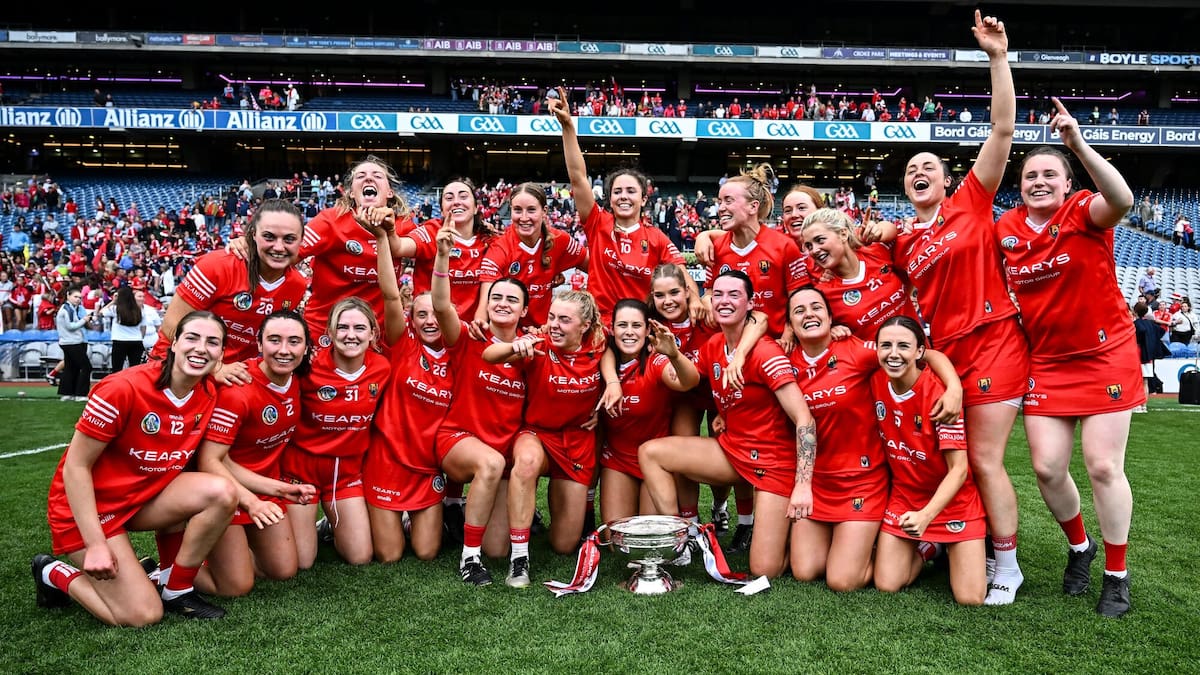
The recent decision by the Camogie Association to reject a motion allowing female athletes to wear shorts has ignited a public relations crisis. This refusal reveals persistent resistance to changing perceptions about women’s sports attire, echoing historical challenges that have remained largely unchanged over the last century.
A Historical Perspective
Throughout the history of women’s sports, the question of appropriate uniform has been a significant barrier. Initially, when women were allowed to compete, uniforms were designed with male sensibilities in mind, often consisting of long dresses that covered most of the body.
For instance, in New Zealand, netball uniforms traditionally featured heavy wool dresses and ties, emphasizing a display of femininity over practicality. Even with modern materials like Lycra, the design remains influenced by male preferences.
Gendered Uniform Designs
The transition from modesty to an emphasis on femininity in women’s sportswear has created unique challenges. In the 1990s, a prevalent viewpoint suggested that women athletes must project a certain level of sex appeal to attract spectators, further complicating the discussion around uniform designs.
As a result, notable disparities emerged between men’s and women’s uniforms in various sports, reflecting a broader societal tendency to focus on women’s bodies rather than their athletic capabilities.
Shifting the Narrative
In recent years, there has been a growing movement among women athletes to advocate for uniforms that prioritize comfort and functionality over traditional standards of femininity. This shift highlights an evolving understanding that athlete preferences should guide uniform design rather than spectator expectations.
Protests over uniform designs have begun to shift public perception and lead to rule reforms, illustrating that a dialogue around gendered clothing in sports is becoming more accepted.
The Road Ahead
To further progress in this area, a significant paradigm shift is necessary—one that recasts women in sports as athletes first, rather than through the lens of their gender. This evolution in thinking will transform uniforms into practical tools that enable athletes to showcase their skills, free from outdated constraints.
Reflecting on historical instances, over a century ago, a group in Wellington managed to redefine their sports attire by advocating for practical shorts. This foresight has only recently begun to resonate with modern athletes, demonstrating that the push for functional attire is not a new concept.
