


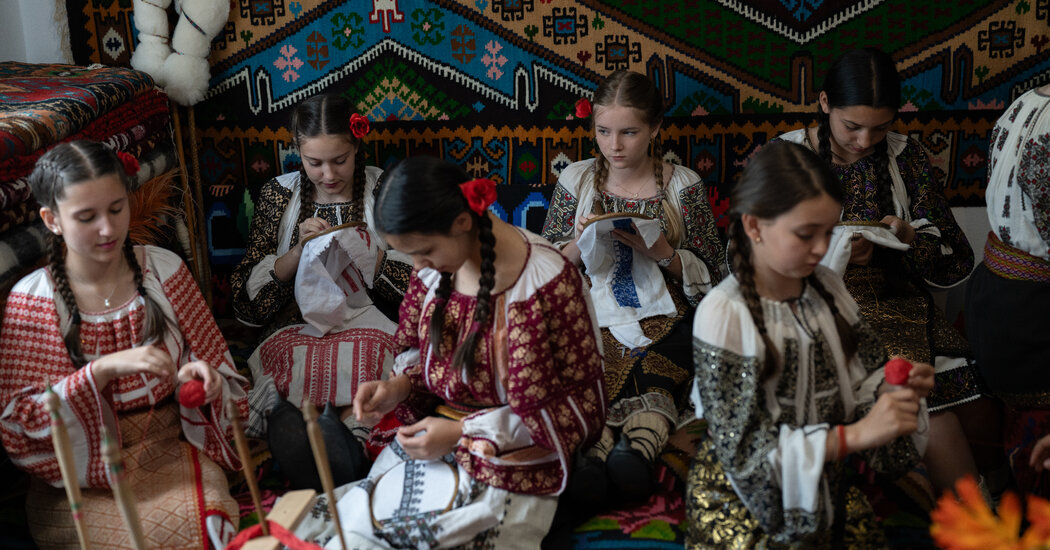
The Romanian Blouse: Cultural Symbolism and Political Significance
Historical Context and Artistic Inspiration
The Romanian blouse, or “ie,” is a traditional embroidered garment that has captivated artists and designers across generations. Notable figures such as painter Henri Matisse and designer Yves Saint Laurent have drawn inspiration from this cultural attire, incorporating its unique aesthetics into their works.
In contemporary fashion, the blouse gained renewed visibility when British singer Adele featured it in a Vogue fashion shoot, showcasing its elegance and versatility. Additionally, luxury brand Louis Vuitton celebrated this traditional piece in a seasonal “By the Pool” collection, further solidifying its status in modern design.
Modern Political Symbolism
Interestingly, the Romanian blouse has also found a place in contemporary politics, particularly among nationalist leaders in Romania. Politicians such as Diana Sosoaca have made the “ie” a central element of their branding, often appearing in public solely adorned in this folk attire.
Nationalism and Cultural Identity
The growing enthusiasm for the blouse among nationalist figures speaks to a broader movement that embraces folk couture as a representation of national pride. George Simion, another politician with nationalist sentiments, is also known for his affinity for the piece, echoing its symbolic meaning in his campaign narratives.
In a striking instance, Calin Georgescu, an ultranationalist candidate who recently garnered attention during a presidential election, prominently featured the blouse in his TikTok campaign videos, captivating a contemporary audience eager for cultural connectivity.
Conclusion
The Romanian blouse serves not only as a beautiful emblem of traditional craftsmanship but also as a powerful metaphor for cultural identity and political expression in Romania today. Its presence in both art and nationalism illustrates the complex ways in which fashion interacts with social and political realms.
