


September 17, 2025 • 3:29 pm ET
Electoral Challenges Faced by Women in Syria’s Landmark Elections
As Syria approaches a critical juncture in its political evolution following the ousting of Bashar al-Assad, the process of establishing a transitional legislative assembly is underway, expected to conclude by the end of September 2025. This indirect electoral process carries significant implications for the future governance of the nation.
The newly elected assembly will be responsible for enacting laws vital to the country’s reconstruction during its two-and-a-half-year mandate, as outlined in the Constitutional Declaration of March. Notably, the electoral guidelines stipulate a minimum of 20% representation for women in all electoral committees, igniting discussions around the necessity for enhanced female involvement in Syria’s political sphere.
Historical Context of Women’s Political Participation in Syria
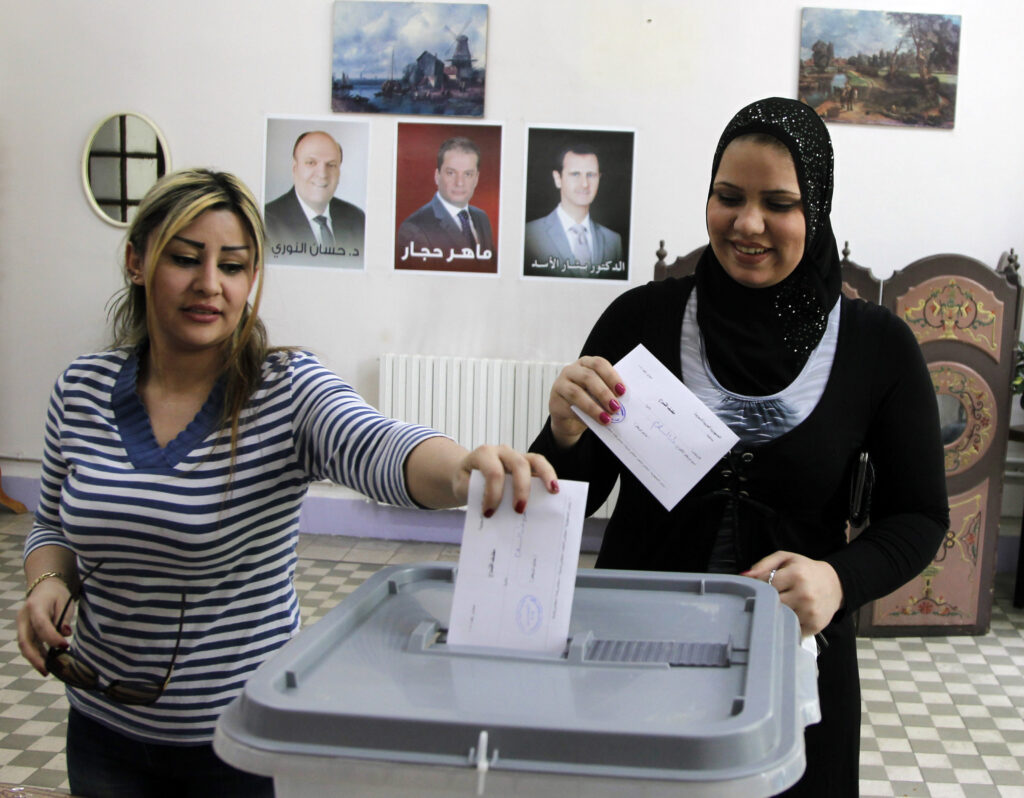
During Assad’s regime from 2007 to 2022, female representation in parliament hovered between 10% and 12%, as reported by the NGO Musawa. Participation rates were even more disheartening at the local level, where women constituted merely 2% of local councils in 2011, rising to only 11-12% by 2022.
Current Landscape and Challenges
Despite transformative changes since Assad’s fall, the interim governance remains male-dominated, with only one female minister and minimal representation in transitional committees. Although women comprised approximately 20% to 25% of participants in the recent National Dialogue Conference, significant barriers to political participation still exist.
Deep-rooted traditions and conservative social norms continue to impede women’s involvement in politics, even after their pivotal roles in the 2011 revolution. Conversations with women activists indicate that affiliations with the former Ba’ath Party and concerns about regime corruption have further deterred female political engagement.
Mechanics of the Electoral Process
The structure of the indirect elections poses additional challenges for women’s participation. The Supreme Committee for the People’s Assembly Elections has appointed Election Sub-Committees across 62 electoral districts, with only 11% of these members being women. These sub-committees are responsible for forming the Electoral Body, comprised of both notables and professionals.
- Women must first gain selection to the Electoral Body, where two-thirds comprise professionals.
- Subsequently, they must stand for election against their peers within the Electoral Body.
- Finally, they must secure sufficient votes to be elected to the assembly.
This indirect election system, characterized by majoritarian principles, has historically favored established male-dominated power structures, making it particularly challenging for women to compete effectively. Even though a 20% quota exists, it only applies to the collective of electoral committees, thereby not reinforcing individual sub-committee representation.
Regional Comparisons and Potential Solutions
In contrast to Syria, many countries in the Arab region have implemented electoral quotas, with women’s parliamentary representation averaging about 17.7%. In nations like Iraq and Egypt, quotas range between 14% and 50%, demonstrating a pressing need for similar measures in Syria.
Given the current electoral challenges, several actions could enhance women’s participation:
- Increase awareness of the electoral process among women to encourage their involvement in forming the Electoral Bodies.
- Advocate for higher female representation in the final lists of the Electoral Bodies once published.
- Engage civil society to promote awareness among Electoral Body members about fair representation for women.
Addressing these challenges is critical within the limited timeframe leading up to the elections. Successfully cultivating a political landscape that embodies inclusive representation will be vital for establishing enduring peace in Syria.
Marie Forestier is a nonresident senior fellow for the Syria Project at the Atlantic Council’s Middle East programs and has collaborated with various organizations focused on peacebuilding in Syria.
Further Reading
Image: Security measures at the Damascus International Fair, marking a significant event post-Assad regime’s fall. (Credit: © Mohammad Bashir Aldaher/ZUMA Press Wire)
