


Soft Hooligans Bring a Wave of Change to Women’s Football Support
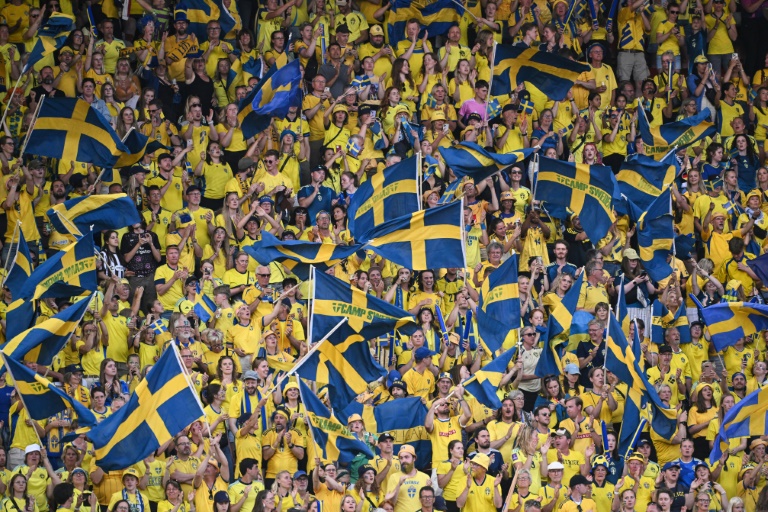
The Soft Hooligans, a Swedish supporter group, are making noise at Euro 2025 in Switzerland, promoting an inclusive atmosphere in the stands as they cheer on their national team. Their mission extends beyond supporting Sweden; they aim to enhance the overall condition and visibility of women’s football.
The Birth of the Soft Hooligans
Founded in 2017 by Kajsa Aronsson and her daughter Estrid Kjellman, the roots of the Soft Hooligans can be traced back to a disappointing atmosphere at the Women’s Euros in the Netherlands. “It was just so incredibly dead,” Kjellman remarked, recalling their experience. Despite their excitement, fellow attendees often looked at them bewilderedly as they cheered for their team.
This shared experience took a humorous turn as they referred to themselves as “hooligans,” eventually coining the term “soft hooligans” to distinguish their supportive style. In an effort to galvanize support, Kjellman launched a Facebook group centered on this vision.
A Shift in Atmosphere
Fast forward eight years to the current Women’s Euros in Switzerland, and both women have noticed a considerable positive change in the crowd dynamics. They remarked on the increased attendance of Swedish fans compared to previous tournaments, signifying a broader shift in engagement with women’s football.
- Kjellman noted, “In England, there were several matches where the opposing team basically had no supporters.” Today, it is a different scenario, with more organized fan groups supporting various teams across the tournament.
- Aronsson added, “We definitely cheer for Sweden the most, but we also want to foster better conditions for women’s football overall.”
Core Values and Inclusivity
The ethos of the Soft Hooligans is firmly rooted in inclusivity. Kjellman highlighted that the group welcomes all individuals, emphasizing its LGBTQ-friendly stance. Aronsson mentioned, “There are many families and children in the stands,” indicating that their cheering section is diverse and welcoming.
However, the group has faced some criticism regarding its name, which Kjellman acknowledges but chooses to overlook. “We receive mocking comments about our name, but we choose not to focus on that,” she said.
Future Aspirations in Women’s Football
Despite the progress made, both women recognize the challenges that remain for women’s football, particularly regarding its marginalization in certain regions. Kjellman stated, “In Sweden, we’ve come a long way, but there’s still a long way to go. In other parts of the world, girls don’t have the opportunity to play football at all.”
Nevertheless, there is hope in the evolution of public perception. The excitement among young fans is indicative of a changing tide; children now idolize female players like Spanish double Ballon d’Or winner Aitana Bonmatí.
Looking Ahead: Swedish Hopes in Euro 2025
As the Soft Hooligans support Sweden’s campaign, they display a giant banner that reads, “41 Years Since Last Time” and “Bringing the Gold Home,” referencing Sweden’s triumph at the inaugural Women’s Euros in 1984. Following a stellar performance that secured a place in the quarter-finals, Sweden defeated Germany 4-1.
Sweden’s coach, Peter Gerhardsson, praised the fans’ fervent support, stating, “I have never, as a national coach, experienced the kind of support we had.” This electrifying atmosphere is reminiscent of a home advantage for the Swedish team as they prepare to face reigning champions England in Zurich.
Conclusion
The Soft Hooligans are not just creating a vibrant atmosphere at Euro 2025; they are playing a vital role in promoting a shift in societal perceptions of women’s football. Their efforts serve as a testament to the ongoing journey toward inclusivity and recognition in sports.
