



During the 2025 Wimbledon women’s matches, the skort made a notable appearance as a favored clothing option among players. This hybrid garment combines the comfort of shorts with the aesthetic of a skirt, creating a functional choice for athletes. Many recalling their school years, particularly in Australia, might remember skorts as a common element of girls’ uniforms.
Initially, skorts emerged as a groundbreaking fashion choice for women, enabling participation in sports and other activities that would have been cumbersome or inappropriate in traditional skirts. However, the garment’s cultural significance has evolved over time, leading to a more complex understanding of its role in contemporary fashion and society.
Getty
Historical Context
The earliest forms of skorts date back to the 1890s, created to allow women to ride bicycles without the risk of their skirts getting caught. Despite earlier inventions like bloomers, women faced social ridicule for wearing them. Thus, skorts served not only a practical purpose but also aimed to maintain femininity at a time when pants were strictly associated with masculinity.
By the 1960s, American designer Leon Levin popularized modern skorts, advocating them as garments that offered “the freedom of shorts and soft lines of a skirt.” This messaging reinforced societal norms, suggesting that while women could engage in traditionally male activities, their appearance should remain conventionally feminine.

Pierce Archive LLC/Buyenlarge via Getty Images
Sport management scholar M. Katie Flanagan posits that women are socialized into believing that wearing skorts aligns with an acceptable performance of gender, thereby reinforcing traditional norms about physical appearance in sports.
The Role of Skorts in Sports and Education
In contemporary athletics, skorts are crafted to be visually appealing, blending style with functionality. A notable study on women golfers indicated greater satisfaction with their uniforms when they combined both comfort and attractiveness. This reflects the ongoing evolution of women’s sportswear, which increasingly prioritizes aesthetics alongside practicality.
Class distinctions have historically influenced access to skorts. For a significant period, sport skorts were viewed as a luxury item, primarily accessible to middle and upper-class women who had the means to engage in sports like tennis and golf. However, recent years have seen discount retailers offering more affordable options, enhancing availability.
In educational settings, skorts are often included in girls’ sports uniforms and general attire. Cost-effective options are available at discount stores for as low as A$10, in contrast to pricier items sold directly by schools. Many institutions provide skorts as an alternative to shorts or dresses, although the availability of shorts can vary significantly by school policies.

Getty
Challenges and Restrictions
Research shows a significant disparity in uniform options. In South Australia, a review revealed that 98.6% of public schools allowed shorts as an option for girls, while only 26.4% of private schools did. The research by Cohen-Woods and Laattoe highlights that private school girls often face limited choices, generally confined to skorts or culottes instead of shorts.
While public school policies have evolved over recent years to include mandatory options for shorts and pants, the implementation of such rules is inconsistent. For instance, states like New South Wales and Victoria explicitly mandate these options, whereas other states have broader language that allows for varied interpretations by local schools. This can perpetuate restrictions on girls’ choices about their uniforms.
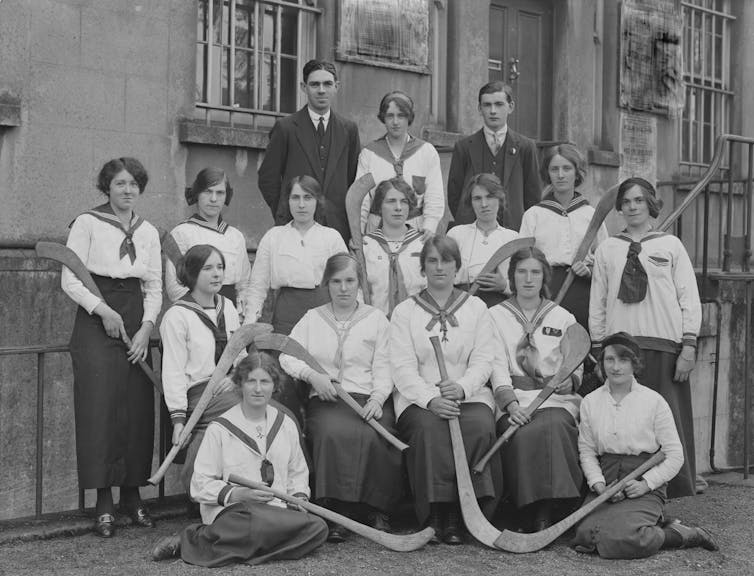
In a parallel context, the debate over skorts in women’s sports continues to gain attention. For instance, Ireland’s Camogie Association only recently lifted a mandatory skort policy, following persistent objections from players about the discomfort and impracticality of the garment. Dublin captain Aisling Maher articulated this sentiment, questioning why women should be compelled to wear garments that resemble skirts in a sporting context.
Wikimedia
Contemporary Perspectives
In recent times, skorts have also been marketed as fashion items, with retailers positioning them as essential pieces for trendsetters. However, opinions about skorts remain polarized. Proponents argue that they enable women to participate in physical activities without the fear of wardrobe malfunctions, while critics contend that they impose restrictive notions of femininity on women and girls, creating a new layer of misogyny.
The skort embodies a duality; it serves as both a symbol of progress and a reminder of lingering societal expectations regarding gender performance. This duality complicates the narrative surrounding skorts, which are both a step forward for women’s athletic wear and an artifact of traditional gender roles.
