


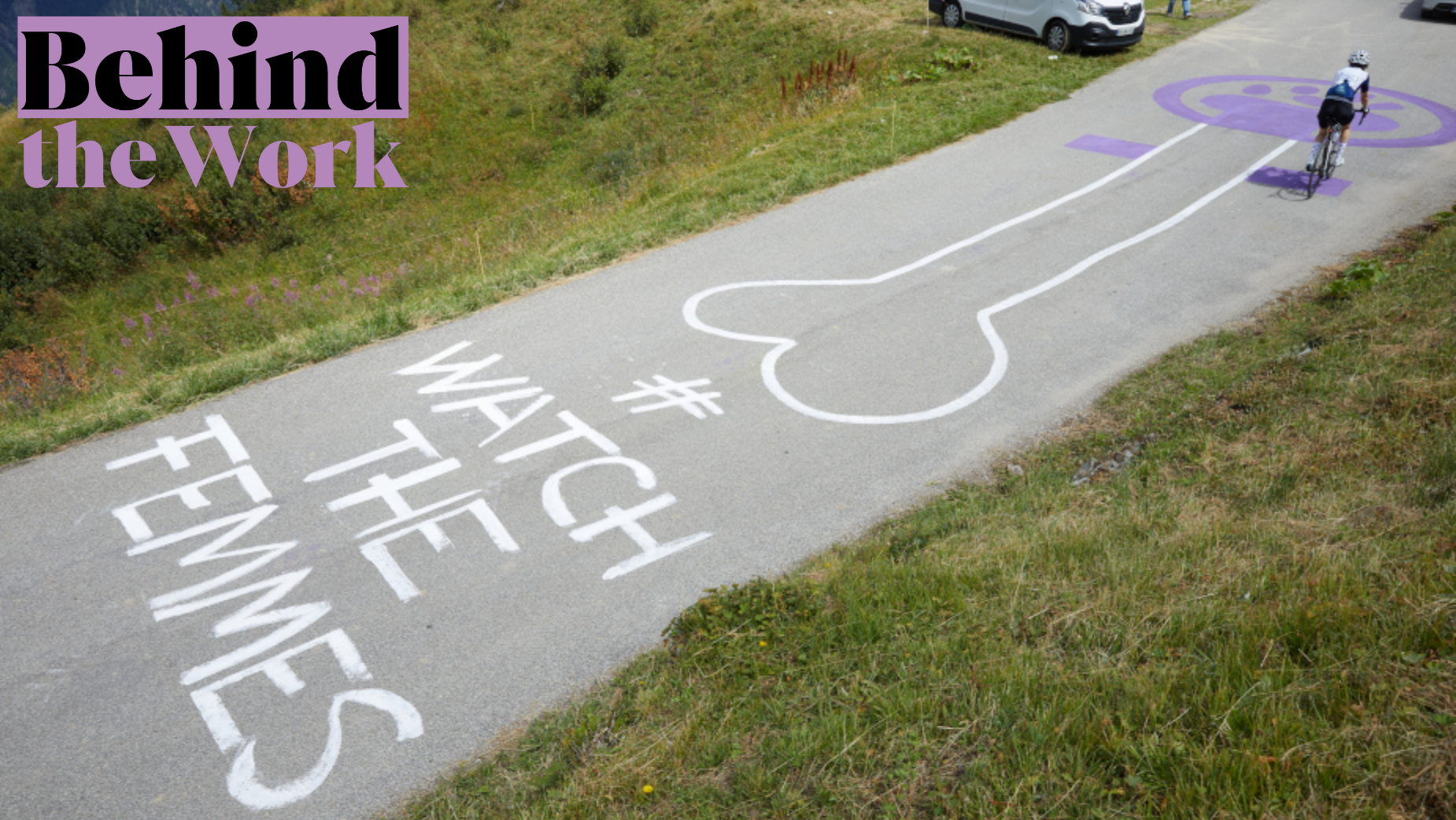
In an innovative campaign to boost the profile of women’s cycling, Škoda and FCB London have taken a humorous and creative approach by repurposing the notorious penis graffiti often seen along the men’s Tour de France route. This campaign seeks to draw attention to the Tour de France Femmes avec Zwift, the women’s equivalent of the celebrated event.
With a dedicated Škoda support vehicle trailing ahead of the cyclists, a duo of feminist artists collaborated with race organizers to transform the crude graffiti into empowering, cycling-themed artworks. Each piece featured the campaign hashtag #WatchTheFemmes, strategically leveraging the global spotlight of the men’s race to raise awareness for the women’s competition that follows directly after.
The Challenge and Creative Solution
The annual presence of penis graffiti is a known issue during the men’s Tour de France, so much so that a team colloquially referred to as the ‘Eraser Men’ is tasked with censoring the lewd images. Recognizing this challenge, FCB London sought to reframe the situation as an opportunity to enhance visibility for the women’s race, which has historically received less coverage. Executive Creative Director Kyle Harman-Turner explained, “The brief is, effectively, how do you drive eyeballs to the women’s race.” Despite growing viewership over the four years Škoda has sponsored the Tour, substantial disparities remain compared to the men’s event, which lasts 21 days compared to the women’s nine.
A Playful Yet Meaningful Message
The campaign balances humor with important advocacy for women’s cycling. “It was one of those ideas where, as soon as we all saw the framing, we thought, fuck, that’s famous,” Harman-Turner recalled. “It was about making sure we could do it in a way that kept that cheek and charm but also had a serious message.” This duality of purpose is central to the campaign’s identity.
Rapid Execution and Collaboration
Operatively, the artists known as the “penis responders”—Cecile Dormeau and Erin Aniker—traveled in the 221st support car, working agilely alongside the existing clean-up crew. Their ability to navigate the challenging terrain enabled them to swiftly address the array of painted graffiti on a 3,500 km course, enhancing the overall effectiveness of the campaign. Harman-Turner highlighted the significance of these support vehicles: “The cars are fundamental to the urgency needed.”
Collaboration with the mural experts at Global Street Art led to prompt brainstorming sessions aimed at repurposing the graffiti into representations of feminism and cycling. This creative process involved crafting various designs that incorporated elements of both cycling and humor. “We did a lot of pre-emptive designs, resulting in a wall full of dick designs,” added Harman-Turner, who noted the amusing and thematic twists that emerged from the creative sessions.
Creating Memorable Moments
The endeavor fostered a sense of camaraderie among the artists and the Eraser Men. “This was never about taking anything away from the Eraser Men,” Harman-Turner emphasized. “What they do is fabulous. We were just there as a squad together.” Valuable interactions, like sharing roller brushes, contributed to both teamwork and the campaign’s light-hearted spirit.
With multiple helicopters capturing footage, the artists aspired to have their modified graffiti featured prominently during the race coverage. The energy on set was palpable, with the artists eagerly following the live stream of the event, trying to identify their artwork as it appeared on camera. “It was kind of beautiful,” said Harman-Turner, encapsulating the collaborative spirit and joy of the moment.
This creative initiative not only addresses a recurring issue during the Tour de France but also aims to elevate the profile of women’s cycling, emphasizing the importance of equity and representation in sports.
