


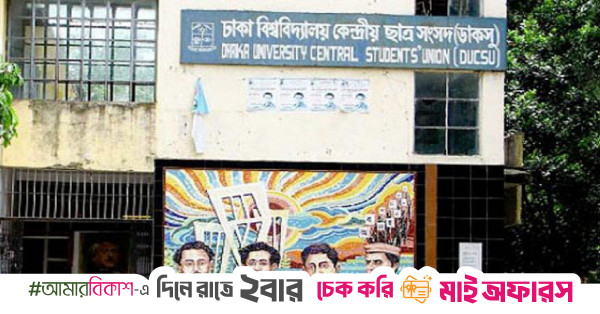
Ducsu Elections 2025: A Transformative Shift in Student Politics
Published on: 23 August 2025
Last modified: 23 August 2025
The Dhaka University Central Students’ Union (Ducsu) elections are set to take place on 9 September 2025, marking a pivotal moment as it becomes the first election in 35 years to be perceived as a truly participatory endeavor. This is in stark contrast to the previous election in 2019, which was mired in controversy and largely dominated by the now-banned Chhatra League, except for a few contested positions.
A Historic Context
The last election of comparable significance occurred in June 1990, a time characterized by widespread student movements advocating against authoritarian governance. The upcoming Ducsu elections arrive in the wake of the July uprising, an event that has profoundly influenced Bangladesh’s political landscape and heightened demands for greater student representation.
Voter Trends and Demographics
Historically, student voter trends have evolved. In 1990, approximately 27,000 students were eligible to vote, with female representation falling below 30%. Fast forward to 2025, and the registered voter count has surged to 39,874, with women comprising 47.55% (or 18,959 students) of this group.
Professor Sabbir Ahmed from the Department of Political Science at Dhaka University points out that many students have grown disillusioned with traditional partisan politics, which often fails to meet their needs.
Changes in Electoral Structure
In the 1990 Ducsu elections, there were 20 central posts contested by 489 candidates. Comparatively, in 2025, the number of central posts has increased to 28, with 462 candidates vying for these positions. Notably, hall unions reflect a similar trend, changing from 168 posts with 1,040 candidates in 1990 to 234 posts with 1,108 candidates in 2025. Although the number of posts has grown, the relative decline in candidacy indicates skepticism towards traditional panel politics.
Rising Female Representation
The political landscape for women has also shifted dramatically since 1990, when female candidates were nearly absent. In 2025, 60 women are running for central posts (13%), and 188 are contesting hall union positions (17%). This uptick in female candidacy is attributed not to allegiance to political panels but rather a collective disillusionment with established party politics. Professor Ahmed emphasizes that young women are increasingly inclined toward independent candidacy, distancing themselves from traditional political alignments.
The Fragmentation of Traditional Politics
The 1990 elections were dominated by around 30 panels, including major groups such as Chhatra Dal, which won a significant majority. In contrast, the electoral environment of 2025 is marked by only 10 registered panels and a rising number of independent candidates competing for key positions. This trend points to a fragmentation of the traditional political structure that has long governed student elections at Dhaka University.
Conclusion
The upcoming Ducsu elections represent more than just a routine democratic exercise; they are a significant step toward reconfiguring student governance and representation at Dhaka University. With increasing female participation and a growing number of independent candidates, the elections promise to reshape the dynamics of student politics in Bangladesh, aligning more closely with the interests and concerns of students today.
For further updates, follow The Business Standard.
