


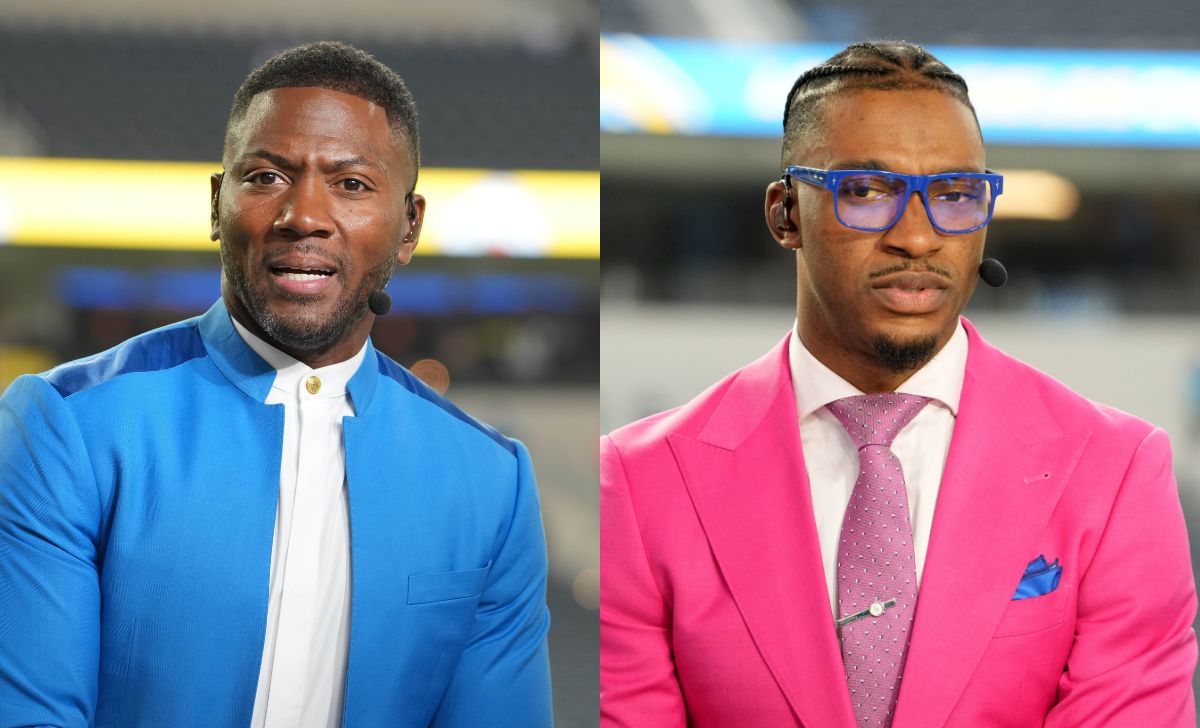
Debate Erupts Over Robert Griffin III’s Comments on Angel Reese and Caitlin Clark
Recent remarks by former NFL quarterback Robert Griffin III have reignited the ongoing conversation about Angel Reese and Caitlin Clark, particularly regarding race and gender within sports. Griffin, now an analyst, expressed skepticism about Reese’s statements, claiming that she harbors dislikes toward Clark beyond mere sports rivalry.
Ryan Clark Responds with a Strong Critique
In a heated response, Ryan Clark, former NFL safety and now an analyst, publicly criticized Griffin for his comments during an appearance on “The Pivot Podcast.” Clark suggested that Griffin’s perspective may be limited due to personal circumstances, stating:
“When RG3 jumps onto the hate train or the angry train, it follows what we saw from Keith Olbermann… and Dave Portnoy as they poured onto Angel Reese to make her the villain, and Caitlin Clark the hero.”
Clark further asserted that Griffin’s marriage to Grete Griffin may influence his understanding of the challenges faced by Black women, claiming:
“One thing we know about RG3 is he’s not having conversations at his home about what Black women have to endure in this country.”
Background of the Controversy
The discourse intensified during a recent WNBA game between the Indiana Fever and the Chicago Sky. The tensions peaked when Clark collided with Reese on the court, an incident that both players later downplayed in their postgame interviews. Clark labeled it a “normal basketball play,” while Reese noted, “Refs got it right. Move on.”
Griffin’s Controversial Comments
Following the game, Griffin took to social media to voice his opinion on the ongoing controversy between Reese and Clark. He stated:
“After watching Caitlin Clark’s flagrant foul on Angel Reese and the aftermath, there is no way Angel Reese can continue the lie that she doesn’t dislike Caitlin Clark. I know what hatred looks like. Angel Reese HATES Caitlin Clark. Not some basketball rivalry hate either. Hate.”
This assertion sparked further discussions about whether personal relationships should influence analyses surrounding race and sports.
Implications of the Debate
The debate has highlighted the need for sensitivity and depth in discussions about race, gender, and sports dynamics. While Griffin’s comments have drawn criticism, they also underscore the intense emotions tied to sports rivalries. As the discourse evolves, it raises questions about the intersection of personal experiences and professional commentary.
