


By DANA DEMINK
“Little Women,” authored by Louisa May Alcott, can be viewed as a subtle form of social resistance. Raised in Concord, Massachusetts, Alcott’s upbringing immersed her in the influences of prominent transcendentalist thinkers like Henry David Thoreau and Ralph Waldo Emerson. Although published in 1868, the novel has often been regarded as gentle reading material for young women, portraying a heartfelt depiction of American family life. Alcott, however, infuses the narrative with challenges to the Victorian ideals of femininity through the character of Jo March and her companion, Theodore Laurence (Laurie).
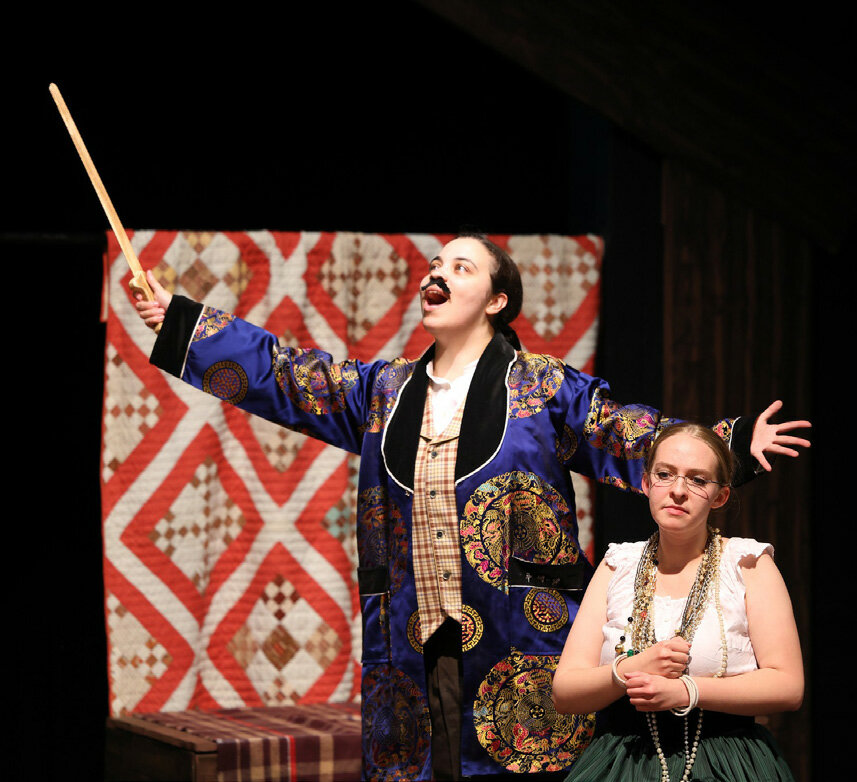
In a contemporary adaptation by playwright Kate Hamill, this timeless story finds itself juxtaposed against modern discussions surrounding feminist themes, including interpretations that resonate with LGBTQ+ identities. This version of Jo defies traditional constraints; she wears pants, expresses her feelings vocally, and even engages in swordfighting. Nevertheless, the portrayal reveals a more complex character, one who grapples with feelings of self-pity and impatience. As her family’s circumstances shift, Jo struggles with a certain immaturity, casting frustrated glances toward the audience as she longs for a more meaningful existence. While she rejects society’s expectations of a virtuous woman, she is also unsure of the identity she seeks, finding herself in a state of emotional turmoil.
As an admirer of both the book and its film adaptations, I approached Riverwalk Theatre’s rendition with mixed feelings. While the character of Jo is described as spirited and autonomous, Anna Hill’s interpretation comes across as hesitant and juvenile. The production features a cozy set along with a classic oval-shaped cameo at the stage’s front, but certain elements—such as an overly loud ticking clock and Beth’s surreal death sequence—added an unexpected, post-modern twist that seemed to clash with the overall tone.
Issues with diction were noticeable throughout the performance, although a few standout performances provided a contrast: Heath Sartorius as Laurie, Sandra Thomasson as Aunt March, and Betsy Karinen as Marmee delivered commendable portrayals. Notably, Rachael Steffens’ portrayal of an adult Amy March proved particularly effective, showcasing her character’s development.
It seems that further performances might lead to a more cohesive presentation. Historically, Riverwalk Theatre is known for its high-quality production values, featuring innovative set designs and costumes. This adaptation included numerous scene transitions that were executed smoothly and quickly, contributing to an engaging viewing experience. For those seeking an emotionally resonant story centered on family dynamics and personal growth, this production of “Little Women” may provide a captivating option.
