


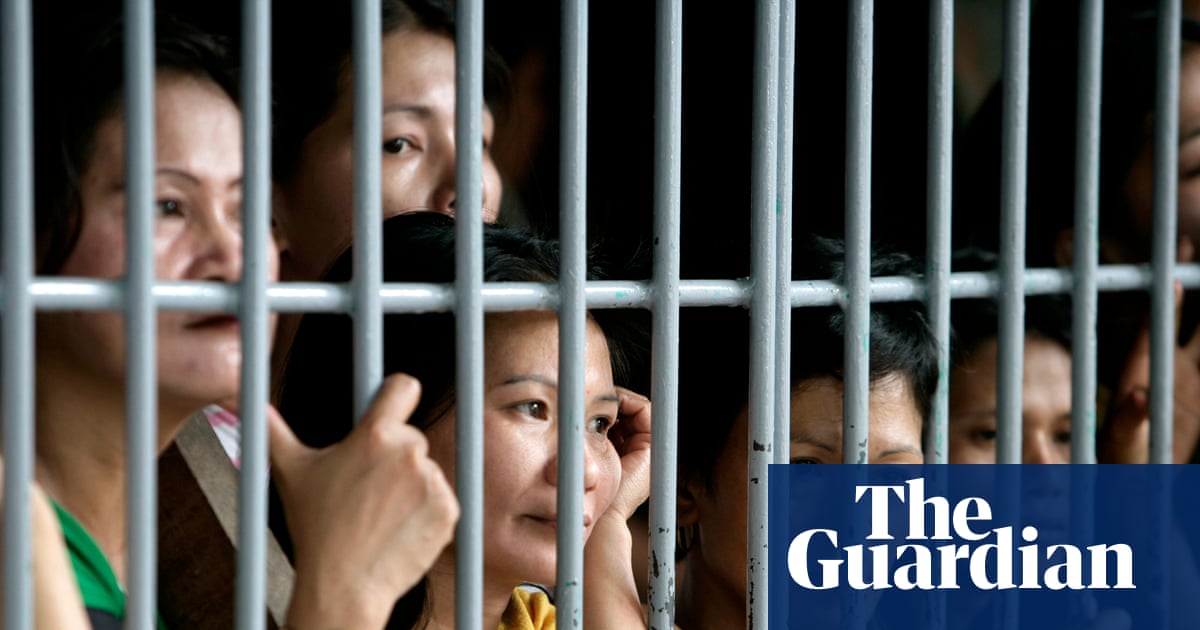
The Rising Crisis of Incarcerated Women Worldwide
Globally, an alarming number of women—potentially up to one million—are subjected to sexual violence and forced labor within prison systems, underlining a pressing humanitarian crisis that is frequently neglected.
Growing Numbers in Female Incarceration
The number of women in prisons is increasing at a much faster rate than that of men, with projections suggesting that it could exceed one million in the near future. While women typically make up between 2% and 9% of total prison populations in various nations, their numbers have surged by 57% since 2000, in contrast to a mere 22% increase among male inmates.
“We are facing a global crisis,” emphasized Olivia Rope, the executive director of Penal Reform International. “The accelerating rate of female incarceration compared to men is genuinely alarming. Women are frequently overlooked, resulting in severe conditions that fail to meet their unique needs.”
Conditions in Prisons
Investigations conducted by the Guardian in various countries—including El Salvador, Kenya, the United States, Argentina, and Iran—reveal disturbing accounts from female prisoners who report being beaten, sexually abused, and coerced into slave labor, often while serving sentences for minor offenses.
International Guidelines and Their Shortcomings
Fifteen years ago, the United Nations introduced the Bangkok Rules, which were the first set of international guidelines aimed at improving treatment for women prisoners. Despite some advancements, Rope pointed out that many critical aspects of these guidelines remain unaddressed. “It is unacceptable that these rules continue to be ignored, and we are likely in a worse position now than we have been in 15 years regarding accountability,” she stated.
Underlying Factors for Increased Incarceration
The rise in female incarceration can largely be attributed to poverty, systemic abuse, and discriminatory laws. Women often face imprisonment for minor theft or non-violent crimes, such as stealing food for their children, begging, or involvement in the informal economy.
Currently, more than 733,000 women and girls are incarcerated worldwide, according to data from the World Female Imprisonment List. This number is thought to be conservative, as many countries lack reliable statistics on female imprisonment.
Global Statistics on Female Incarceration
- The United States has the highest rate of incarcerated women globally, with 174,607.
- China follows with approximately 145,000 women in prison, alongside an unknown number in pre-trial or administrative detention.
- In England and Wales, 3,566 women are imprisoned, comprising just 4% of the overall prison population. In 2020, 72% of these women were held for non-violent offenses.
- Across Europe, there are about 94,472 detained women, and Australia reports 3,743 female inmates, amounting to 8% of its prison population.
Unique Challenges Faced by Women in Prisons
Women in prison encounter significant challenges within a system predominantly structured for men. A notable percentage of these women struggle with mental health issues and come from backgrounds marred by abuse. In Europe, the suicide rate among incarcerated women is nine times higher than that of the general population, according to the World Health Organization. Access to adequate mental health treatment remains limited across many regions.
The experience of imprisonment can be particularly traumatic for women who have survived abuse. Conditions such as overcrowding, extended periods without natural light, and stressful security measures can contribute to a sense of entrapment.
A Call for Reforms
Sabrina Mahtani, a Zambian-British lawyer and member of Women Beyond Walls—a global initiative addressing the incarceration of women—advocates for a reevaluation of the justice system. “After 20 years of working with women in prison, I firmly believe that traditional incarceration is ineffective and often harmful. We need to reconsider our approach to justice,” she asserted.
She points out that many women do not pose a risk to society and suggests exploring alternative measures to incarceration. “There is a persistent belief that prison serves as a rehabilitative environment for offenders, yet it often exacerbates trauma among vulnerable populations,” Mahtani added.
The Impact on Families
Many incarcerated women are primary caregivers, resulting in approximately 1.45 million children worldwide having a mother in prison. The impact of maternal imprisonment extends beyond the individual, often leading to family disintegration and forcing children into social services or shifting care to extended family members. “When a mother is imprisoned, the repercussions can be far more severe than when a father is incarcerated,” said Rope.
Inadequate Healthcare and Exploitation
Pregnant women in prisons often receive insufficient healthcare and have reported being forced to give birth in isolation or under humiliating conditions. Instances of sexual violence within prison settings are prevalent, particularly in conflict-affected regions, where women face egregious abuses such as being exploited as prostitutes.
Labor Practices in Prisons
In many correctional facilities, women are required to work under exploitative conditions for little to no remuneration. Concerns have arisen regarding unregulated labor practices, with reports emerging of women producing goods for export without fair compensation in several countries, notably Cambodia.
Challenges in Data Collection
Obtaining comprehensive and reliable statistics on female incarceration is a significant challenge due to the secretive nature of prison systems. Helen Fair, a research fellow at the Institute for Criminal Policy Research, highlights the lack of available data and its implications. “The scarcity of accurate prison population figures leaves significant gaps in understanding this issue,” she explained.
