


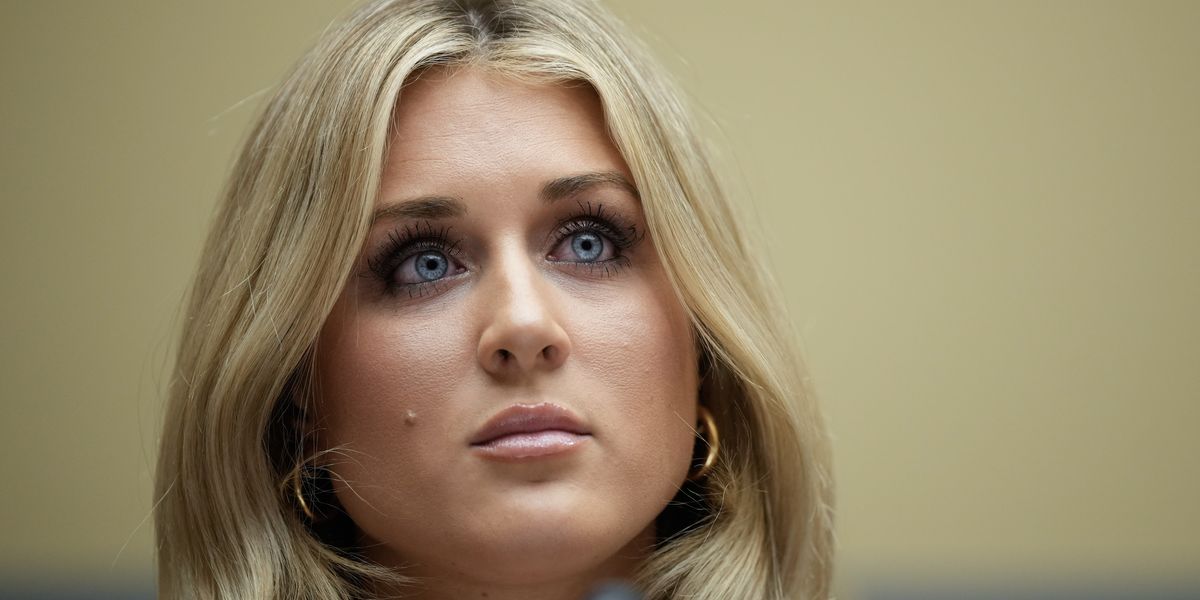
Riley Gaines Advocates for Legal Repercussions for Officials in Women’s Sports
Former NCAA swimmer Riley Gaines, known for her notable tie with trans swimmer Lia Thomas during the 2022 championships, has publicly called for the criminal prosecution of officials who allow transgender athletes to compete in women’s sports. Her outspoken stance reflects widespread tensions surrounding the participation of trans athletes in competitive sports categorized by gender.
Demand for Prosecution
In an interview with Fox News Digital, Gaines articulated her belief that current policies permitting trans athletes to participate in women’s categories are criminal, stating, “The way that we have been told that a man’s feelings matter more than our physical safety… is a criminal action, therefore, I believe it is a criminal offense.”
Targeting Educational Institutions
Gaines specifically pointed to Angel Cabrera, the president of Georgia Tech, which hosted the contentious 2022 championships. She stated, “Someone somewhere has to be made an example of, otherwise you will have the woman-hating Democratic Party continue with full steam ahead,” indicating a strong desire for accountability among educational leaders.
Political Landscape
The controversy surrounding this issue is compounded by differing state responses to federal mandates. In recent months, several states—including California, Maine, Minnesota, Oregon, and Washington—have chosen to prioritize their own laws over a federal executive order signed by former President Donald Trump. This order aimed to restrict the participation of trans athletes in women’s sports, raising ongoing debates about fairness and safety in athletics.
Federal Response and Legal Actions
Despite the Trump administration’s assertions that state officials could face legal consequences for defying federal law, the current administration has opted for investigations and lawsuits rather than pursuing criminal charges against defiant officials. This has resulted in a complex landscape of regulations that vary by state, leaving many sports leagues navigating uncertainties.
Support from Legal Experts
Legal representation for Gaines has echoed her sentiments, with attorney William Bock stating that “prosecution is necessary” to hold responsible those who knowingly violate federal law and affect fair competition for female athletes. Bock emphasized that continued defiance of federal law necessitates significant legal repercussions to safeguard the rights of women in sports.
Ongoing Controversies in Sports
Recent months have seen many instances where biological males have competed in women’s high school sports, often drawing criticism and raising questions about the integrity of female-only competitions. In California, for instance, the Department of Justice has set deadlines for policy revisions affecting trans athlete participation amidst ongoing federal investigations.
Conclusion
As states maintain their positions amid legal challenges and public scrutiny, the debate over transgender participation in women’s sports continues to evoke strong emotions and calls for significant policy changes. With Gaines and her legal team pushing for actionable steps against perceived injustices, the discussion remains a focal point in contemporary sports ethics and gender rights.
