


Women’s Integration in the Military: Progress and Challenges
A New Era for Military Women
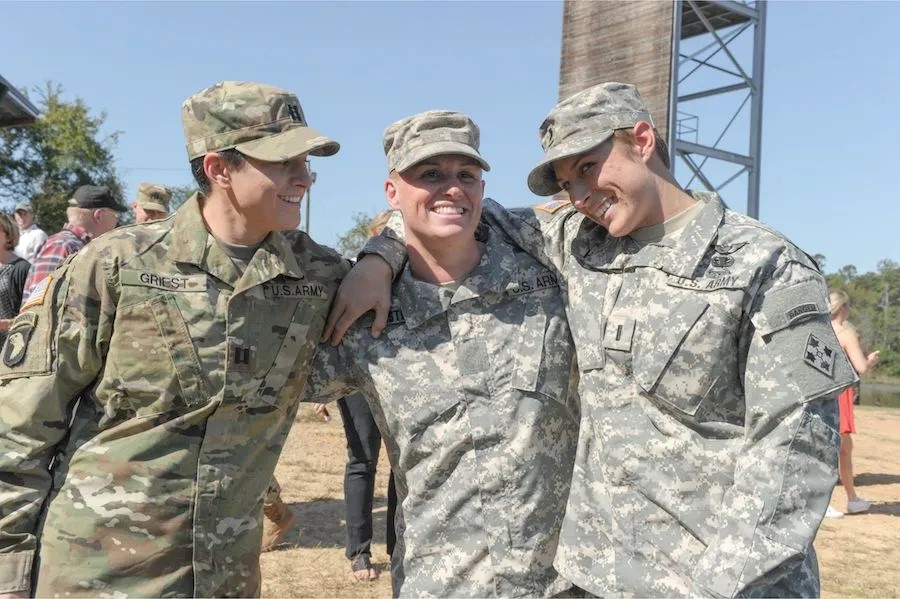
In 2015, Capt. Kristen Griest and 1st Lt. Shaye Haver made history by becoming the first women to complete Army Ranger training. This milestone inspired many, including Emelie Vanasse, who had kept their pictures above her desk as motivation. Fast forward less than two years, and Vanasse proudly joined the ranks of female Rangers, graduating in a cohort that marked a significant progression in the Army’s 249-year history.
The Current Landscape
Today, more than 160 women have earned their Ranger tabs, and the conversation surrounding women’s participation in combat roles has largely been viewed as settled. However, recent developments have reignited debates within the military establishment.
In March, Defense Secretary Pete Hegseth initiated a review of entry standards for women in combat roles, following a series of controversial leadership changes. This included the dismissal of Adm. Lisa Franchetti, the first female Chief of Naval Operations, leaving the military without a female four-star officer.
Changes and Concerns
Hegseth’s mandate includes reassessing the criteria under which women have gained access to combat roles and reviewing advisory committees that have historically supported women’s integration into the military. Actions taken include removing members from the Defense Advisory Committee on Women in the Service (DACOWITS), which has played a crucial role in advocating for women’s rights in the military since its establishment in 1951. This sudden shift raises concerns that the committees may be refocused to align more closely with Hegseth’s perspectives, which have previously questioned the suitability of women for combat positions.
Historical Context and Current Statistics
The journey toward gender integration in the military spans decades. During World War II, approximately 400,000 women served in various capacities, pushing boundaries and making significant contributions. The gender barriers began to fade in 1948 with the passage of the Women’s Armed Services Integration Act, which allowed women to serve alongside men.
By 2023, women constitute nearly 20% of the total military force, and surveys indicate that many male service members support a fully integrated military environment. Despite previous resistance, even the Marine Corps has adopted mixed-gender battalions.
Challenges Ahead
With Hegseth’s recent directives, advocates worry that the progress made in integrating women into combat roles may be at risk. Samantha Weeks, a former member of DACOWITS and the first female solo pilot of the Air Force’s Thunderbirds demonstration team, highlights the importance of maintaining an inclusive military. “What if those people happen to be some of the best and brightest warriors for tomorrow’s generation? What does that do to our country?” she asks, voicing concerns about the potential loss of talent within the military.
Women in Ranger Training
Vanasse described her experiences in Ranger school, facing both physical and mental challenges while aware of the biases that existed. Fellow Ranger Capt. Charley Falletta echoed these sentiments, noting the opposition female trainees faced in a field traditionally dominated by men. Yet, as Falletta pointed out, the landscape is gradually changing, with instructors becoming more supportive of female candidates, indicating a slow but steady shift in attitude.
The Path Forward
Despite the advocacy and progress to date, women in the military still confront persistent challenges, including biases and logistical hurdles. Retired Coast Guard Admiral Cari Thomas emphasized that oversight and continuous advocacy are crucial to ensuring that women can succeed in the military. “There are still biases… and challenges that exist for integration,” she said.
Conclusion
As the military navigates a complex political landscape, women’s integration into combat roles remains a critical issue. The actions taken by leadership have implications not only for the future of female servicemembers but also for the efficacy and readiness of the military itself. The importance of fostering an inclusive environment is paramount, ensuring that all capable individuals can contribute to national security and military success.
