


Alaska has long struggled with alarming statistics regarding violence against women, a grim reality highlighted by multiple studies and media reports. According to the 2020 Alaska Victimization Survey conducted by the University of Alaska Anchorage Justice Center, an alarming 57.7% of female participants reported experiencing intimate partner violence, sexual assault, or both.
The historical context raises an important question: Were conditions for women in the past significantly better? While there are no solid historical crime rates due to a lack of reliable data, stories and anecdotes offer a glimpse into the challenges women faced, hinting that past hardships may not differ drastically from present-day struggles.
The term “Spenard Divorce” emerged in Anchorage’s history as a local adage denoting the belief that, if a wife were to kill her husband, society would assume she had a valid reason. Bryan Cooper, in his book “Alaska: The Last Frontier,” elaborates that this informal phrase arose from numerous incidents involving women killing their abusive spouses, primarily during the late 1950s to early 1960s. These events often involved severe and sustained abuse, with Regina Bowker famously shooting her husband after years of intimidation and threats concerning mental health commitments. Bowker received a 15-year prison sentence ensuing her act of desperation.
Another harrowing case involved a Kenai woman who, in 1954, attempted to defend herself with a revolver during a brutal assault. She missed every shot, only to face legal repercussions while her husband went unpunished for his violence. Such incidents illustrate the systemic biases against women during that era.
In Anchorage during the 1940s, women reportedly carried long hatpins for self-protection, a reflection of both evolving societal dynamics and persistent threats. The blade-like pins served as formidable weapons against potential attackers, underscoring the urgent need for self-defense options.
The history of murders targeting women in Alaska is extensive and troubling. Figures like serial killer Robert “Butcher Baker” Hansen are infamous, but many names remain obscure yet equally tragic, such as musher Charles Cannon, who killed his wife in 1955, only to evade indictment. Similarly, schoolteacher Zelda King’s mysterious death in Palmer in 1936 was suspiciously ruled a suicide despite perplexing circumstances.
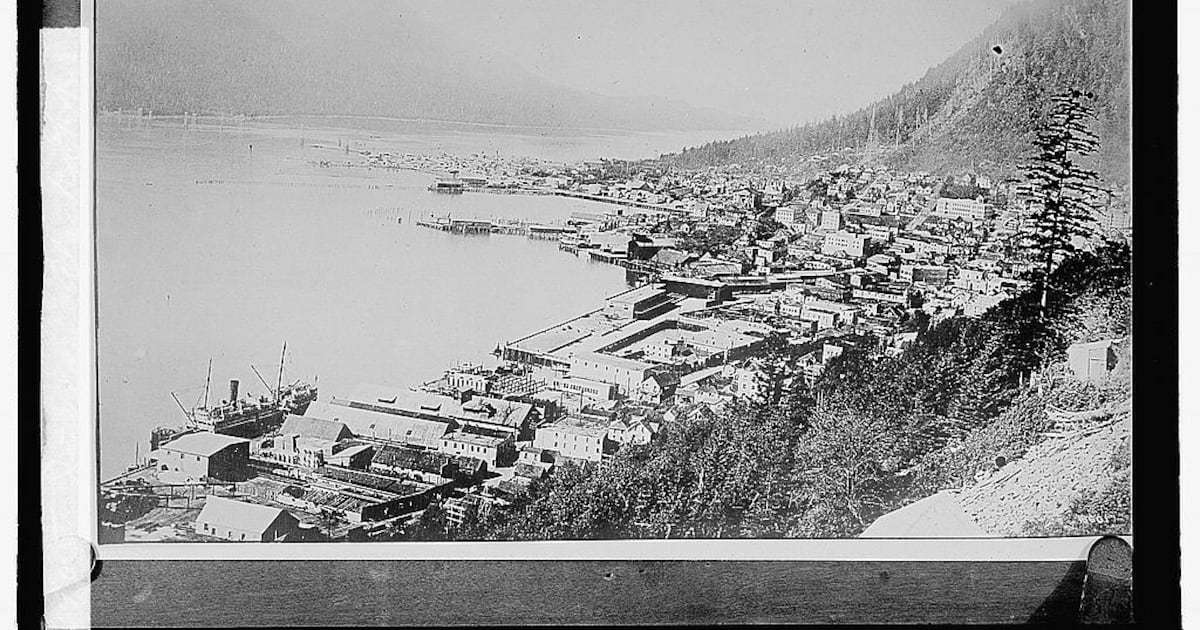
Pushing further into this somber narrative, the double murder of Hilda Weiss and Luella Boadway in Juneau in 1923 portrays grim realities for women involved in sex work. Operating under the guise of a cigar store during Prohibition, the women’s deaths were sensationalized in local newspapers, denoting their professions as central to the tragedy. It is evident that despite societal acceptance of sex work, women remained vulnerable to brutal violence, with their livelihoods often presenting a rationale for their deaths.
On the fateful night in 1923, Weiss and Boadway were brutally murdered, with evidence of struggle evident on both bodies. A notorious local figure, Harry “Battling” Johnson, was arrested shortly thereafter, displaying a troubling nonchalance during his arraignment. His history of aggression and poor character made him a prime suspect, leading to a guilty plea for second-degree murder, resulting in two life sentences.

Johnson’s life in prison did not transform his behavior—they classified him as a chronic troublemaker, eventually resulting in his transfer to the infamous Alcatraz penitentiary. His actions following his incarceration painted a stark picture of a man uninterested in rehabilitation.
The ongoing violence against women in Alaska suggests that despite societal progress, many historical patterns of abuse and victimization persist. The upcoming Alaska Victimization Survey aims to provide updated insights into the situation, holding the potential for greater understanding and hope for improving conditions.
Key Sources:
- Cooper, Bryan. Alaska: The Last Frontier. New York: William Morrow and Company, Inc., 1973.
- “Double Murder Is Committed in Front Street Resort; 6 Detained.” (Juneau) Alaska Daily Empire, September 24, 1923, 1, 7.
- “Johnson Charged With Murder of Women; Admits Was On Scene.” (Juneau) Alaska Daily Empire, September 25, 1923, 1, 3.
- Johnson, Ingrid Diane. 2020 Statewide Alaska Victimization Survey Final Report. University of Alaska Anchorage, Justice Center, October 2021.
- “Johnson Keeps Mute on Crime; Goes to Prison.” (Juneau) Alaska Daily Empire, December 3, 1923, 1, 3.
- Kahler, Abbott. “ ’The Hatpin Peril’ Terrorized Men Who Couldn’t Handle the 20th-Century Woman.” Smithsonian, April 24, 2014.
- Longenbaugh, Betsy. Forgotten Murders from Alaska’s Capital. Kenmore, WA: Epicenter Press, 2022.
- “Marshal Al White.” (Ketchikan) Alaska Fisherman, March 1929, 6-7.
