


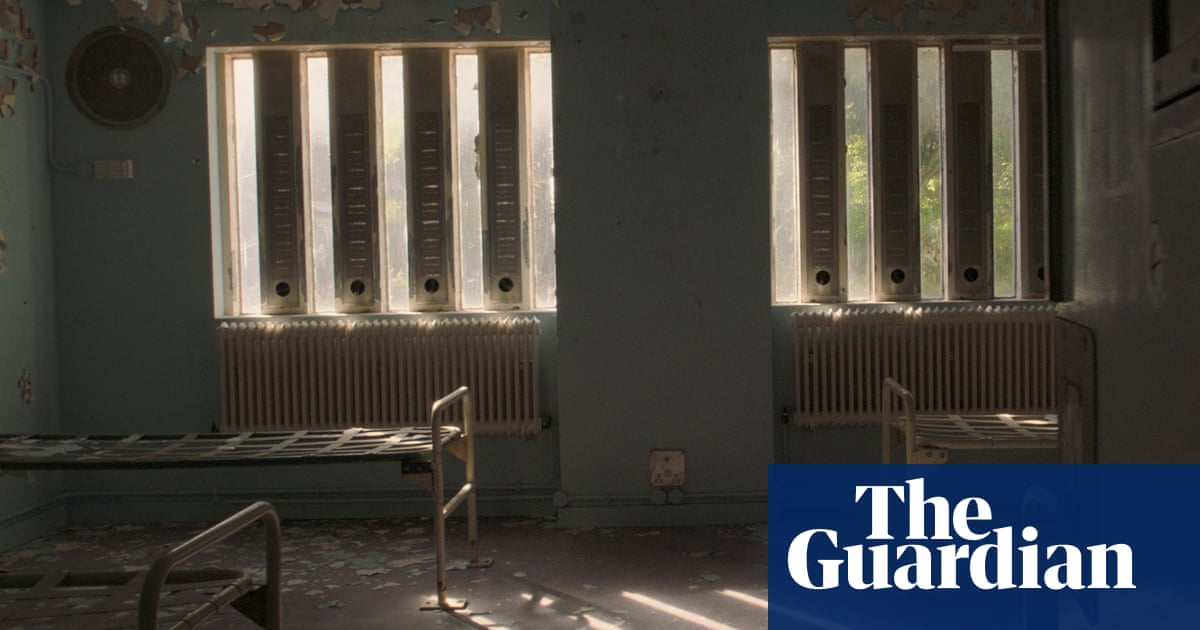
In the poignant documentary titled Holloway, directors Sophie Compton and Daisy-May Hudson employ a striking visual metaphor to illustrate the profound failings of the British prison system regarding female inmates. In a compelling moment near the documentary’s conclusion, six former women prisoners participate in a modified version of Grandmother’s Footsteps, taking place in the hushed chapel of the abandoned Holloway prison.
As they stand in a line against the wall, a voice prompts them to step forward based on their life experiences: “Step forward if you grew up in a chaotic household,” followed by inquiries about domestic violence, drug use in the family, financial struggles, and incarceration among relatives. Gradually, all six women move forward, powerfully underscoring the film’s central theme: the UK penal system is populated by vulnerable women who are receiving punishment rather than support.
“When I got to my cell, I felt my 18-year-old self cry out.”
Before the demolition of Holloway prison in 2022, Compton and Hudson obtained permission to film within its walls, capturing the journeys of six women revisiting the very cells where they had once served time. Instead of employing standard documentary techniques, which often involve direct questioning in stark environments, the directors chose a more nuanced method. They arranged the women in a circle with guidance from a trained therapist, allowing organic conversation to unfold.
This approach introduced a level of uncertainty in conversations, as the participants wrestled with their vulnerabilities and the intentions of the filmmakers. Despite initial hesitations, the women ultimately decided that the need to discuss systemic failures in the justice system outweighed their concerns regarding representation in the film.
Both Compton, an Emmy nominee known for her work on deepfake pornography, and Hudson, a Bafta Breakthrough Award recipient, emphasize collaborative filmmaking. They involved the women in editing, ensuring their comfort with how their narratives were portrayed. “They could say what they did and didn’t like,” Hudson explains. “They wanted more laughter included—our wish was that they felt proud of the film.”
The history of Holloway prison is significant; it once held over 300 suffragettes and was the site of the last woman executed in the UK, Ruth Ellis, in 1955. However, the film does not delve deeply into the historical aspects of the prison. Instead, it focuses on the journeys of the participating women and how their pasts have shaped them.
As the women return to the now-closed prison, their reactions vary. Some embrace the space, relishing the freedom to defy former restrictions, while others reflect on the chaos they once experienced. One participant describes her time in Holloway as akin to a holiday camp, only to confess later the extent of her trauma. Another finds solace in nature’s reclamation of the derelict building, noting a sense of healing in its decay. “It feels kind of healing to see that Holloway prison is falling apart,” she remarks.
The emotional complexity of their experiences comes across vividly, as Aliyah Ali shares her perspective on the prison environment. “It was probably the first time that I was in an environment which was controlled and felt safe,” she notes, encapsulating the irony that for many, prison was the first place they felt a sense of belonging.
Ali, who entered Holloway at age 18, reflects on her troubled childhood, which included family breakdowns and exposure to domestic violence. Initially hesitant to share her story, she eventually opens up, discussing how societal perception labeled her as a “bad girl” rather than addressing her trauma. “Nothing was asked about what actually happened to me,” she states, revealing the deep-seated frustrations that many like her face within the system.
Her sentiments resonate with Mandy Ogunmokun, who also encountered systemic challenges while growing up. “It’s so frustrating to see how similar the stories of people going in and out of prison are. Change is so slow,” she observes, articulating the anger over the disadvantaged circumstances faced by many children. Now 66, Ogunmokun works to support individuals overcoming addiction and the cycle of reoffending.
Despite having been incarcerated multiple times, she emphasizes the lack of adequate support available during their time in prison. “The officers see horrific things, but they’re not trained counsellors,” she explains, advocating for a critical reassessment of how female offenders are treated within the justice system.
Nearly two decades after the impactful Corston report recommended comprehensive reforms for vulnerable women in the justice system, many of its proposals remain unaddressed. Hudson and Compton faced considerable obstacles in securing funding for their documentary, but they now celebrate its release amid a growing discourse about reform. Recently, the UK’s Justice Secretary, Shabana Mahmood, acknowledged the need for change, stating, “The simple truth is that we are sending too many women to prison; we need to do things differently.”
With Hudson’s new fictional film, Lollipop, also exploring themes related to women and the justice system, both projects aim to illuminate the pervasive issues faced by vulnerable women. Aliyah Ali expresses hope that Holloway can inspire change and resilience among younger audiences in prisons. Reflecting on her journey, she states, “It’s been emotionally turbulent, but they’ve done an amazing job.”
Holloway will be released in UK cinemas starting June 20.
