


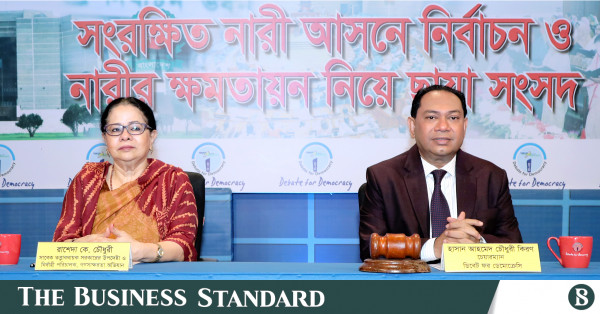
Gender Inequality in Political Representation Highlighted at Shadow Parliament

Concerns Over Women’s Representation
During a recent shadow parliament focused on women’s empowerment, former adviser Rasheda K Chowdhury expressed strong disapproval of the National Consensus Commission’s formation, citing the absence of women representatives as a critical oversight. She remarked, “Forming the National Consensus Commission without women’s representation is an insult and a sign that their issues are being ignored.”
Chowdhury emphasized the importance of voting as a civil right and cautioned against boycotting elections as a means to address women’s rights issues. “The commission is busy with the distribution of power and political matters, while women’s concerns are neglected,” she stated.
Policy Recommendations Ignored
At the event held on 23 August, Chowdhury pointed out the disregard for international best practices that advocate for women’s inclusion in decision-making processes. She referred to a proposal submitted by 67 women’s organizations to the Consensus Commission on 3 August, which has yet to receive a response. “Political parties have also not discussed the matter with us,” she added, questioning the commitment to gender representation in political systems.
Additionally, she brought attention to the ongoing issue of underrepresentation, with proposals for female nominations in political parties still largely ignored. “Parties want to nominate only 5% to 7% of women in the national election; this is like a charity,” she noted, urging for a shift towards greater empowerment and representation.
Dissent Over Current Electoral System
The shadow parliament was organized by Debate for Democracy and chaired by Hasan Ahmed Chowdhury Kiran. In his remarks, Kiran described the current method for electing women to reserved seats as fundamentally flawed, stating that it largely depends on party nominations rather than direct electoral support from the public.
“Without direct elections for reserved seats, the democratic process remains incomplete,” he said, adding that the female representatives in these positions have often been viewed as mere “ornaments of the parliament,” a characterization he deemed dishonorable.
Moreover, he raised concerns regarding the absence of female representatives from major political parties during discussions with the Consensus Commission, stating, “Without the goodwill of political parties, it is impossible to increase women’s seats or ensure empowerment.”
Debates on Women’s Empowerment
The theme of the shadow parliament revolved around the notion that women’s empowerment can only be secured through direct elections for reserved women’s seats. In a competitive setting, debaters from Manarat International University emerged victorious over their counterparts from Atish Dipankar University of Science and Technology. The judging panel included distinguished figures such as Professor Abu Muhammad Rais and senior journalist Mainul Alam.
Participants were awarded trophies, crests, and certificates, marking an enlightening discussion on the pressing issues concerning women’s political representation.
