


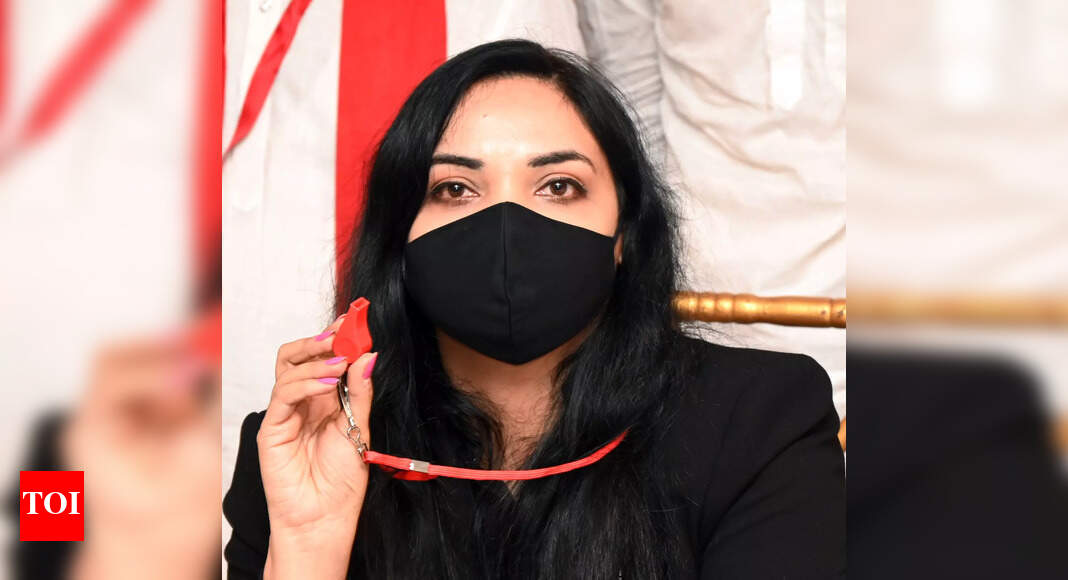
Pushpam Priya Choudhary: A New Voice in Indian Politics
Challenging the Status Quo
Pushpam Priya Choudhary, founder of The Plurals Party, is once again stepping into the political arena, contesting from the Darbhanga assembly constituency. With a background from the London School of Economics and the Institute of Development Studies, Choudhary aims to disrupt the traditional political dynamics in India. This election marks her party’s expanded presence, with candidates fielded in 100 constituencies.
A Unique Campaign Approach
Choudhary first gained public attention in 2020, proclaiming her ambition for the chief ministerial position through prominent advertisements. Known for her distinctive black attire and mask, she clarifies that her choice of clothing is not symbolic but strategic, allowing her ideas to take precedence over her appearance. “Nobody asks politicians why they wear white like a uniform,” she states, adding, “I want people to listen to my ideas.” She has pledged to remove her mask once elected.
The Plurals Party’s Philosophy
The name of Choudhary’s party embodies her belief in pluralism, asserting that India’s diversity should be harmoniously reflected in its politics. She critiques the current establishment for concentrating power and neglecting key institutions. “The entire system is currently engaged in ‘brokery’; all institutions need to be re-established,” she says, emphasizing her commitment to transforming the education sector and beyond.
Candidate Selection and Campaign Strategy
Unlike traditional political strategies, TPP prioritizes quality over quantity in candidate selection. Choudhary insists on choosing candidates who are educated, grounded in their communities, and free from criminal records. “This time, we are not establishing; we are fighting to reach the assembly,” she states, denouncing what she terms “institutional bribes” that have become commonplace in politics.
Focus on Darbhanga
Diving deep into local issues, Choudhary has chosen her native Darbhanga as her battleground, pointing out the chronic neglect faced by the constituency, even though it is considered a BJP stronghold. “The issues here are beyond the scope of the incumbent MLA who has been in power for five terms,” she asserts, expressing her desire to amplify the community’s voice in the assembly.
Advocating for Women’s Representation
Choudhary highlights the importance of political consciousness among women in her campaign, aiming for a representation of 50% female candidates. She defines development by the visibility of women in society, especially in roles traditionally held by men. “We want women with a voice and if such candidates come, we give them the ticket,” she adds.
Competitive Landscape
Taking a critical stance against rival parties, Choudhary accuses groups like Jan Suraaj of imitating TPP’s manifesto while lacking the fortitude to make meaningful changes, such as fielding candidates with clean backgrounds. She aptly uses the metaphor: “The groom ran away from the field, where will the wedding procession go?” to denote the lack of commitment in conventional politics.
