


Congressional Hearing Highlights Controversial Transgender Participation in Women’s Sports
Overview of the Hearing
A recent hearing held by the Delivering on Government Efficiency sub-committee of the House Committee on Oversight and Government Reform devolved into a contentious debate over the role of transgender men in women’s sports. The three-hour session was marked by heated exchanges and partisan rhetoric, reflecting the current national divide on this issue.
Political Dynamics
Democratic representatives criticized the hearing as a waste of resources, accusing Republicans of targeting transgender individuals. On the other side, Republican representatives engaged in questioning USA Fencing leadership about its policies on transgender athletes, expressing concerns over fairness in women’s competitions.
The tone was notably set by Chair Marjorie Taylor Greene (R-Georgia), who claimed, “USA Fencing makes a mockery out of women’s fencing, by allowing biological males to compete in its women’s fencing competitions.”
Key Testimonies
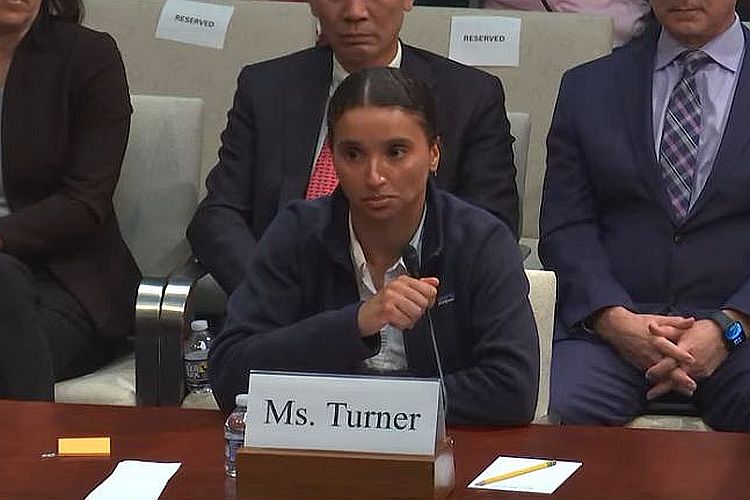
Stephanie Turner’s Experience
One of the witnesses, Stephanie Turner, who was disqualified at a fencing event for refusing to compete against a transgender competitor, shared her poignant experiences. She argued that the inclusion of transgender athletes in women’s categories undermines fair competition for women and creates a culture of intimidation within the sport:
“The [U.S. Fencing Association, now USA Fencing] has over 200 self-declared members who identify as ‘transgender.’ Each time a man competes in the women’s category… it removes fair sport and takes opportunities from women.”
Turner also expressed that her protests led to personal attacks and exclusion from the sport she loves, stating, “Women deserve to be treated fairly in sport,” and emphasizing the need for protective measures for female athletes.
Payton McNabb’s Injury
Another impactful testimony came from Payton McNabb, a former high school volleyball player who suffered a serious injury during a match involving a transgender male athlete. She highlighted her frustrations regarding safety in sports:
“It is completely aggravating because the injury I suffered was 100% avoidable — if only my rights as a female athlete had been more important than a man’s feelings.”
USA Fencing’s Position
Damien Lehfeldt, Chair of USA Fencing, addressed the complexities of transgender participation policies. He emphasized the necessity of maintaining safety and fairness in the sport, while articulating the federation’s adherence to existing laws, including the Ted Stevens Olympic and Amateur Sports Act:
“If Congress amends that statute…USA Fencing will of course amend its policies to ensure compliance.”
Lehfeldt underscored that strategic skill in fencing often outweighs physical advantages, stating, “…transgender status does not confer any inherent advantage over a cisgender fencer.”
Contrasting Perspectives
Testimony from Fatima Goss Graves, President of the National Women’s Law Center, emphasized that claims of trans athletes having overwhelming advantages are outdated and rooted in sexism. The testimonies highlighted a broader societal debate, where differing views on fairness and safety in competition continue to clash.
Conclusion
The contentious hearing illustrated the complexity of the discussion surrounding transgender athletes in women’s sports. As the landscape continues to evolve, with potential interventions from national governing bodies and legislation, the debate is set to remain a focal point of contention within the sporting community.
