


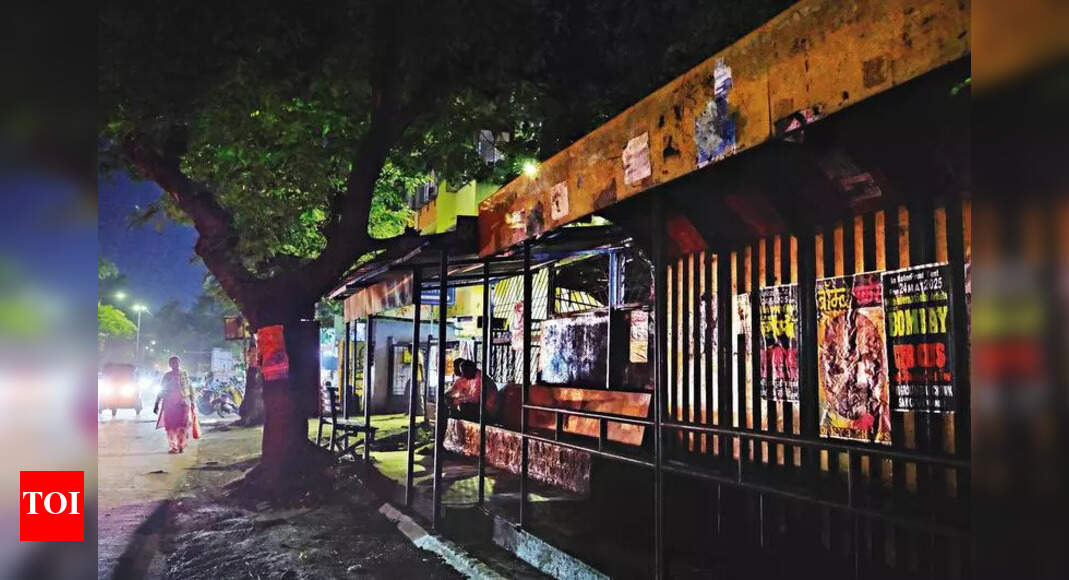
Women’s Safety in Urban Environments: A Growing Concern in Pune
Public spaces in Pune often present significant challenges for women’s safety, as highlighted by the experiences of many residents. Numerous women express concern about walking alone in poorly lit areas, crowded streets, and deserted parking lots—issues exacerbated by inadequate urban planning and infrastructure.
Nighttime Anxieties
Walking near BMCC Road at night can be particularly distressing. Women report fearing potential threats, such as abduction, due to the combination of parked cars and poor lighting. This environment encourages alternatives, such as walking along roadsides, despite the inherent risks.
Public transport areas, including FC Road and Laxmi Road, compound these fears. Women frequently choose to park on the street rather than in parking lots, where inadequate lighting and a lack of surveillance further heighten vulnerability.
Infrastructure Shortcomings
Despite Pune’s rapid urban expansion, the infrastructure often fails to address the needs of women and marginalized groups. Urban spaces—from bus and railway stations to public toilets—lack basic safety features such as functional CCTV cameras and sufficient lighting. Mona N. Shah, founder of Vayati Systems and Research Inc, emphasizes that current urban designs often overlook safety, prioritizing aesthetics over functionality.
Shah states, “Most streets lack essential safety features—operational surveillance systems, panic buttons, public conveniences, adequate lighting, and walkable footpaths.” She advocates for a shift toward gender-sensitive urban planning and suggests conducting public safety audits to address these gaps.
Challenges in Urban Planning
Pratap Raval, former head of the planning department at COEP Technological University, points to key design flaws in popular areas like FC Road. He notes that long walkways should prioritize visibility, free from obstructions such as advertising boards that contribute to unsafe environments. The safety of urban infrastructure is further diminished by poor architectural decisions that limit pedestrian mobility.
Perception vs. Reality
Aneeta Gokhale-Benninger of the Center for Development Studies and Activities argues that the perception of rapid urbanization is misleading, categorizing it more as population growth in urban areas. She highlights the cultural dynamics shaped by a predominantly male-led operational framework for public infrastructure, which can affect safety perceptions and policy implementation.
Gokhale-Benninger suggests that incorporating women into key public infrastructure roles may help to reshape attitudes towards women’s safety. She emphasizes the need for police reform to ensure more reliable enforcement of existing protective legislation.
The Call for Accountability
Activist Kiran Moghe underscores the pressing need for accountability measures to ensure that safety plans and infrastructural implementations are effectively realized. She expresses frustration over the stagnation of meaningful change, citing past reports on women’s safety that remain unacted upon.
Moghe states, “Will we ever hold officials accountable when CCTV cameras stop working or streetlights remain dysfunctional?” This sentiment reflects a broader dissatisfaction with the current administration’s responsiveness to safety concerns.
Proposed Solutions and Measures
Vibhuti Patel, a gender economist, stresses the importance of establishing help desks at transport hubs and providing a functional 24/7 helpline to guide women on where to seek assistance. She advocates for awareness campaigns that inform the public about available resources.
Moreover, the incorporation of human surveillance—through active pedestrian engagement and community oversight—can create safer public settings. Dr. Sharvey Dhongde notes that well-traveled areas with ongoing human activity deter potential threats, rendering neighborhoods safer for all residents.
Community Insights
Residents also voiced their specific concerns. Prerna Goyal, a yoga professional, expressed that unlit streets make her feel unsafe and highlighted the need for better public visibility in enclosed spaces. Raji Nair, a homemaker, echoed this, suggesting that extensive CCTV coverage could serve as a strong deterrent for crime.
Anuradha Nahire, another local, emphasized the need for increased female representation in shops and public services, suggesting that a visually “safe” environment can be achieved by promoting community vigilance and responsiveness among bystanders.
Conclusion
As Pune continues to evolve, addressing women’s safety should become a priority in urban planning. Through collaborative efforts—melding local insights with expert recommendations—Pune can take significant strides toward becoming a safer, more inclusive city for all its residents.
