


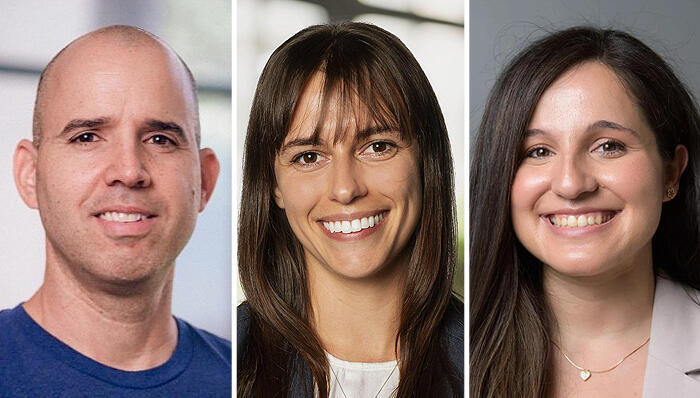
In a landscape where women’s health issues remain largely underfunded and overlooked, Anastasia Budinskaya, a Bio Associate at venture fund NFX, asserts the pressing need for effective alternatives in medical treatments. She emphasizes, “I want to see drugs that make sense,” urging for solutions beyond surgical options like hysterectomies for conditions such as endometriosis. Budinskaya calls for innovative medications that avoid drastic interventions.
Despite making up over half the global population, women’s health has suffered from historical neglect. This has led to a scarcity of options, leaving women to deal with uncomfortable side effects from contraceptives or resorting to surgeries when alternatives are unavailable. Notably, venture capital has predominantly focused on fertility, sidelining other critical women’s health issues.
1 View gallery
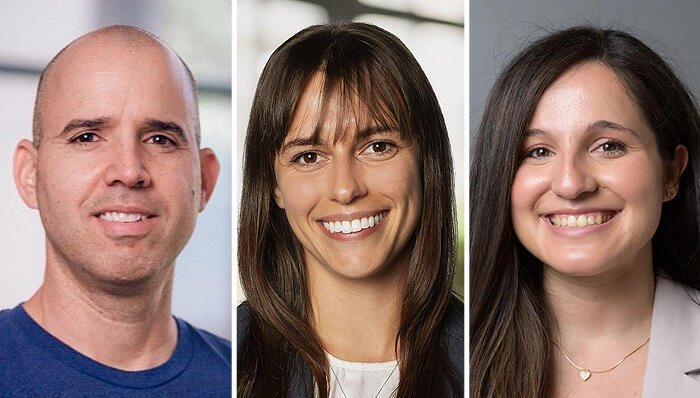
Omri Drory Ph.D. Anastasia Budinskaya Dr Karny Ilan MD
(Credit: N/A, NFX Website, Fusion VC)
Earlier this year, Budinskaya and NFX Bio’s General Partner Omri Drory, Ph.D., co-authored a pivotal blog article titled “Women’s Health 2.0: Beyond Fertility.” This publication critiques the longstanding perception of women’s health as a niche and often risky sector for investment. They argue that this viewpoint has contributed to the failure to explore the commercial potential of women’s health solutions.
Budinskaya reminds us, “Women aren’t just uteruses.” Having spent her career as a biomedical engineer and within corporate development, she brings a valuable perspective to the conversation about women’s health, highlighting the multifaceted biological issues that genuinely impact women’s lives. She identifies focus areas such as polycystic ovary syndrome (PCOS), endometriosis, preeclampsia, osteoporosis, and heart disease.
Drory also notes the current shift in the industry, stating that a cultural correction regarding women’s health has begun. This shift comes alongside improvements in technology and methods like precision medicine that reinforce the notion that investments in women’s health could be not only ethically warranted but commercially lucrative as well.
Budinskaya expresses a dual motivation, describing her work as both a moral obligation and a promising investment avenue. “Personally, I feel like I have a moral obligation,” she states. “But it’s also a sector that’s going to provide returns.”
Drory asserts that investing in women’s health should not be seen as a niche concern but as a viable market opportunity. “I’m not a sexist or a racist; I’m a capitalist. Whatever makes me money, I’m happy,” he remarks, highlighting the expansive market potential.
In Tel Aviv, Dr. Karny Ilan co-founded Feminai to develop a groundbreaking AI-driven tool for at-home breast cancer screening. This innovation enables women to perform self-examinations using wearable technology. Breast cancer is one of the most prevalent cancers among women, making accessible screening methods essential.
Ilan shares her challenges in securing funding, noting her aversion to the terms “femtech” and “women’s health” in fundraising pitches. She learned that distancing her project from these labels enhanced her ability to attract general investments.
Feminai has successfully raised $8 million, including recent funding from the Israel Innovation Authority. Despite this success, Ilan recounts investor skepticism regarding the market size, stating, “It was crazy to me. No, it’s not. You just can’t do math.” She emphasizes that breast cancer screening is a significant concern for over half the population.
NFX’s outreach in the women’s health sector has garnered significant interest, as noted by Drory, following the publication of their article. This includes funding initiatives such as Cyclana Bio, which recently announced a £5 million pre-Seed round aimed at developing solutions for endometriosis.
Having faced years of neglect, the field of women’s health technology appears poised for a renaissance. Budinskaya attributes this shift to advances in machine learning and AI, underscoring the potential for innovative solutions across various sectors within women’s health that have traditionally been understudied.
She suggests that integrating real-world evidence with biological research can lead to the discovery of new therapies for historically neglected disorders.
While the momentum in women’s health technology is palpable, ongoing challenges remain. Entrepreneurs like Ilan wish for a landscape where they do not have to justify their ventures as legitimate business opportunities. “Making it obvious that it’s a big market would really help us,” she notes.
As investments in women’s health technology increase, the goal remains to validate the sector as a lucrative opportunity. Drory emphasizes the importance of pointing to successful business examples that can attract further interest and investment. “Nothing will improve the future success of an industry more than a company you can point to and say, ‘You see this multi-billion-dollar company?’”
Budinskaya concludes on a hopeful note, stating that advancements in women’s health will require collective effort from various players in the tech ecosystem. “It’s going to take everyone,” she asserts. “It’s not just niche biotech investors.” The advancement of women’s health tech should be a priority for anyone invested in improving healthcare for over half the global population.
