


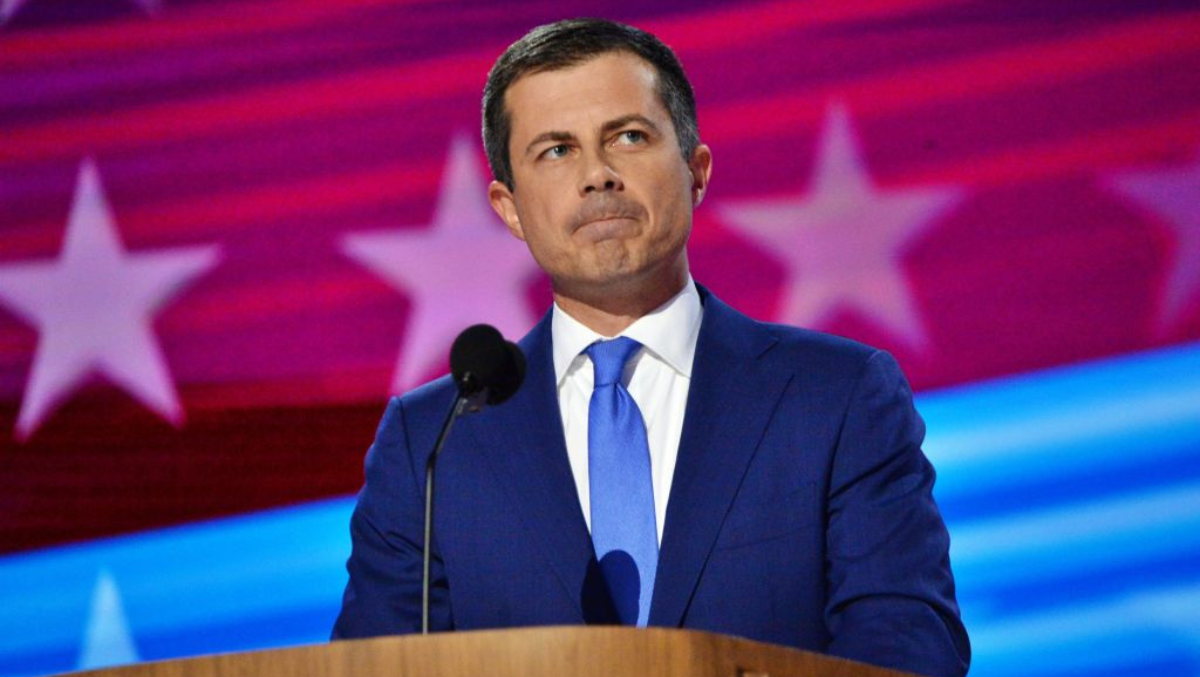
Pete Buttigieg on Transgender Athletes: A Need for Comprehensive Solutions
In a recent interview on NPR’s Morning Edition, former Transportation Secretary Pete Buttigieg addressed the contentious issue of transgender athletes competing in women’s sports. While he showcased a level of understanding that diverges from typical party lines, there are critical considerations he has yet to fully embrace.
Buttigieg’s Acknowledgment of Fairness Concerns
Buttigieg expressed empathy for both the transgender community and parents who question the fairness of their daughters competing against biological males. He remarked, “Compassion for transgender people, compassion for families, especially of young people who are going through this,” acknowledging the valid concerns of parents about competitive integrity in sports.
A Refreshing Perspective Amidst Common Narratives
This response marks a departure from the often simplified narratives that equate opposition to transgender athletes with bigotry. Buttigieg noted, “Most reasonable people would recognize that there are serious fairness issues if you just treat this as not mattering.” This acknowledgment is a crucial step in a nuanced discussion.
The Role of Legislation and Local Governance
However, Buttigieg proposed that decisions surrounding transgender athletes should be the responsibility of local sports leagues and school boards rather than federal politicians. He stated, “Policies regarding trans athletes should be in the hands of sports leagues and school boards.” While this perspective promotes local empowerment, it overlooks the implications of federal protections under Title IX.
Title IX is a significant federal statute that safeguards female athletes. Local leagues may lack the resources or legal protections to defend against discrimination claims, complicated by policies that could allow biological males to participate based merely on a change of sex designation.
Fragility of Arguments on Category Differences
Buttigieg attempted to differentiate the implications of sports categories, suggesting that nuances exist between disciplines, stating, “I think that chess is different from weightlifting, and weightlifting is different from volleyball.” While this logic acknowledges that each sport has distinct physical demands, it fails to uphold the root principle of equity that classification systems are designed to protect.
Recent events in competitive swimming, for instance, have raised concerns about the integrity of women’s competitions when transgender athletes participate. This highlights the need for uniform standards across all sporting entities.
The Message to Young Athletes
Buttigieg’s remarks regarding varying contexts in different age levels, especially the statement, “middle school is different from the Olympics,” raises further questions. It implies that the rights and experiences of younger female athletes are less significant, which could lead to a detrimental reception for young athletes grappling with fairness in competitions.
Conclusion: Upholding Title IX for All
As conversations around athlete classification continue, it is crucial for public policies to preserve the protections offered by Title IX across all levels of competition, ensuring fairness for female athletes of all ages and backgrounds. Buttigieg’s approach, while insightful, must broaden to encompass a more comprehensive solution that fully protects the rights of all athletes.
