


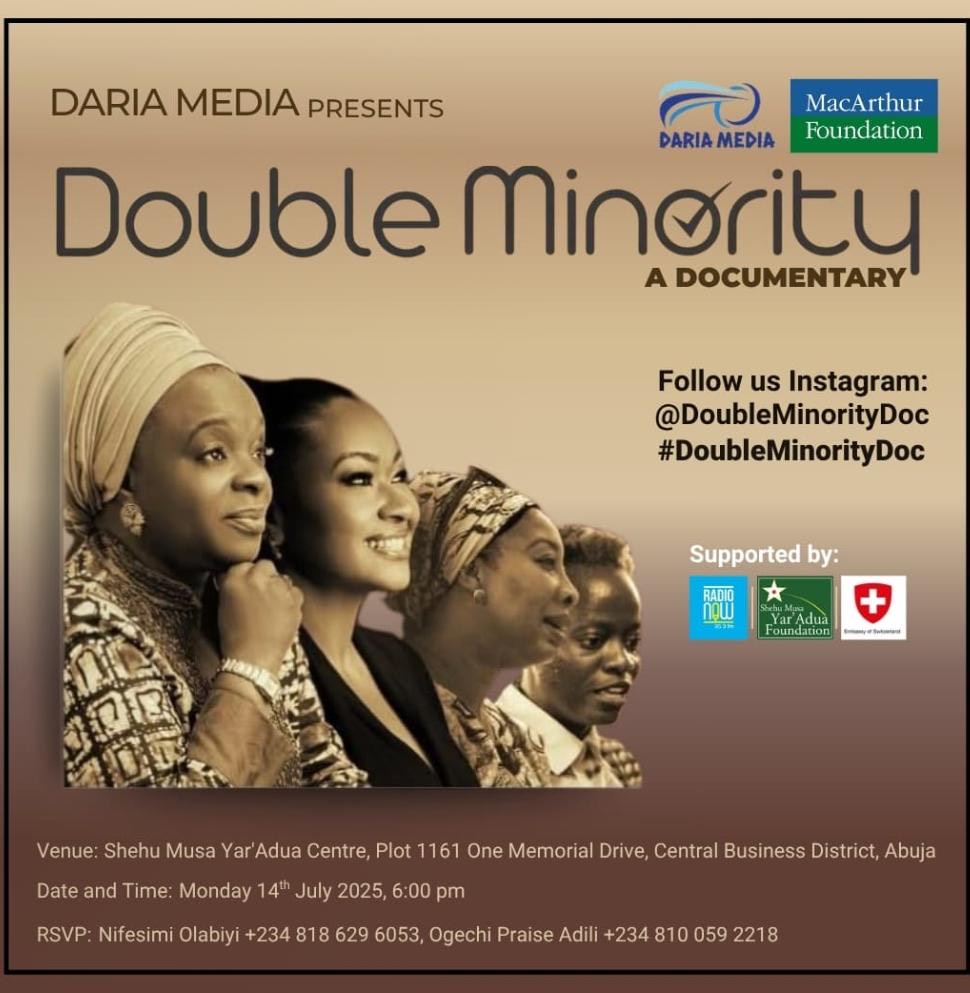
Exploring Women’s Challenges in Nigerian Politics: The Documentary ‘Double Minority’
The film ‘Double Minority’, recently premiered in Abuja, offers a poignant insight into the hurdles women face in navigating Nigeria’s political landscape. With a focus on amplifying women’s voices in governance, the documentary reflects both the struggles and achievements of female politicians in Nigeria.
About the Documentary
Produced by Daria Media, this documentary chronicles the experiences of nine women who ran for election in the highly competitive 2023 political cycle. It aims to shed light on their resilience while highlighting systemic barriers they confront in a predominantly male-dominated environment.
Key Personalities Featured
Among the candidates showcased are:
- Natasha Akpoti-Uduaghan
- Ireti Kingibe
- Nnenna Elendu–Ukeje
- Adeola Azeez
- Simi Olusola
- Hauwa Gambo
- Khadijah Iya
- Munira Tanimu
- Joyce Daniels
Insights from the Women
The narratives shared by these women reveal the multiple adversities they face, which include:
Systemic Obstacles
From cultural bias to financial limitations, the women articulated the multifaceted challenges of political engagement. Natasha Akpoti-Uduaghan recounted her experience when she faced aggression at a campaign event, emphasizing the pervasive violence that many women encounter while aspiring for political office. She also mentioned that her team had to coordinate with multiple hospitals to care for supporters who were injured during violent altercations.
Harassment and Stereotypes
The documentary also addresses the issue of harassment, with women facing derogatory comments such as “prostitutes” or criticisms regarding their roles in the household. Such views are often exacerbated by prevailing societal norms, including remarks from influential figures reinforcing traditional gender roles.
Financial Challenges
The financial demands involved in campaigning—obtaining forms and funding campaigns—pose significant hurdles. Many participants expressed concerns that relying on financial backers or “godfathers” complicates their accountability to constituents.
Current Landscape of Women in Politics
Despite women comprising nearly half of Nigeria’s population, their representation in elective offices remains dismal, at only 3.6%. This stark contrast disconnects with the National Gender Policy’s goal of 35% representation.
Recent statements from President Bola Tinubu during his inauguration hinted at a greater focus on gender inclusion, yet tangible changes have yet to materialize. Presently, women occupy just 17% of ministerial positions in the current administration.
The Role of Advocacy and Investments
Supported by the MacArthur Foundation, the documentary serves as a catalyst for national dialogues concerning gender disparities in politics. Kole Shettima, the foundation’s Africa Director, noted that the lack of opportunities for women doesn’t reflect their population numbers but rather a broader issue of systemic exclusion.
Conclusion
As the discourse around the Gender and Equal Opportunities Bill gains momentum, the documentary ‘Double Minority’ arrives at a crucial juncture. Highlighting the contributions and obstacles faced by women, it further underscores the need for voices advocating for gender equity in Nigeria’s political sphere.
With the ongoing efforts for structural reform, the hope remains that the barriers will eventually be dismantled, enabling women to participate fully in the political arena.
