


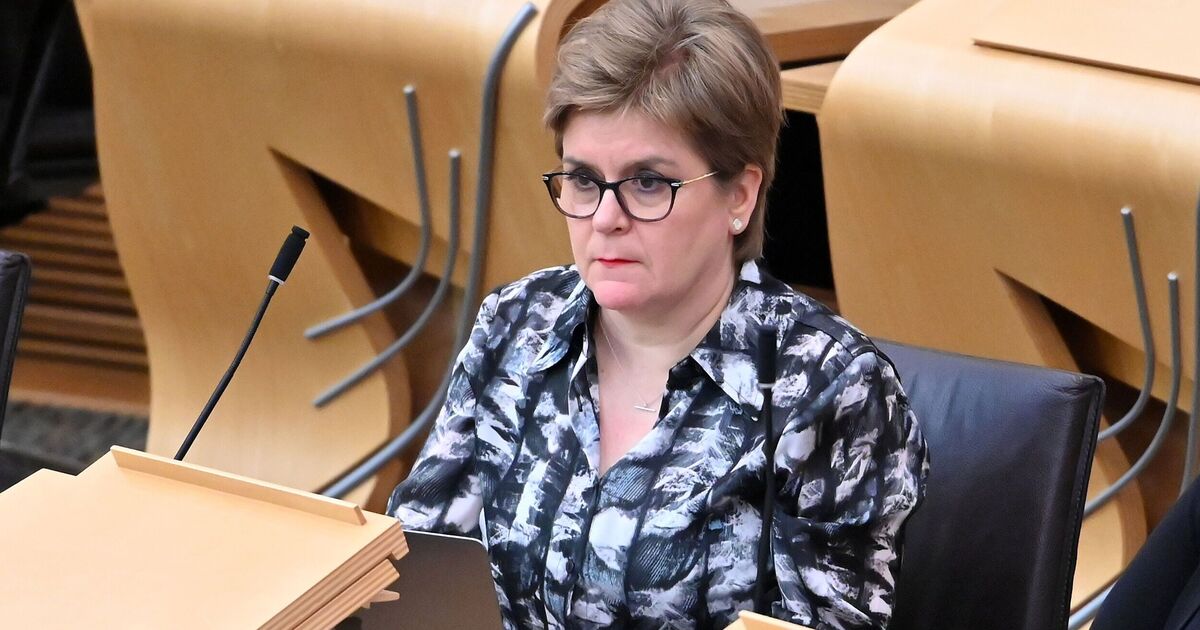
Nicola Sturgeon Stands Firm on Gender Policy Following Supreme Court Ruling
In the wake of a landmark judgment by the Supreme Court confirming that “sex” under the Equality Act 2010 refers to biological sex, former Scottish First Minister Nicola Sturgeon has stated that she will not apologize for her government’s gender policy. Sturgeon expressed concern over potential implications for transgender individuals, warning that their lives could become “unliveable” due to the ruling.
Background on Gender Reforms
The Supreme Court’s judgment, issued last month, concluded a long-standing debate surrounding gender identity and biological sex, stemming from reforms initiated by Sturgeon’s administration in 2018. The court ruled after the Gender Recognition Reform (Scotland) Bill was passed by the Scottish Parliament but later vetoed by the UK Government, citing concerns about women’s safety in single-sex spaces.
Sturgeon’s Reaction to the Ruling
Since the ruling, the Equality and Human Rights Commission has released guidance indicating that trans women, classified as biological men, would be prohibited from using women’s facilities in settings such as hospitals and retail outlets. In her first substantial comments regarding the ruling, Sturgeon emphasized that the feminists who challenged the Scottish Government in court do not represent all women in Scotland.
Sturgeon’s Defense of Her Actions
During a rare appearance at the Scottish Parliament, Sturgeon rebuffed calls from groups such as For Women Scotland to apologize for her handling of the gender reforms. She argued that the legislative process involved extensive consultation and consideration of various viewpoints across the political spectrum:
“I fundamentally disagree, fundamentally and respectfully disagree because the views of all opinions were taken account of in the run up to Parliament… I think it’s important that respect runs in both directions.”
Understanding Diverse Opinions
Sturgeon underscored the necessity of recognizing a spectrum of opinions on gender policy, stating that for every individual who expresses concern about her policies, there are likely others who support her approach:
“For every woman that I know or who contacts me… there are probably another two who have a different view.”
She firmly stated that it is incorrect for any group or individual to claim that their perspective is the singular authoritative viewpoint on the matter.
