


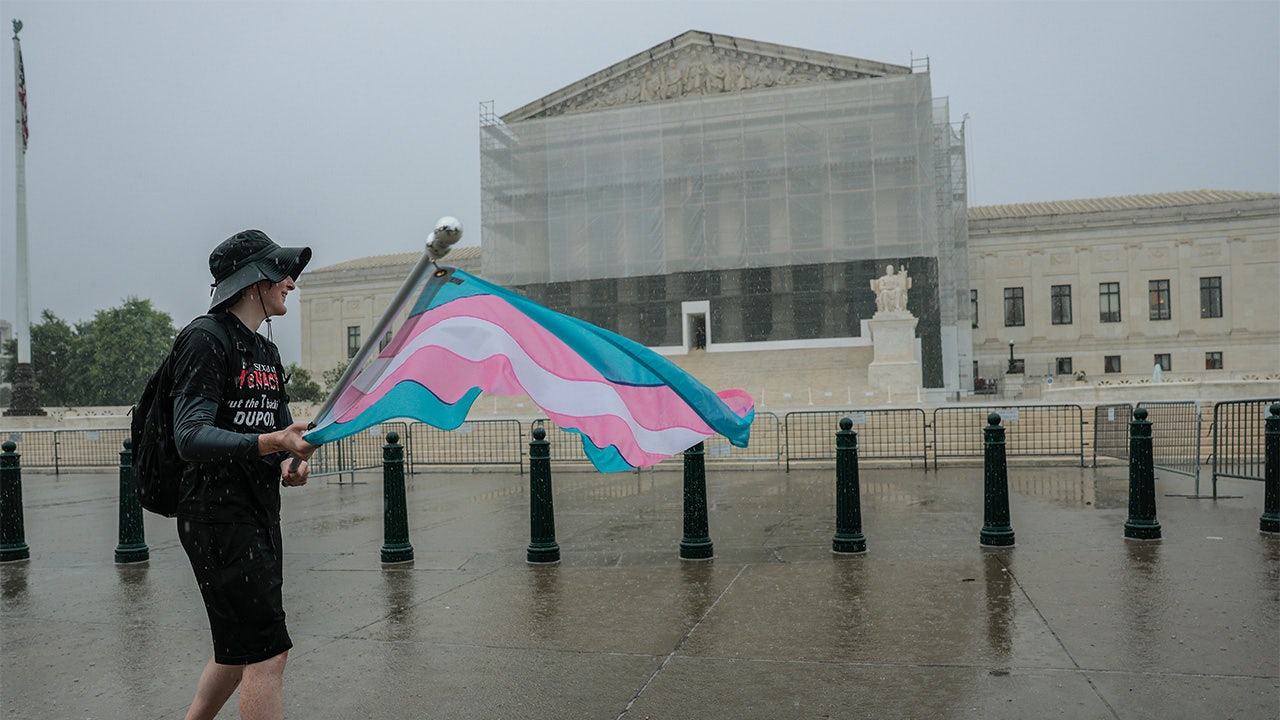
Supreme Court to Examine Transgender Athlete Participation in Women’s Sports
In a critical development for sports and gender equality, the Supreme Court has agreed to review two notable cases regarding the participation of transgender athletes in women’s and girls’ sports. These cases, Little v. Hecox and State of West Virginia v. B.P.J., will determine the legality of state laws that restrict biological males from competing on female teams.
Background of the Cases
The lawsuits have been initiated by former female college athletes who have raised concerns about the implications of allowing transgender individuals to compete in women’s sports. Former Idaho State University athlete Madison Kenyon is one of the plaintiffs in Little v. Hecox. Kenyon, whose experience includes competing against male athletes during her freshman year, expressed her frustration with the competitive disadvantage she faced.
“My coach sat us down in the room and told us that we would be competing against a male athlete… I remember sitting there and kind of like, looking around the room being like, ‘What do my teammates think about this?'” Kenyon stated.
Another significant figure in this legal battle is Lindsay Hecox, a transgender athlete at Boise State University. She sought to join the women’s cross-country team, which prompted the legal challenge. Initially, a U.S. District Court issued a preliminary injunction that blocked the enforcement of the law, citing a likelihood that the plaintiffs could demonstrate the law’s unconstitutionality. This ruling was later upheld by the 9th Circuit Court of Appeals, but the Supreme Court’s involvement is now anticipated.
West Virginia Case
In State of West Virginia v. B.P.J., a trans athlete, referred to as B.P.J., is challenging a state law that prohibits participation in girls’ sports teams. The Fourth Circuit Court of Appeals ruled in favor of the athlete, asserting that the law violated Title IX and the Equal Protection Clause. This ruling led to significant discussions surrounding the rights of transgender individuals in sports.
Lainey Armistead, a former Stetson University soccer player involved in the West Virginia case, emphasized the importance of protecting opportunities for female athletes. She articulated her motivation to support the “Save Women’s Sports Law,” highlighting the impact on scholarships and podium placements for female athletes.
“I heard about the girls and women whose scholarships and opportunities… were being taken from them,” Armistead said regarding her involvement.
Potential Implications of the Supreme Court’s Decision
The Supreme Court’s upcoming decision could establish a significant precedent regarding the ability of states to impose restrictions on transgender athletes in women’s sports. John Bursch, the attorney representing Kenyon and Armistead, plans to argue beyond just state rights, focusing on broader implications under Title IX and the equal protection clause.
“It’s clearly the right result under Title IX, under the equal protection clause and under common sense, that men and women are different,” Bursch argued.
As of now, 27 states have enacted laws banning transgender athletes from competing in girls’ sports. The current legal landscape includes a push from various factions advocating for the rights of both transgender individuals and female athletes. A ruling in favor of the states could further solidify the momentum for such legislation across the country.
No specific hearing dates have been set for the Supreme Court’s review of these cases, but initial hearings are expected in January 2025.
Conclusion
The decisions in Little v. Hecox and State of West Virginia v. B.P.J. represent pivotal moments in the ongoing debate over gender identity and sports. As legal arguments unfold, the ramifications could reshape the landscape of women’s sports and influence policies nationwide.
