


Challenging Taboo Relationships: Love Beyond Norms
Understanding Societal Norms and Love
This article examines how love can disrupt entrenched social norms, particularly regarding relationships that defy conventional expectations. From differences in disability to height variances and gender identities, we explore the unique experiences of couples navigating these challenges.
A Love Story in Melbourne
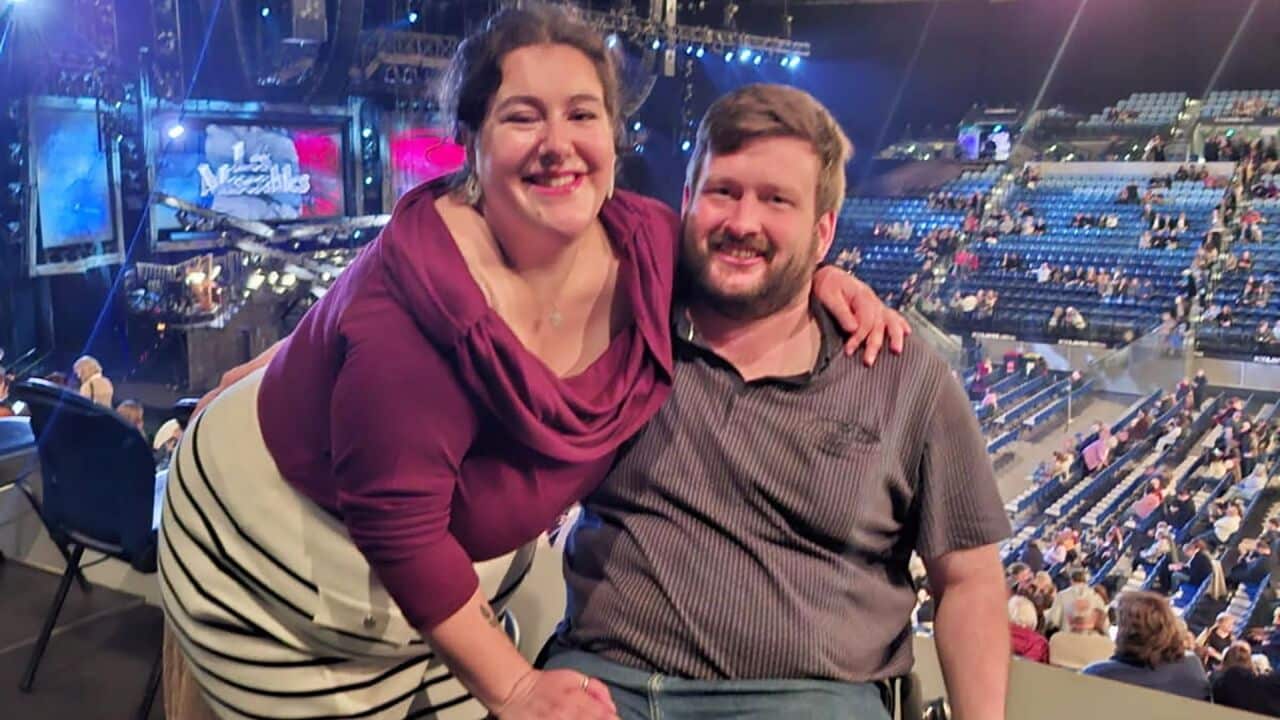
Mia Fine and her partner Will Taylor often find themselves in situations where their relationship triggers misunderstandings. Despite Mia’s own disability, she notes that many people mistakenly perceive her as Will’s caregiver or even sister.
She recalls an incident where a stranger commended her for ensuring Will had an enjoyable night out at a nightclub, reflecting societal assumptions about their dynamic. “Somehow, I was ‘worthy’ of respect for spending my night out at a nightclub with someone in a wheelchair when I just wanted to go to a Taylor Swift disco with my boyfriend,” Mia states.
Will, who uses a wheelchair, also highlights the intrusive nature of some questions, sharing that someone once asked him, “how do you have sex if your penis is disabled?”
Breaking Height Barriers
Height differences can create their own set of challenges in romantic relationships, as demonstrated by Brisbane couple Shontel and Jacob. Standing at 190 cm tall, Shontel often encounters societal discomfort regarding her 20 cm height difference with Jacob, who is 170 cm.
After a decade of friendship, Shontel’s initial hesitance regarding their height difference subsided as she recognized the importance of their connection. “It doesn’t seem like a good reason, to not allow myself to give something a go,” she reflects.
Jacob acknowledges that for some, being shorter than their partner—especially when the partner is female—can be emasculating. He emphasizes that finding the right partner is crucial for overcoming such feelings.
Navigating Trans Identities in Relationships
Haylo Roberts and his girlfriend Elyse, both trans, navigate the complexities of acceptance in different social communities. Haylo explains that they often feel unwelcome in spaces meant for the queer community, feeling judged for their perceived status as a “straight couple.”
Elyse points out the societal fixation on stereotypes surrounding trans identities, noting that conversations often fail to go beyond surface-level assumptions. “There’s no undoing the ‘taboo-ness’ of it all,” she states.
Unlearning Stigmas and Embracing Differences
Shontel has found that public judgment concerning her relationship with Jacob is not as overwhelming as she anticipated. “Him not caring about the height really made me be more comfortable with it,” she says.
Mia echoes the notion that taboo surrounding relationships involving disabilities persists, suggesting that more open dialogue is needed. “Curiosity is great. Without cool conversations, we don’t learn and we don’t grow as a society,” she concludes.
