


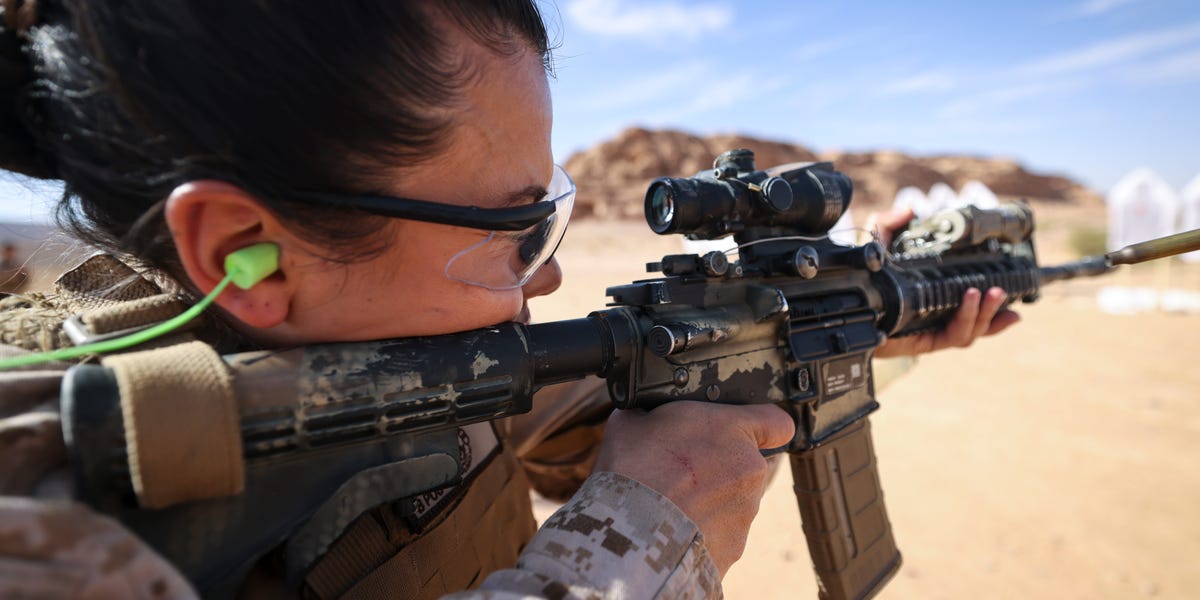
Calls for Review of Military Standards Amid Changes in Women’s Integration
On Tuesday, Defense Secretary Pete Hegseth expressed interest in re-examining the Defense Department’s criteria that have evolved since the 1990s—a period marked by limited support for women in the military. Hegseth’s statements have raised questions regarding the motivations behind changed military standards, specifically concerning physical fitness requirements that have been adjusted over time.
“The 1990s test is simple,” Hegseth stated. “What were the military standards in 1990? And if they have changed, tell me why.” This inquiry leads to deeper discussions about the necessity of these changes—whether they reflect adaptations to the evolving nature of combat or the result of an agenda perceived as prioritizing gender over merit.
It remains unclear whether Hegseth was specifically referencing physical fitness standards or a broader array of policies aimed at enhancing workplace integration for women in the military.
U.S. Army National Guard photo by Sgt. Margaret Taylor/Released
Concerns from Military Women
Hegseth’s address coincided with the recent termination of the Defense Advisory Committee on Women in the Services (DACOWITS), a long-standing Pentagon initiative valued by many for its role in advocating for women service members. Critics view this move as alarming, expressing fear that it signals a potential rollback of protections and benefits for women, despite enhancements made over recent years.
Following the committee’s shutdown, Hegseth stated that it promoted a “divisive feminist agenda” which detracted from combat readiness. This assertion has drawn sharp criticism, with many military women arguing it misrepresents the committee’s contributions and its importance in fostering an environment conducive to advancing military capabilities for all personnel.
Significance of DACOWITS
Retired Marine Corps Lt. Gen. Lori Reynolds emphasized DACOWITS’ essential role, noting it provided valuable insights to help female service members remain engaged within the military ranks. “DACOWITS served as a sort of institutional conscience,” she stated, advocating for changes that benefit not only women but the military as a whole.
Statistics show that female representation in the military is approaching 20%. As the forces grapple with recruitment and retention challenges, DACOWITS has historically been instrumental in highlighting policies related to duty assignments, family support, and other factors affecting female troops.
U.S. Marine Corps photo by Lance Cpl. Anthony Ramsey
DACOWITS’ historical contributions include advocating for women’s positions on ships and in combat roles as well as identifying obstacles that hinder female retention. The committee’s recommendations have shown to enhance military effectiveness by creating a more inclusive environment.
Potential Impact of Policy Changes
With the dismantling of DACOWITS, concerns arise regarding the future focus on military policies affecting women. Retired Navy captain Laura Hatcher stated, “During the 1990s, we saw tremendous strides in opportunities for women, aided by DACOWITS.” She expressed apprehension that eliminating such committees signifies a retreat from these hard-earned advancements.
Hegseth’s recent directives extend beyond DACOWITS; they include a review of existing definitions surrounding toxic leadership and harassment within the military framework.
U.S. Marine Corps photo by Sgt. Angela Wilcox
Supporters of DACOWITS believe its disbandment undermines decades of progress and sends a discouraging message to current service members, especially women. Reynolds articulated this sentiment, suggesting that the absence of such advisory groups may hinder considerations crucial for maintaining the health and welfare of military personnel.
The Office of the Secretary of Defense has yet to comment on the ramifications of policy revisions following DACOWITS’ dissolution.
