


Changes in Women’s Sports: New USOPC Policy on Transgender Athletes
The US Olympic & Paralympic Committee (USOPC) has recently announced a significant policy shift regarding the participation of transgender athletes in women’s events for the upcoming 2028 LA Olympic Games. According to the new eligibility criteria, only individuals assigned female at birth will be allowed to compete in women’s categories. This directive mandates that all sport-specific governing bodies align their regulations accordingly.
Policy Background and Implications
This announcement follows recent legislative moves by President Donald Trump, who, through executive orders, aimed to prevent transgender women from participating in women’s sports. One such measure directs the Department of Homeland Security to deny visa applications from individuals attempting to enter the U.S. as transgender women athletes. Furthermore, schools and colleges face the potential loss of federal funding if they allow transgender athletes to compete in women’s events. Trump’s declaration marked a significant moment, stating, “the war on women’s sports is over.”
Current Landscape of Transgender Policies in Sports
Despite this move by the USOPC, the International Olympic Committee (IOC) still lacks a consistent global policy regarding transgender participation. While the new IOC president, Kirsty Coventry, has indicated a commitment to “protect the female category,” the absence of uniform regulations continues to leave room for disparity across various sports organizations. Some organizations like World Athletics prohibit individuals who have experienced male puberty from competing, while others, such as World Triathlon, apply testosterone level limits as their criteria.
Concerns over Safety and Fairness
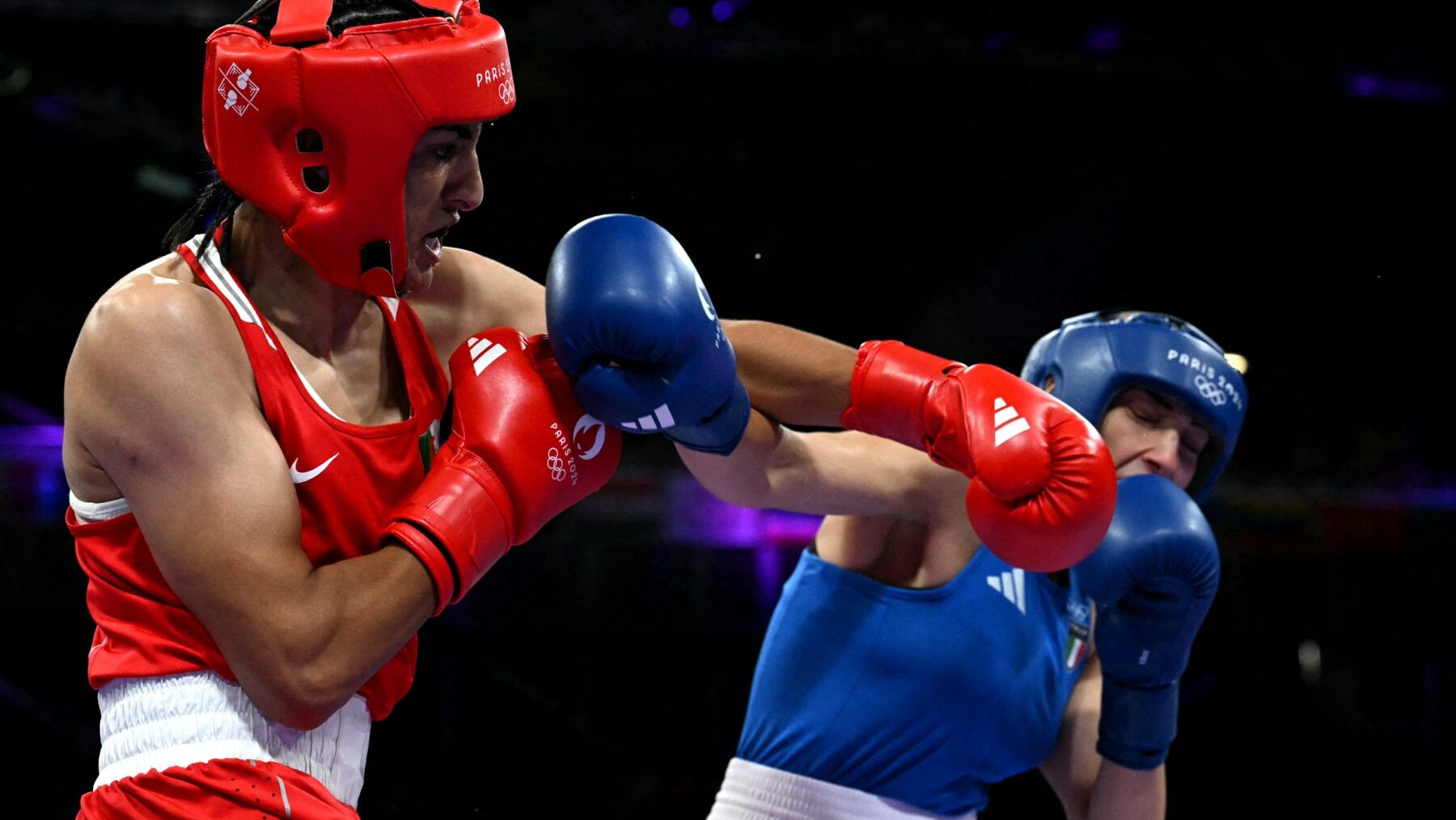
Recent events have raised alarm about the implications of allowing transgender athletes in women’s categories. For instance, at last year’s Paris Olympic Games, Algerian boxer Imane Khelif faced Italian boxer Angela Carini, leading to controversy due to questions about Khelif’s eligibility. This match ended abruptly when Khelif injured Carini, highlighting the physical dangers posed in contact sports.
- A study from the University of Utah found that men can strike with over 160% more force than women.
- Notably, Fallon Fox, the first openly transgender mixed martial artist, caused a severe injury to female opponent Tamikka Brent in 2014.
- Even in non-contact sports, risks are evident, as demonstrated by high school athlete Payton McNabb, who suffered a career-ending injury from a spike by a transgender athlete.
Impact on Women’s Sports and Opportunities
Beyond safety concerns, there is a growing narrative regarding fairness in women’s sports. Cases of transgender athletes, such as swimmer Lia Thomas and cyclist Emily Bridges, have sparked discussions about the advantages that biological men may hold over women, leading to feelings of frustration for female competitors who have dedicated significant time and effort to their sports. One notable example occurred at a women’s pool championship in the UK, where the final competitors were both men, following defeats against female athletes.
Historical Context and Disparity in Achievements
The ongoing debate raises fundamental questions about equity in athletics. The story of Laurel Hubbard, a transgender weightlifter nominated to represent New Zealand in the Tokyo 2020 Olympics, is emblematic of the concerns raised by critics. Each time a transgender athlete competes in a women’s category, opportunities for deserving female athletes can be compromised, further deepening the disparities that women have fought against for equal sports recognition.
The Road Ahead
The recent ruling by the USOPC signifies a noteworthy shift, but there remains a substantial distance before women can feel assured of fair and equitable competition. This necessitates cohesive rules across sporting federations and a commitment to their enforcement. The effective ban on transgender athletes from women’s events at the Olympic level may galvanize other governing bodies to take similar actions.
Women’s sports exist not only to acknowledge female athletes but also to provide them with a level playing field. As discussions around inclusion evolve, it is critical to address how policies can protect the integrity and opportunities within women’s sports without compromising safety or fairness. The ongoing dialogue must prioritize the rights and challenges faced by female athletes at all levels.
