


Travel Arrangements for Manchester United’s Women’s Team: A Closer Look
Sir Jim Ratcliffe, chairman of INEOS and holder of a 29% stake in Manchester United, has not shied away from expressing a lack of engagement with the women’s team. According to statements made to The Sunday Times, the focus has largely remained on the men’s squad, attributed to their substantial revenue generation compared to the women’s team.
Team Travel Overview
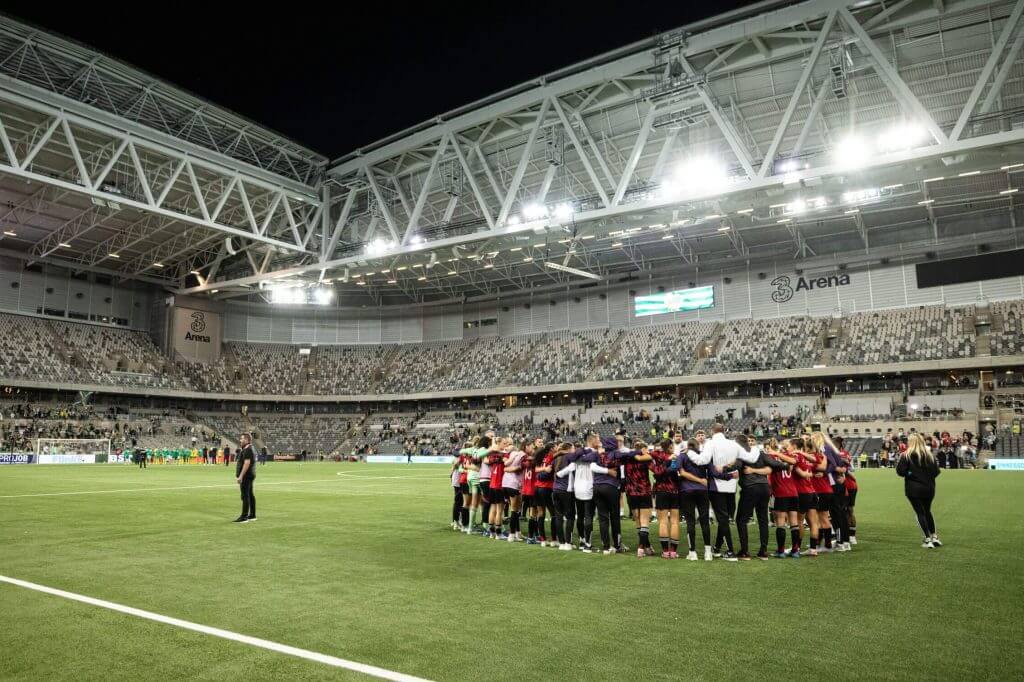
During a recent UEFA Women’s Champions League qualifying trip to Sweden, the women’s team showcased some significant differences in travel arrangements. The squad of 27 players successfully traveled to Stockholm via a chartered flight for their crucial matches, including a semi-final victory against PSV Eindhoven and a final against Hammarby, where they secured a win of 1-0.
Return Journey Details
Despite the initial chartered flight, the team’s return was not as lavish. Approximately half of the squad took a commercial flight back to Manchester, involving a one-hour stopover in Copenhagen. This decision was made in consultation with the player leadership group, citing a lack of direct flights accommodating the entire squad.
In addition, several players opted to arrange personal flights to alternative European destinations, leveraging their downtime efficiently. One player even paid for a direct flight back to Manchester. The club’s official stance clarifies that this arrangement was made in light of their upcoming Women’s Super League opener on Sunday, allowing players two days off training.
Financial Considerations
The financial landscape at Manchester United has prompted a series of cost-cutting measures, which have not spared the women’s team. Cuts have included staff redundancies, increased ticket prices, and a reduction in expenses associated with high-profile ambassadorial contracts. The rationale behind opting for a commercial flight instead of booking a chartered return is rooted in efforts to maintain fiscal sustainability.
Comparison to Other Clubs
In contrast to Manchester United’s women’s travel plans, teams like Arsenal, Chelsea, and Manchester City regularly utilize charter flights for European competitions. Such practices have become standard among successful Women’s Super League clubs. However, domestic travel usually involves more economical options like coaches or trains due to shorter distances.
Context of Women’s Soccer Travel
In the broader context of women’s soccer, disparities in travel arrangements can be noted, particularly when compared to leagues like the National Women’s Soccer League (NWSL). New regulations in the NWSL have addressed travel by charter flights, limiting them to a specific number of trips per season, reflecting ongoing discussions about equity in travel standards across women’s sports.
Club’s Commitment to Sustainability
A spokesperson for Manchester United emphasized confidence in the current conditions provided for the team and reaffirmed a commitment to performance and sustainability. “We are proud of the players for their two excellent victories in Stockholm,” they stated. Future travel plans will continue to be evaluated on a case-by-case basis, balancing performance needs with financial prudence.
The journey of Manchester United’s women’s team serves as a microcosm of the larger challenges and considerations facing women’s sports as they seek parity with their male counterparts in operations and resources.
