


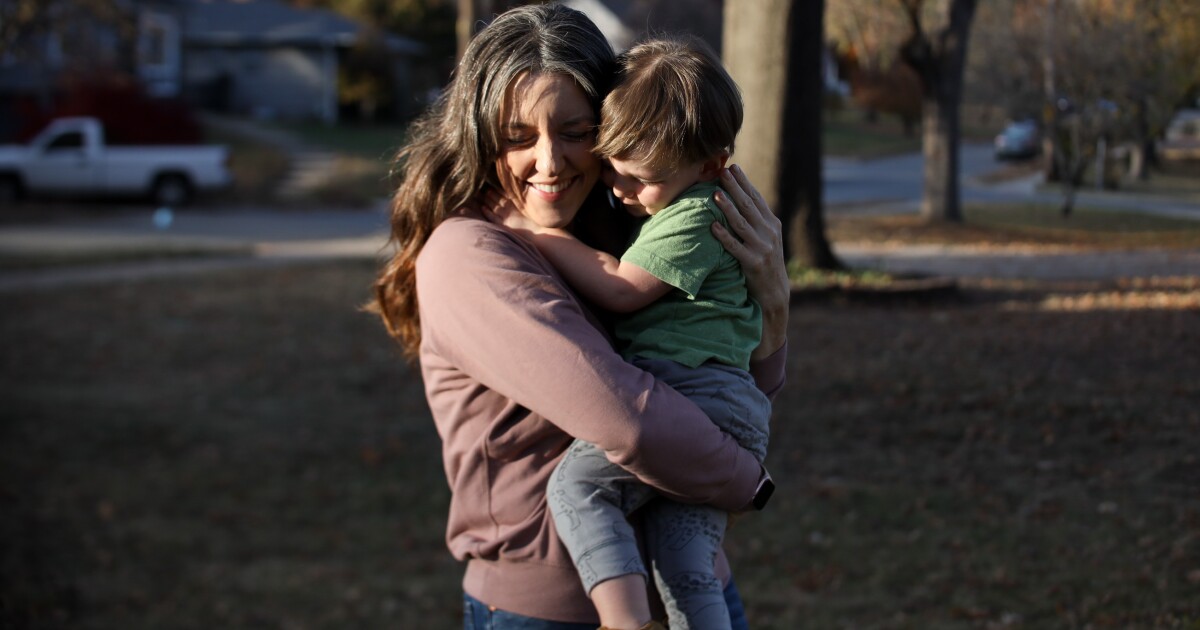
In Roeland Park, Kansas, Annie Parsons enjoys a sunny November day raking leaves in her yard alongside her 2-year-old son, River. With a toddler-sized rake in hand, River busily collects acorns as Parsons reflects on her journey to motherhood.
Parsons had always envisioned a life filled with children and a loving partner by her side. However, as she reached her late 30s without finding the right partner, her perspective shifted. “The desire to be a mom was stronger than it was to have a partner or to be a wife,” she remarked. This realization led her to pursue motherhood independently, eventually welcoming River at the age of 41 through in vitro fertilization and a sperm donor.
The Rise of Later Motherhood
Parsons’ experience is emblematic of a growing trend in the United States, where more women are giving birth later in life. According to the Centers for Disease Control and Prevention (CDC), the number of mothers in their 40s surpassing teenage birth rates is becoming more commonplace. Although Kansas still sees a relatively high rate of teenage births, there is an observable increase in the number of older mothers.
Statistics on Birth Trends
Between 2013 and 2023, the percentage of births to women aged 40-44 in Kansas increased from 1.9% to 2.6%, representing a growth of nearly 40%. Nationally, this trend is even more pronounced, with births to women in that age group rising from 2.8% to 3.8% during the same time frame.
Personal Reflections on Late Motherhood
Reflecting on her path to parenthood, Parsons expressed that the heartbreak she faced while trying to conceive only intensified her gratitude for River. She believes that her life experiences prior to motherhood have equipped her to be a more self-aware and engaged parent. “The fact that I was not a parent earlier in life really allowed me to take some of those risks and to explore my career,” she shared.
Though she faces challenges adjusting her home’s aesthetic to accommodate River’s toys, Parsons finds joy in motherhood. “I don’t feel like I missed anything in the earlier years. There’s nowhere else that I’d rather be than right here, right now, and that is a gift,” she affirmed.
Challenges and Changes
Another woman navigating late motherhood is 44-year-old Esther Reddish-Hanner from De Soto, who experienced an unexpected pregnancy after already having four children and becoming a grandmother. After facing a miscarriage, she welcomed her son, Alex, into the world in 2021. She acknowledged that the physical demands of this pregnancy were more significant than her previous ones and described a shift in her parenting style; she now approaches motherhood with more patience, calling herself a “grandma mom.”
Aimee De Vries, another older mother from Olathe, gave birth to her son, Lucas, in 2023 at age 45. With two daughters from her twenties, De Vries finds that her approach to parenting has evolved significantly. “I do find a lot more time to sit down and enjoy and take it in rather than thinking everything needs to be perfect,” she said, highlighting the enjoyment she finds in her role as a parent at this stage of life.
Expert Insights on Birth Trends
Experts attribute this shift in maternal age to several factors, including greater access to contraceptives, expanded fertility treatment options, and changing priorities around career and family life. Sarah Hayford, director of the Institute for Population Research at Ohio State University, noted that while year-to-year changes in birth rates may appear minor, they can reflect deeper trends when viewed over time. “When we see those small declines continuing to happen for five years or 10 years, then we might say something is going on,” she explained.
Obstetrician-Gynecologist Caitlin Linscheid emphasizes the importance of preconception counseling for women considering motherhood at an older age. She notes that older mothers may face a higher risk of complications such as gestational diabetes or preeclampsia and advises open communication with healthcare providers to create suitable family planning approaches.
Conclusion
As societal norms around motherhood evolve, stories from women like Parsons, Reddish-Hanner, and De Vries illustrate the complexity and richness of parenting later in life. While challenges exist, many find fulfillment in their unique parenting journeys.
Bek Shackelford-Nwanganga reports on health care disparities for the Kansas News Service. This collaboration between various Kansas media outlets focuses on health and social determinants linked to public policy.
