


The Shift in St. Louis Politics: A Closer Look at Leadership Changes
Resilience Amidst Challenges
In her concession speech, Tishaura Jones, the first Black woman to serve as mayor of St. Louis, addressed young women aspiring to lead, despite her defeat to Alderwoman Cara Spencer. “You can do anything you set your mind to and your heart to,” Jones emphasized, highlighting her commitment to inspiring future leaders from marginalized communities.
The Political Landscape: A Changing Tide
Jones’ loss reflects a concerning pattern in St. Louis politics, where several Black female leaders have vacated or lost their positions in recent years. This trend raises questions about the representation of Black women in the city’s governance, as none of their successors have been Black women.
Reflecting on her electoral defeat and the primary loss of U.S. Rep. Cori Bush, Jones called for “a reckoning” within the Democratic Party regarding its treatment of Black women leadership. “They want our votes, but they don’t want our leadership,” she stated, underscoring the need for a serious dialogue about this issue.
Assessing the Coalition Dynamics
Jones and Bush successfully built diverse coalitions in their previous elections, integrating Black and white progressive voters. However, shifts in voter sentiment and the emergence of well-funded opponents during their recent campaigns contributed to their electoral setbacks. Political analyst Mike Jones noted, “Just because you want it, doesn’t mean you own it,” emphasizing the competitive nature of politics.
Many critics argue that Black women often face harsher scrutiny compared to their white counterparts. John Bowman, a former state lawmaker, stated, “It’s just an insult that Black women cannot hold leadership positions in this region,” highlighting the pervasive challenges faced by these leaders.
Reflecting on Past Successes
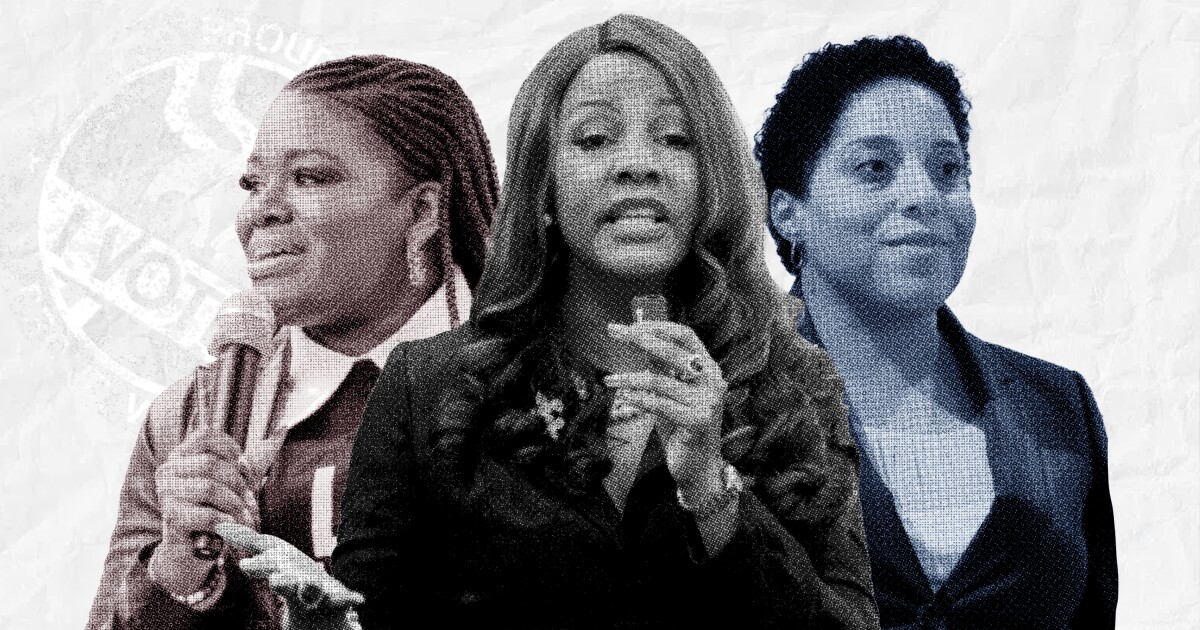
An August 2020 photograph representing a “wave of Black girl magic” featured Jones, Bush, and Kim Gardner after their electoral victories, signifying a moment of hope in the political sphere. However, the contrast to 2025 shows a stark decline in representation, with all three leaders now out of office. Darlene Green’s recent defeat removed the last African American presence from St. Louis’ influential Board of Estimate and Apportionment.
The Future of Leadership in St. Louis
Despite recent losses, there remains a belief that the progressive movement in St. Louis can survive. Alisha Sonnier, an alderwoman, remarked on the unfair expectations placed on Black leaders, affirming their determination to succeed despite societal challenges.
New mayor Cara Spencer aims to represent all constituents, emphasizing her commitment to unifying the city across racial and political lines. Key figures in St. Louis politics stress the importance of practical decision-making for the city’s functionality, rather than divisive labels.
Conclusion: A Call for Inclusive Leadership
The current political climate in St. Louis suggests a compelling need for discourse surrounding the representation and expectations of Black women in leadership roles. As the city navigates these changes, the call for unity and inclusive governance becomes paramount for shaping a brighter future.
