


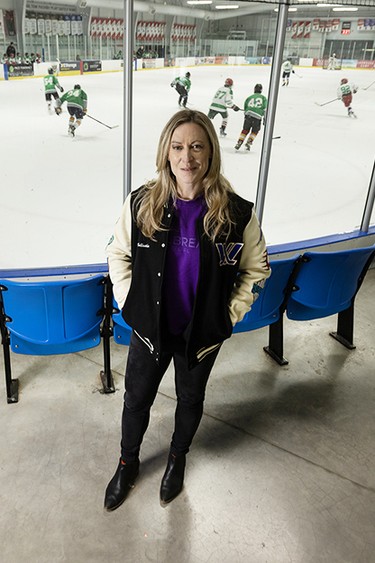
Transforming Women’s Hockey: The Impact of Jayna Hefford
As a prominent figure in women’s hockey, Jayna Hefford has transitioned from an accomplished athlete to a key executive shaping the dynamics of the Professional Women’s Hockey League (PWHL). Hefford’s influence extends beyond the rink, significantly impacting the perception of women’s roles in sports and business.
A Stellar Athletic Career
Jayna Hefford’s journey began on the ice, where she made a name for herself as one of Canada’s most prolific clutch scorers. Notably, she played a crucial role in securing Olympic gold medals for Canada, including her memorable performance at the 2002 Salt Lake City Olympics, where she scored a pivotal goal against the U.S. This marked the beginning of a remarkable career that would include a total of four Olympic gold medals and numerous accolades, including eight world championship medals.
Pioneer of Women’s Hockey Leadership
In her current role as the Executive Vice President of Hockey Operations for the PWHL, Hefford has demonstrated that her leadership extends beyond athletic prowess. Organized in 2023, the PWHL has aimed to provide a sustainable and professional environment for women’s hockey. Hefford’s vision and confidence have been instrumental in this initiative.
Moments That Matter
Reflecting on the impact of her leadership, Hefford recalls a moment in 2025 when she witnessed her daughter and her friends discussing PWHL games in a locker room. “That’s the kind of stuff that hits,” she remarked, emphasizing how her efforts in promoting women’s sports have gone beyond just hockey. Such moments inspire future generations to view women in sports differently, broadening societal perspectives on gender roles.
Challenges and Triumphs
The formation of the PWHL was not without challenges. Hefford emphasized the importance of a clear vision to establish the league and to tackle issues head-on. With extensive responsibilities ranging from governance to expansion strategies, she has cultivated a strong leadership approach that aligns with her earlier success as an athlete. Chris Burkett, who works closely with Hefford, describes her leadership style as calm and communicative, essential qualities for managing a fledgling league.
Redefining Women’s Hockey
Hefford’s leadership within the PWHL is characterized by innovative rule changes aimed at enhancing the fan experience. The introduction of the “Jailbreak” rule, which allows teams to return a player from the penalty box if they score shorthanded, exemplifies her willingness to think creatively while remaining true to the sport’s essence. Hefford is committed to evolving the game while ensuring its core remains intact, stating that any changes must genuinely enhance the overall product.
Aiming for Greater Visibility
Hefford’s pathway into administrative roles began after her playing career, where she sought to create opportunities for women in hockey. After a brief stint with the Canadian Women’s Hockey League, which disbanded in 2019, she joined forces with the PWHPA. Together, they aimed to elevate women’s hockey by establishing a fully professional league that guarantees equal treatment and opportunities for women athletes.
Future Prospects for Women’s Hockey
The PWHL stands at a pivotal moment as it continues to grow, with plans to expand further in the coming seasons. Despite early struggles, attendance is promising, and more cities are expressing interest in hosting teams. As Hefford and her team work to solidify the league’s infrastructure, she remains focused on building a legacy that embodies empowerment and excellence in women’s sports.
Conclusion: A Lasting Legacy
Hefford’s transition from a celebrated athlete to a transformative leader in women’s hockey illustrates her profound impact on the sport. Beyond her impressive medal collection, her greatest achievements may be defining and forging new avenues for the next generations of female athletes. The PWHL is not just a league—it’s a movement for equality in sports, and at the forefront is Jayna Hefford, a pioneer reshaping the landscape of women’s hockey.
