


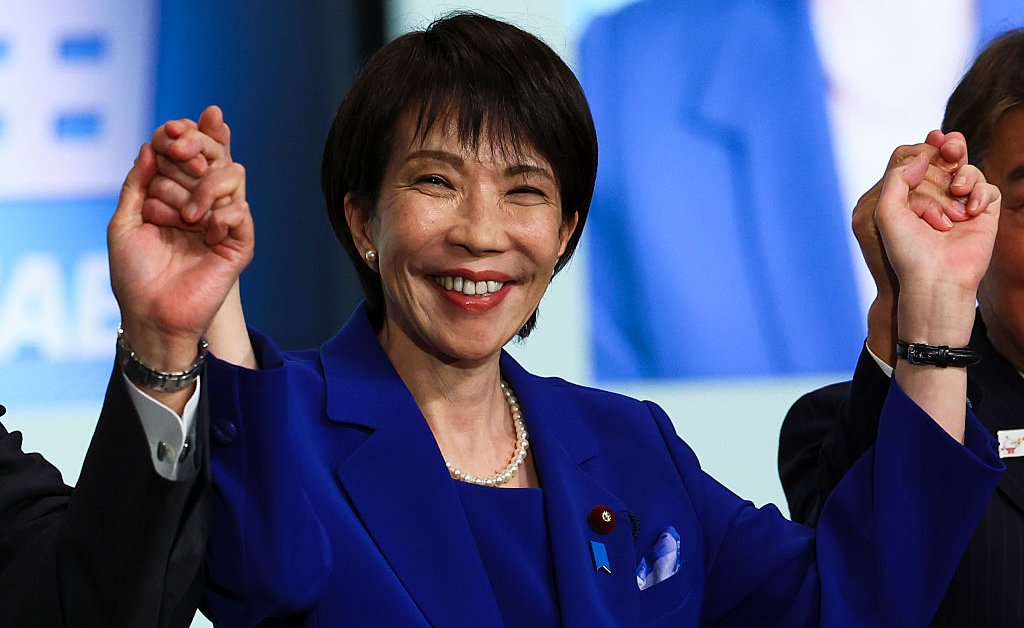
Sanae Takaichi Becomes Japan’s First Female Prime Minister
In a historic move for Japan, Sanae Takaichi has been elected as the leader of the ruling Liberal Democratic Party (LDP), effectively positioning her to become the nation’s first woman to hold the office of Prime Minister.
The Election Details
During the recent vote on Saturday, Takaichi, aged 64, garnered 185 out of 341 votes from LDP members and parliamentarians. This leadership contest echoed last year’s, which she initially led but eventually lost to Shigeru Ishiba.
The final round of voting was a tight race between Takaichi and Shinjiro Koizumi, who, at 44, was poised to be the youngest Prime Minister in Japanese history.
Challenges Ahead
Takaichi acknowledged the challenges that await her, stating, “Instead of just celebrating, I know the real challenge starts now. I believe there is a mountain of work ahead and we must tackle it together with everyone’s support.”
She is set to replace Ishiba, who resigned following two election defeats, resulting in the LDP losing its majority in both parliamentary chambers for the first time since 1955.
A Shift in Gender Representation
Takaichi’s election marks a pivotal change in Japan’s traditionally male-dominated political landscape. According to the World Economic Forum’s 2025 Global Gender Gap Report, Japan ranks 118th among 148 economies in terms of political empowerment, the lowest in the G-7.
However, experts caution that her elevation does not guarantee significant advancements for women’s rights. A noted relationship with conservative values raises questions about her commitment to gender issues. Jeff Kingston, a professor of Asian studies at Temple University, remarked, “She doesn’t have a very positive track record on gender issues, on family-friendly policies, women’s empowerment.”
Who is Sanae Takaichi?
Takaichi hails from Nara Prefecture and has a background in business, earning her degree from Kobe University in 1984. After a stint as a television presenter, she entered politics in 1993 and has since been reelected nine times.
Throughout her career, Takaichi has developed a strong affiliation with former Prime Minister Shinzo Abe, serving in multiple ministerial roles during his administrations. Her approach to women’s issues, positioned traditionally, has drawn criticism over the years.
Gender Agenda and Future Aspirations
Although Takaichi has vowed to enhance female representation in her cabinet and within the LDP’s executive committee, skepticism remains. Takeda from Nagoya University noted that Takaichi’s recent campaign has indicated a shift towards highlighting her gender as part of her appeal.
Despite her renewed emphasis on women’s representation, critics point to her history of opposing progressive reforms, such as the dual-surname law, which would allow married couples to keep their surnames. She has also staunchly defended the traditional male-only line of succession for the imperial throne.
Nevertheless, her campaign has hinted at some openness to modern policies, with proposals for tax incentives aimed at supporting working families, signaling a potential shift in her stance.
The Road Ahead
While Takaichi’s election is a historic landmark for female leadership in Japan, the implications of her conservative policies suggest continuity in the LDP’s approach to traditional social values. Experts like Takeda and Kingston are cautious, recognizing that despite symbolic progress, the underlying ideology may remain unwaveringly conservative.
