


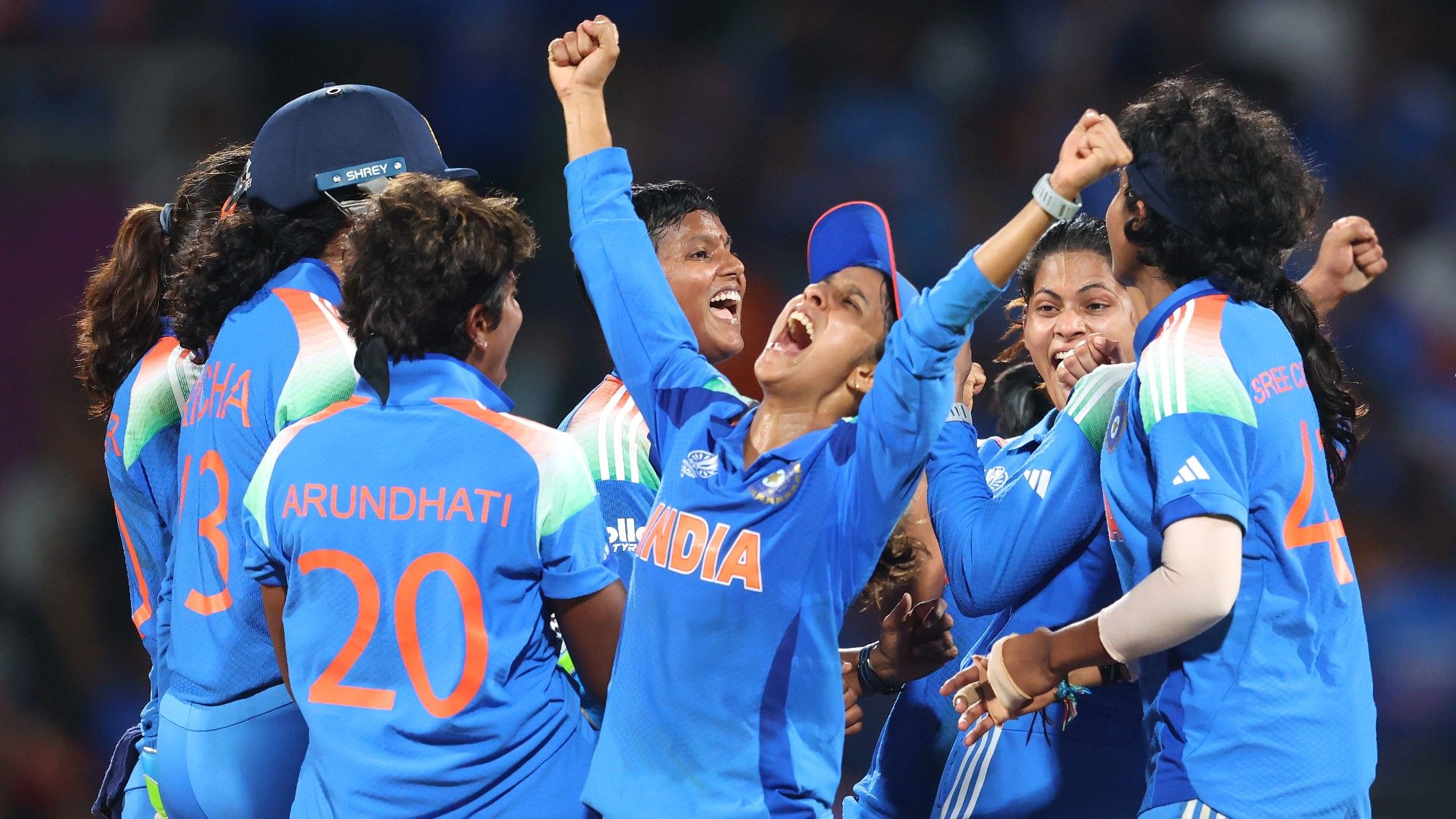
India has achieved a historic milestone by winning the Women’s World Cup for the first time, significantly altering the landscape of women’s cricket worldwide. In a thrilling final held in Navi Mumbai, Harmanpreet Kaur’s team triumphed over South Africa, clinching victory by 52 runs before an enthusiastic crowd of 45,000 spectators. This win marks the end of Australia’s decade of dominance in women’s cricket, as noted by The Hindustan Times, which emphasized the long-lasting impact of this victory on the sport.
The significance of India’s victory extends beyond the match itself. Sonia Twigg from The Telegraph remarked that this accomplishment serves as a “wake-up call” for the international community and may herald a transformative era for women’s cricket. This is the first time since 2000 that a nation other than Australia or England has won the Women’s World Cup, suggesting the potential for a more competitive environment as India prioritizes funding and support for its women cricketers.
New Heights of Recognition
According to P.K. Ajith Kumar in The Hindu, India’s women cricketers are now stepping into a “brave new world” of recognition and fame. Key players like Smriti Mandhana, Deepti Sharma, and Shafali Verma have quickly risen to “new levels of stardom,” capturing the attention of the public and media alike.
Shafali Verma, who was awarded Player of the Match, has an inspiring journey that includes overcoming substantial obstacles. Growing up in the conservative state of Haryana, she initially disguised her identity to join boys’ teams. Her natural talent led her to debut internationally at just 15 years old. Remarkably, her scores in the final showcased her resilience; she scored 87 runs off 78 balls and made history as the youngest player to score a half-century in a Women’s World Cup final.
In contrast, the last Women’s World Cup hosted by India in 2013 received minimal attention. At that time, the national team faced significant challenges, including poor accommodations and insufficient support during preparations, highlighting a stark shift in public and institutional interest in women’s cricket over the last decade.
Growing Institutional Support
The restructuring and increased administrative support behind the Indian women’s cricket team have also played a crucial role in its recent successes. Amar Sunil Panicker of India Today described the win as a “vindication” of policies that emphasize gender equity in sports. Innovations such as the Board of Control for Cricket in India’s decision for pay parity between male and female players signal a commitment to supporting women’s cricket at all levels.
Global investment in women’s cricket is also on the rise, with Australia’s Big Bash League significantly increasing team salaries in 2023. The UK’s Hundred competition has followed suit, announcing a substantial salary increase for its women’s teams for the upcoming seasons, although these figures still fall short compared to their male counterparts.
This victory serves as a launchpad for the future of women’s cricket in India and around the world, igniting hope for greater equality and recognition in sports. As these dynamics evolve, India’s success in the Women’s World Cup is a pivotal moment that may well reshape the global cricket landscape.
