


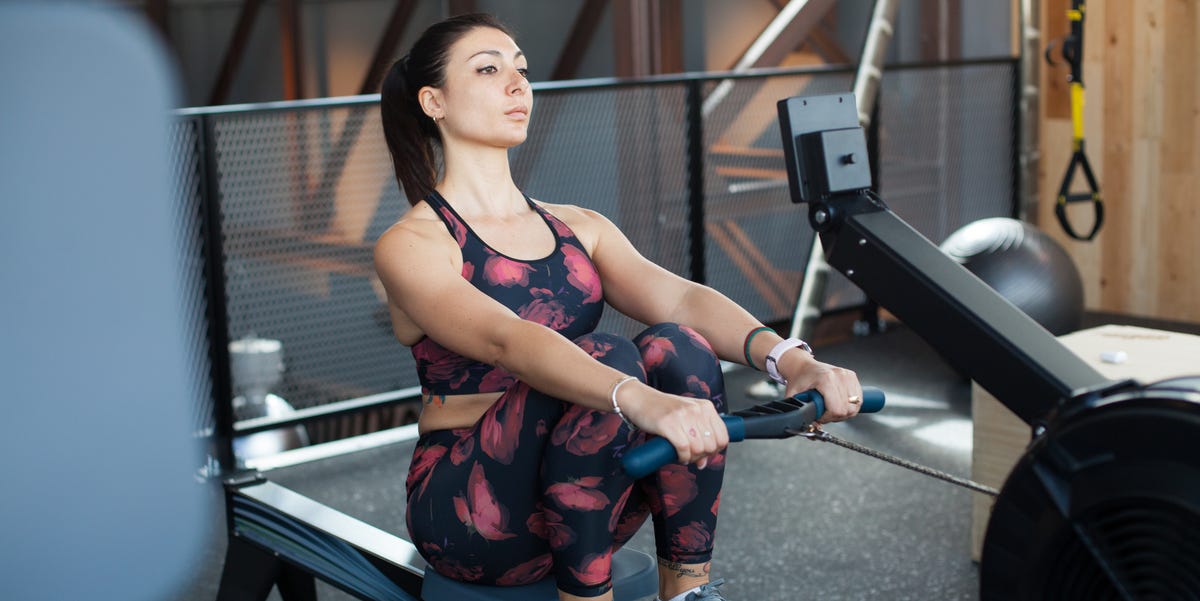
Benchmark 500m Rowing Times for Women and Tips for Improvement
The 500-meter rowing distance, while not an official competitive standard, serves as a widely recognized metric in indoor rowing. This short yet intense distance is often regarded as a rigorous test of an athlete’s power and pacing. According to Marcus Prestegard, a personal trainer and Strength and Conditioning BSc undergraduate at Dabbs Fitness, “The 500m row is short, intense, and brutally effective: a true test of power and pacing.” He also notes that unlike longer distances, rowers can afford to begin strongly in a 500m row.
Understanding Your Performance
While it’s helpful to know how your performance measures up, individual factors such as fitness level, nutrition, sleep, and overall health can significantly influence your rowing times. The average benchmarks provided below should be used as rough guidelines rather than absolute standards for performance.
Average 500m Rowing Times for Women of All Ages
According to Rowing Level, the average time for women across all ages is approximately 1:58, with elite athletes reaching as fast as 1:24.
Ages 20-25
A beginner should target a time of about 2:25, while intermediate rowers typically aim for around 1:58.
Ages 30-35
Beginners in this age group can expect times between 2:27 and 2:28, while intermediate athletes should aim for 2:00 to 2:01.
Ages 40-45
New rowers generally finish in 2:26 to 2:28, with intermediate rowers aiming for 1:59 to 2:00.
Ages 50-55
For beginners, the expected range is 2:36 to 2:41, while intermediate rowers should aim for 2:07 to 2:11.
Ages 60-65
In this group, beginners are looking at an average of 2:49 to 2:59, while intermediate rowers can achieve times of 2:17 to 2:26.
Ages 70-75
Beginner rowers may finish in the range of 3:10 to 3:19, with a respectable intermediate time between 2:35 and 2:42.
Improving Your 500m Rowing Time
Marcus Prestegard offers several strategies for optimizing performance in the 500m row. His key tips include:
- Start off aggressively to build speed in the initial phase.
- Maintain a steady rhythm throughout the mid-section of the row.
- Intensify your effort for the final 100m of the distance.
- Focus on quality strokes rather than quantity, aiming for 28-32 strokes per minute.
- Utilize a full-body drive, engaging your legs, core, and arms in a synchronized manner.
Bella Poppy, head trainer at F45 Oxford Circus, emphasizes pacing strategy: “You want to start off just below your target pace for that first 125m to make sure it feels comfortable.” She advises gradually ramping up your effort in the middle stages and pushing harder in the last 100m to finish strong.
Proper Rowing Form
Mastering the correct rowing form is crucial for both performance and injury prevention. Key components of a successful rowing stroke include:
Drive Phase
Begin by gripping the handle firmly and pushing off from the foot pedals. As your legs extend, maintain an upright torso and pull the handle towards your body until it reaches your sports bra level, keeping your wrists aligned with your forearms.
Recovery Phase
In the recovery phase, reverse the drive mechanics by extending your arms and moving the handle away from your body. Maintain straight legs and lean forward at your hips. Once your hands are beyond your knees, bend your knees and slide forward to initiate the next stroke efficiently.
