


The Ongoing Debate on Transgender Athletes and Women’s Sports
Current Political Landscape
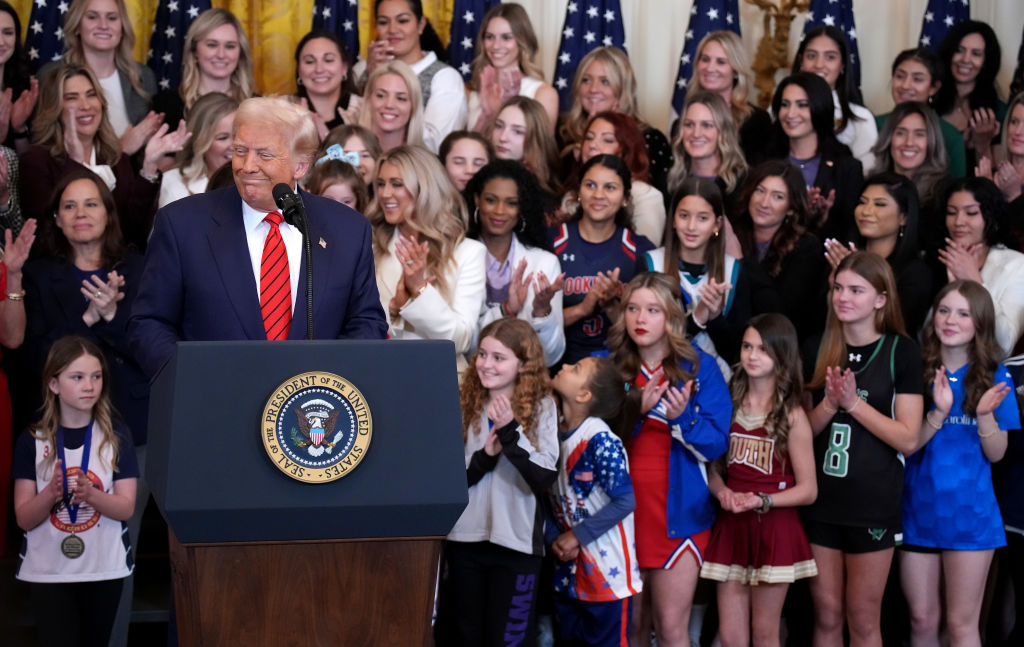
In recent discussions, President Trump and various Republican leaders have intensified calls for an end to the participation of male athletes identifying as transgender in women’s sports. This movement gains traction amid rising public sentiment favoring the protection of women’s athletic opportunities.
The Argument at Hand
Critics of transgender inclusion in women’s sports often encounter a familiar retort: “How does this impact you personally?” This line has been a strategic rhetorical device employed across various liberal policies, from abortion rights to immigration reform. The underlying aim is to insulate these policies from critiques by asserting a need for personal relevance in public opinion.
Shifting Public Opinion
However, recent polling indicates a substantial shift in sentiment. A Pew Research survey from 2025 revealed that approximately 66% of Americans support policies requiring athletes to compete based on biological sex. Only 15% opposed such measures, suggesting a broader consensus against the inclusion of transgender women in female sports.
State Responses and Legal Challenges
Notably, states like Minnesota and California have taken differing stances on this issue. In Minnesota, Attorney General Keith Ellison has pursued legal action to maintain the inclusion of transgender individuals in women’s sports. This has sparked controversy, especially highlighted by a recent lawsuit from three female softball players against the state.
The situation surrounding “Marissa” Rothenberger, a transgender athlete who dominated the girls’ softball championships, illustrates the ongoing challenges. Rothenberger’s performance raised questions regarding fairness, as the athlete’s physical advantages have been noted as significant compared to female competitors.
California’s Recent Developments
Simultaneously, California has drawn attention with its legislative approach. Under AB 1266, athletes are allowed to compete based on gender identity, a policy that has led to the participation of male athletes in girls’ competitions. Governor Gavin Newsom’s administration has responded to criticisms by enacting rules that facilitate medal distribution for female athletes who feel disadvantaged.
This approach has led to mixed responses, with some claiming it serves to dilute the arguments against transgender participation while critics argue it fails to address inherent inequalities in competition.
Concerns and Future Implications
Concerns about the long-term consequences of current policies are mounting. Critics argue that the physiological advantages of male athletes competing in women’s categories can lead to unfair competition, as evidenced by recent statements regarding the performance metrics of male athletes compared to their female counterparts.
A report by the United Nations noted that elite female athletes have lost numerous medals to transgender competitors, raising awareness of the impact on women’s sports on a global scale.
Personal Perspectives
As the debate continues, personal stories add weight to the discussions. Parents of young female athletes express concerns about the implications of current policies. One such individual raised the point of safety and fairness for their daughters who are actively engaged in sports, emphasizing that protection against inequitable competition should be a priority for all states.
