


This article is part of The Athletic’s series observing UK Black History Month. To explore the entire collection, click here.
Celebrating Unique Hair Journeys: Black Female Footballers in the UK
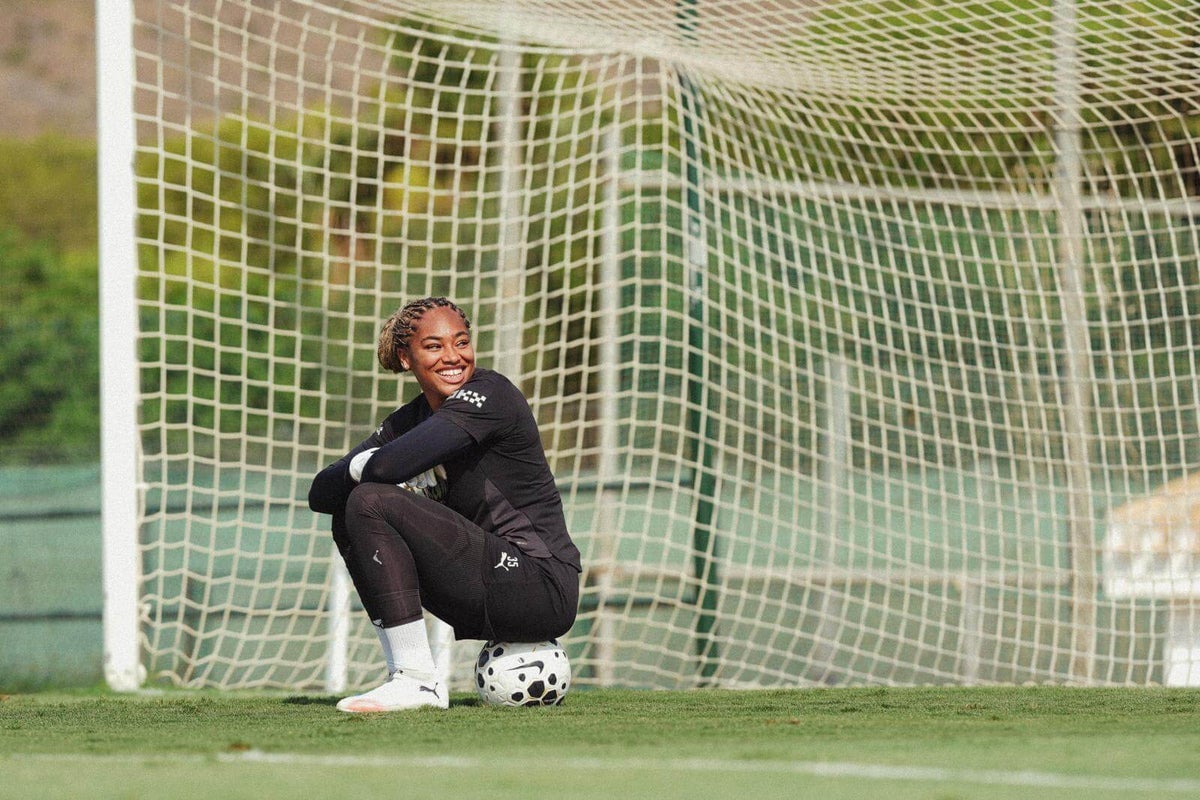
In July 2024, during a national team camp in the Netherlands, goalkeeper Khiara Keating found herself in an unexpected predicament unrelated to her performance on the field. The 21-year-old had run out of her essential styling product, Gummy Wax, crucial for maintaining her trademark bun throughout the game.
A Trailblazing Journey
As a player for Manchester City and the first Black goalkeeper to represent the England Lionesses, Keating has made history. She shares that positioning her bun at the top of her head allows her to occupy more space in the goal effectively, underscoring the significance of hair rituals in the competitive atmosphere of elite sports, where routine is vital.
The Barbershop Expedition
With no Gummy Wax in sight, fellow teammate Jessica Naz, a forward for Tottenham, recalled Keating expressing her distress: “Oh my God. I have none left. How the hell am I gonna slick my bun?” This led them on a quest to find a shop selling hair products in an area that Naz humorously described as “the most dodgy.”
The Cultural Significance of Hair in Women’s Football
For many Black female footballers, managing hair goes beyond typical ponytails or simple styles; it is intertwined with cultural identity. Players like Keating and Naz, alongside others such as Bunny Shaw and Lauren James, embrace their rich heritage through diverse hairstyles—whether it be box braids, cornrows, or sleek buns. They transform the notion of looking good into a powerful expression of self-confidence on and off the pitch.
Diversity in Numbers—or Lack Thereof
Despite their significant impact, the actual number of Black players in the Women’s Super League remains ambiguous, with league officials unable to confirm the exact figures. Observationally, Black and ethnic minority players constitute a minority at both club and national levels, reflecting wider issues within the sport. For instance, of the 28 players at a July 2024 training camp, only four identified as Black.
Personal Hair Stories: Keating and Naz
Khiara Keating’s experiences with her hair reveal the complexities many multi-ethnic individuals face regarding grooming. “My mum’s white, so she didn’t really understand… our hair used to knot way easier than her hair used to knot,” she explained, reflecting on early difficulties when her mother attempted to manage her and her sisters’ hair. The family eventually turned to YouTube tutorials to embrace their natural texture.
Similarly, Jessica Naz’s hair journey began with her mother plaiting cornrows, a practical style for young children. “As you grow older, you start experimenting with colors and beads,” she noted, highlighting the transition from basic neatness to more expressive styling.
The Search for Aesthetics and Identity
Both players expressed the joy in exploring new styles, using social media platforms like Pinterest for inspiration. Keating often exchanges hairstyle ideas with teammates and friends, creating a collaborative space for creativity within the team environment. Over time, as they have gained professional autonomy over their hairstyles, they have embraced the opportunity to hire stylists and attend dedicated beauty appointments.
Challenges in Professional Settings
However, scheduling these beauty routines often presents challenges. Complex techniques such as braids or extensions may require long hours and extensive travel—Keating noted that her recent hair appointment necessitated a lengthy trip to London. Naz echoed similar sentiments about juggling football commitments and beauty appointments, demonstrating the continual balancing act inherent in professional sports.
Understanding the Cultural Context
Black hair carries historical significance, rooted in rich cultural traditions that often differ from mainstream styles. This has resulted in varying degrees of understanding and acceptance from teammates who may have limited exposure to such practices. For instance, Keating humorously recounted a teammate’s surprised expression upon seeing her hair down for the first time.
Progress and Representation
In a changing landscape, players highlight a gradual shift towards greater cultural acceptance within football. Naz remarked on the increasing visibility of Black hairstyles in her team’s locker room, noting that practices such as using edge control brushes have become mainstream. “Everyone in the changing rooms is using edge control brushes,” she stated, demonstrating a broader cultural embrace of diverse aesthetics.
As the representation of Black players evolves within the Women’s Super League and beyond, the pride associated with their hair journeys speaks to their resilience and individuality in a historically underrepresented space.
