


Controversy Surrounding Gender Identity in Sports Gains Attention in Minnesota
Growing Discontent Among Democrats
In recent weeks, the topic of allowing transgender athletes to compete in women’s sports has sparked significant debate, even among traditional Democratic supporters. Discontent is rising as biological males participate in female athletics.
A notable example unfolded in Minnesota when a trans-identifying male athlete, Marissa Rothenberger, contributed to the Champlin Park High School’s championship win in high school girls’ softball, reigniting public scrutiny.
Public Reactions and Protests
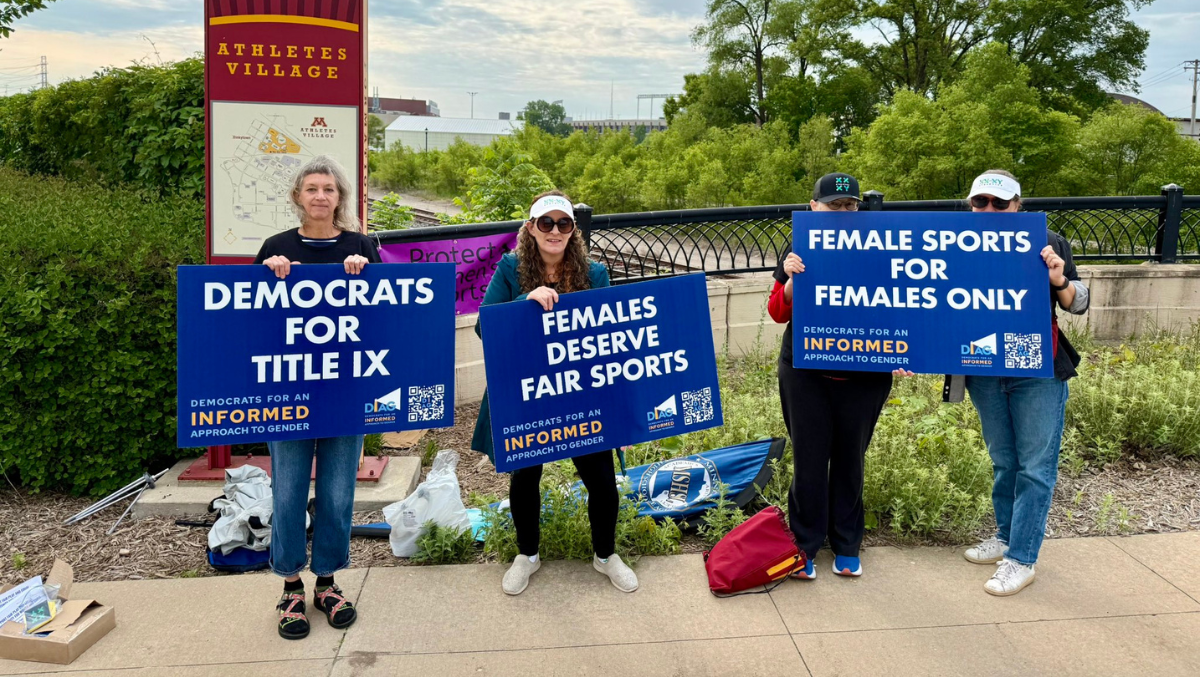
As the Champlin Park Rebels secured the Class AAAA state title, a small group of protesters gathered outside Jane Sage Cowles Stadium. They displayed signs advocating for women’s rights in sports, stating slogans like “Females deserve fair sports” and “Democrats for Title IX.”
Among the protestors was Elizabeth from Women’s Declaration International, who expressed her concerns:
“I came out today to stand up to protect women and girls in sports.”
She noted that many females in Minnesota feel their competitive opportunities are compromised due to these policies.
Minnesota’s Legislative Framework
The Minnesota State High School League (MSHSL) permits athletes to compete based on gender identity, regardless of their biological sex. Minnesota laws also facilitate the alteration of sex markers on birth certificates with minimal requirements, further enabling this inclusivity.
While the state leadership, including Governor Tim Walz and Representative Leigh Finke, advocates for this policy, dissent among constituents is growing, as many remain unaware of the implications these decisions have on female athletes.
Shifting Perspectives Among Voters
Recent surveys highlight a shift in public opinion. A 2023 Gallup poll indicated that nearly 70% of Americans, including two-thirds of Gen Z voters, oppose allowing trans-identifying males in girls’ sports. This figure has since climbed to 75% in subsequent polls.
Even among Democrats, support for these policies is faltering as parents become increasingly concerned about fairness and opportunities in competitive sports.
The Financial Aspect
According to protestor Elizabeth, financial motivations may be influencing this political stance. She suggests that the trans advocacy movement is closely linked to significant funds from the medical and pharmaceutical industries, leading to a push for policies that might not align with the electorate’s views.
This view resonates with ongoing discussions surrounding studies funded by major corporations, aimed at exploring medical transitions in young athletes, despite the potential risks involved.
Legal Developments and Federal Oversight
In the wake of these events, the Trump Administration initiated an investigation into Minnesota’s policies regarding compliance with Title IX. The administration has emphasized that state leagues must adhere to federal regulations regarding sex-based rights in sports.
In response, Minnesota’s Attorney General Keith Ellison has filed a lawsuit against the Trump administration, defending the state’s approach as a protection of vulnerable individuals.
Conclusion
The situation in Minnesota serves as a focal point for ongoing national discussions about gender identity in sports. As political ideologies clash, the voices calling for balanced discourse on fairness and safety in athletics are becoming increasingly prominent.
As one observer remarked at the championship game, “You’re looking at a whole team of future Republicans,” highlighting the potential implications for political landscapes as public sentiment continues to evolve.
