


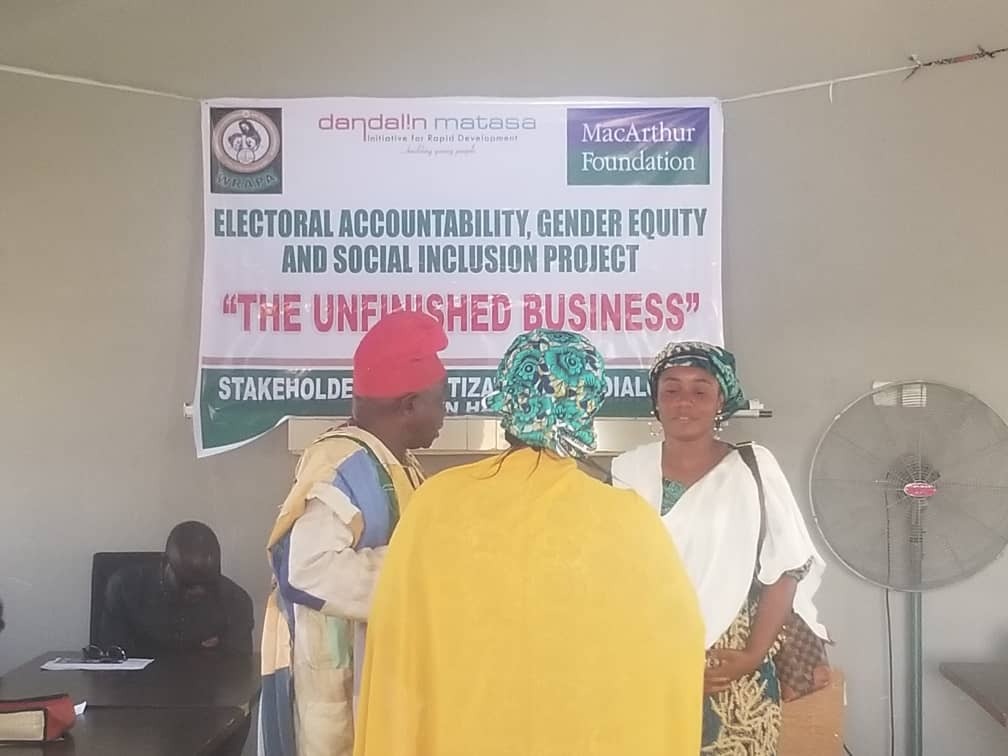
Advancing Gender Equity and Social Inclusion in Gombe State Politics
Efforts to enhance gender equity and social inclusion in political governance are gaining momentum in Gombe State. Various stakeholders have pledged to actively mobilize women and persons with disabilities to engage in the political processes ahead of the upcoming elections.
Stakeholders’ Meeting Overview
This commitment was articulated during a town hall meeting organized by the Women Advocates for Peace and Development (WRAPA), in collaboration with the Dandalin Matasa Initiative for Rapid Development. The event took place at the State Hotel Kaltungo, under the Gender Equity, Social Inclusion and Accountability Project supported by the MacArthur Foundation.
Themed “The Unfinished Business,” the meeting attracted approximately 45 grassroots stakeholders, including community leaders, youth groups, and organizations dedicated to civil society advocacy.
Key Highlights from the Meeting
Bachama Yusuf, Executive Director of the Dandalin Matasa Initiative, emphasized the importance of women and persons with disabilities in political decision-making. He pointed out the existing challenges within Nigeria’s electoral reforms and underscored the necessity to implement the ‘Justice Uwais Report’ to reinforce democratic principles.
“Stakeholders must demand accountability for gender equity and social inclusion in governance,” Yusuf stated.
Voices from the Participants
Zainab Abdulrasheed, Programme Officer from the WRAPA national secretariat, applauded participants for their commitment to improving governance through the active involvement of marginalized groups. Similarly, WRAPA State Coordinator, Anita Dogo, expressed grave concerns regarding the underrepresentation of women in Gombe’s political landscape, noting the lack of female members in the State House of Assembly and the limited presence of women and persons with disabilities in local councils.
A Call to Action
The stakeholders concluded the meeting with a resolve to significantly enhance inclusive governance and gender equity in the upcoming 2027 elections. Their strategy includes mobilizing women and persons with disabilities to register with political parties in large numbers.
