


Growth and Dynamics of the Global Women’s Health Market
Market Overview
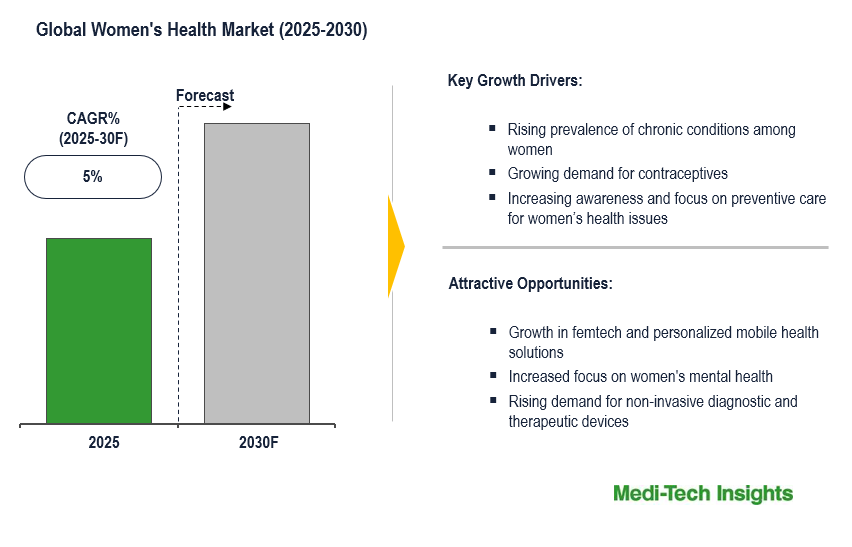
The Global Women’s Health Market is poised to grow at an annual rate of 4-5% over the next five years. This growth is driven by an increasing prevalence of various women-specific health conditions, including anaemia, endometriosis, osteoporosis, breast cancer, and menopause-related issues. Additionally, government initiatives aimed at controlling population growth and an escalating desire for contraceptives are significant contributing factors.
Key Trends Influencing Market Growth
Approximately 50% of the global population consists of women, who make about 80% of healthcare purchasing decisions. Women’s health is a specialized field focusing on diseases that specifically impact women’s health, necessitating tailored treatment and preventative strategies.
Emerging Healthcare Innovations
Advancements in medical science are setting the stage for transformative changes in women’s health. Key areas of research include:
- Genomics: Personalized medicine is becoming increasingly viable via research into unique DNA profiles.
- Artificial Intelligence: AI applications are being developed for predictive analytics in women’s health diagnoses and treatments.
- Tissue Engineering: Innovations such as the creation of uterine organoids offer novel solutions for conditions like endometriosis.
- Transcriptomics: This research is being applied to tackle complex issues like preeclampsia and preterm birth.
An executive from a Women’s Health Company in the U.S. emphasized, “Women’s health is not a niche market; it includes much more than just maternal or reproductive care,” highlighting the broader implications for societal well-being.
Growing Incidence of Special Conditions
Women-centric diseases are on the rise, exemplified by approximately 2.3 million new cases of breast cancer globally in 2022 alone. This increase fuels demand for specialized medical services and innovative diagnostic technologies. The urgent need for targeted treatments for conditions like osteoporosis and endometriosis further expands market opportunities.
Awareness campaigns and initiatives aimed at early diagnosis are also driving more women to seek medical assistance, thereby boosting market growth.
Product Segmentation Analysis
The women’s health market consists of various product categories:
- Common products include ACTONEL, YAZ, FORTEO, Mirena, and others.
- The Prolia segment is projected to emerge as a leader, particularly for its role in preventing osteoporosis in postmenopausal women.
- The Minastrin 24 Fe segment is expected to grow significantly, offering combined benefits for birth control and managing iron deficiency.
Application-Based Market Insights
The market segments can also be categorized by applications, such as:
- Hormonal infertility
- Contraceptives
- Postmenopausal osteoporosis
- Endometriosis and uterine fibroids
- Polycystic ovary syndrome (PCOS)
Contraceptives represent the largest market segment while postmenopausal osteoporosis is the fastest-growing area due to rising incidences and increasing awareness.
Strategic Initiatives in the Market
Companies in the women’s health sector are leveraging various growth strategies, such as:
- Product launches and regulatory approvals, like Bayer Healthcare’s extended approval for Mirena.
- Teva Pharmaceuticals’ introduction of a generic version of Forteo enhances accessibility to vital treatments.
- Sandoz’s recent approvals for its interchangeable biosimilars reflect a commitment to broaden treatment options.
Competitive Landscape
The women’s health market features key players including AbbVie Inc., Pfizer Inc., Merck & Co., and others. These organizations are increasingly focused on R&D initiatives to strengthen their market position.
Future Outlook
With a growing focus on women’s health, driven by technological advancements and societal awareness campaigns, the market is set for significant growth. Ongoing investments in research and improved healthcare policies will likely contribute to the evolution of the women’s health market.
