


Global Leaders Unite in Beijing to Advance Women’s Empowerment
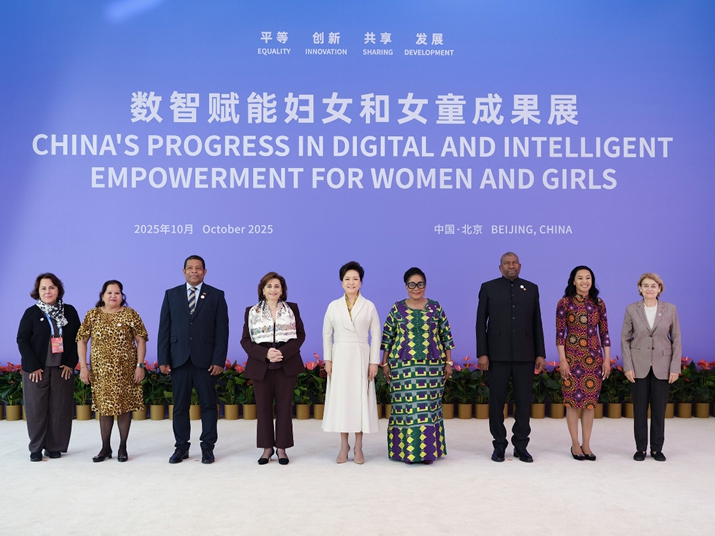
Peng Liyuan, the First Lady of China and a UNESCO special envoy, highlighted the importance of women’s education during an exhibition focused on digital and intelligent empowerment for women and girls in Beijing on October 14. This event coincided with the Global Leaders’ Meeting on Women, held from October 13-14.
A Milestone in Gender Equality
Three decades ago, the Fourth World Conference on Women took place in Beijing, marking a significant turning point in the global movement for gender equality. The Beijing Declaration and Platform for Action, adopted unanimously by 189 countries, serves as a foundational policy document promoting women’s empowerment. This comprehensive framework addresses 12 critical areas of concern, including poverty alleviation, education, health, and violence against women.
Global Leaders’ Meeting: Commitment to Progress
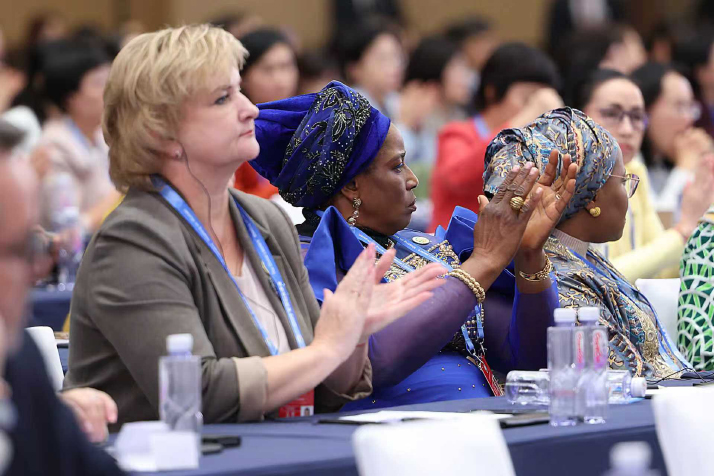
The recent Global Leaders’ Meeting saw participation from over 800 influential figures, including heads of state and international dignitaries. The conference aimed to articulate a shared path forward for women’s holistic development, under the theme of “One Shared Future: New and Accelerated Process for Women’s All-Round Development.”
In his opening address, President Xi Jinping stated, “Women play an important role in creating, promoting and carrying forward human civilization. And the international community has a shared responsibility to advance the cause of women.” He acknowledged the growth and achievements in women’s rights globally over the past 30 years.
Challenges Ahead
Despite significant advancements, various complex challenges remain. According to Xi, over 600 million women and girls are still affected by armed conflict, and around 10% endure extreme poverty. Ongoing issues like violence, discrimination, and the widening gender digital divide hinder further progress.
Proposals for Future Action
To tackle these issues, Xi proposed four strategic measures:
- Creating an enabling environment conducive to women’s growth and development.
- Fostering high-quality development in women’s initiatives.
- Establishing governance frameworks to safeguard women’s rights.
- Promoting international cooperation focused on women’s issues.
Nahla Haidar El Addal, head of the UN Committee on the Elimination of Discrimination Against Women, commended these initiatives and underscored the necessity for coordinated governance to enhance women’s roles globally.
China’s Achievements in Women’s Development
Xi Jinping reported that China has achieved remarkable progress in women’s rights and development, emphasizing integration with national modernization efforts. Key achievements include:
- A significant reduction in the maternal mortality rate, dropping nearly 80% since 1995.
- Women benefiting from the poverty alleviation initiative have reached about 690 million.
- In higher education, female students now represent 50.76% of the total enrollment, exceeding 1995 figures significantly.
Moreover, a recent white paper highlighted continuous improvements in women’s health services, contributing to an increase in women’s life expectancy.
Global Contributions and Initiatives
China’s commitment to global women’s empowerment is also evident in its initiatives beyond its borders. The country has introduced innovative agriculture techniques, such as Juncao technology, which has empowered women in over 100 nations. Additional projects, like the African Mothers’ New Farm initiative, focus on enhancing agricultural skills for African women, improving their livelihoods.
China also prioritizes a gender perspective in peacekeeping efforts, deploying over 1,200 female peacekeepers, demonstrating a commitment to peace and gender equality in conflict zones.
Future Commitment and Global Strategies
As the global community nears the 2030 Agenda for Sustainable Development, Xi announced a commitment of $10 million to UN Women and a $100 million allocation for women’s development projects worldwide over the next five years. Key initiatives include:
- Supporting 1,000 livelihood projects focusing on women and girls.
- Inviting 50,000 women for training and exchange programs in China.
- Establishing a Global Center for Women’s Capacity Building.
As global challenges persist, Xi’s proposals reinforce the urgent need for collective international action to advance women’s rights and achieve gender equality.
Achieving sustainable development requires concerted efforts toward promoting gender equality globally, addressing the pressing issues women face, and fostering inclusive growth.
