


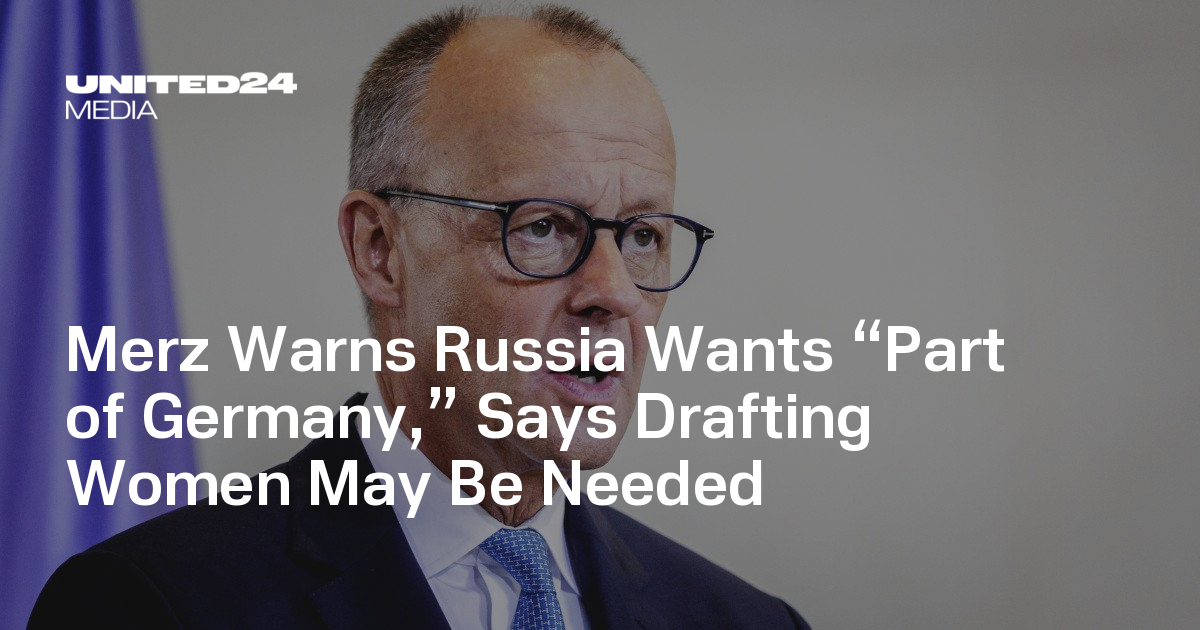
German Chancellor Friedrich Merz has indicated that the possibility of conscripting women into the country’s military, the Bundeswehr, should not be dismissed in the long term, largely due to ongoing security concerns stemming from Russia’s actions.
As reported by ZDF, Merz stated that if the new model of voluntary military service fails to meet recruitment needs, Germany may need to consider a return to mandatory military service, which could potentially include women. Currently, the German Constitution prohibits compulsory military service for women, so any shift toward this would necessitate constitutional amendments.
Reflecting on the past, Merz described the suspension of conscription in 2011 as a regrettable decision. In light of the evolving security landscape, the German government has recently taken steps to bolster the Bundeswehr, approving a draft law aimed at increasing its size by tens of thousands of soldiers.
The current strength of the Bundeswehr exceeds 182,000 personnel, yet the target set by the government aims for a minimum of 260,000. Skepticism exists regarding the feasibility of achieving such numbers through voluntary enlistment alone, a concern echoed by the Bundeswehr Association.
In his remarks, Merz underscored the strategic threats posed by Russia, noting that President Vladimir Putin’s ambitions appear to extend beyond Ukraine. “He wants to restore the old Soviet Union. And that includes part of my country,” he declared, warning of a looming period of heightened tension with an aggressive Russian regime.
On the topic of nuclear deterrence, the Chancellor acknowledged Germany’s dependency on the United States’ nuclear umbrella while also indicating openness to discussions regarding collaboration with France on nuclear capabilities. “I do not want to lead us into an additional new dependency,” Merz remarked.
Earlier this month, Minister of Defense Boris Pistorius confirmed Germany’s request for U.S.-made Typhon missile systems, which can target locations up to 2,500 kilometers away, including deep within Russian territory. Despite emphasizing their defensive nature, Pistorius noted that these systems would serve as a temporary solution until European missile programs are fully developed.
Security Developments in Germany
As Germany works to enhance its military capabilities amidst the changing global landscape, the government’s approach reflects a strategic reassessment of national defense priorities. The discussions around conscription and the reliance on both American and European military partnerships underscore the multifaceted nature of current security challenges.
