


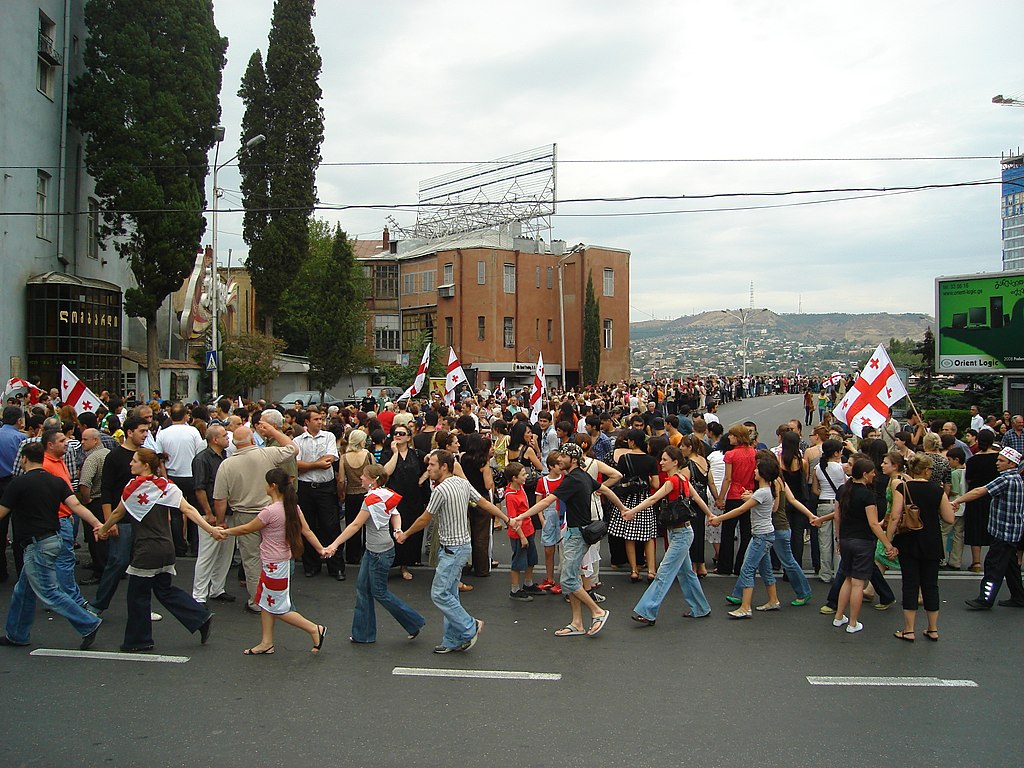
Amnesty International disclosed troubling information regarding the treatment of women involved in anti-government demonstrations in Georgia. The organization reported instances of intimidation, harassment, and gender-based violence instigated by state authorities against these women.
In its findings, Amnesty highlighted a concerning trend of arbitrary searches of individuals’ homes and offices, as well as stop-and-search tactics employed by police. Participants in public protests, particularly women, are reportedly at heightened risk of experiencing gender-based violence. This includes verbal assaults, threats of sexual violence, and unwarranted strip searches, which are regarded as unlawful and degrading.
Denis Krivosheev, Deputy Director for Eastern Europe and Central Asia at Amnesty International, stated:
“The authorities may have hoped that by targeting women with threats of sexual violence, raids in their homes, unlawful strip searches, and arbitrary detention, they would crush the spirit of resistance, deter protesters from further gatherings, and silence them. Instead, women in Georgia have risen more boldly, denouncing the abuse, demanding justice, and turning repressions into resistance and defiance.”
The organization asserts that such actions represent clear violations of international human rights laws. Specifically, they contravene the prohibition of torture and inhumane treatment outlined in the International Covenant on Civil and Political Rights (ICCPR). Additional standards set forth in the UN Rules for the Treatment of Women Prisoners and Non-custodial Measures for Women Offenders (commonly known as the Bangkok Rules) emphasize the need for respecting the dignity of women during searches. Furthermore, Georgian domestic legislation supports the right to privacy and guarantees freedoms of expression, assembly, and association, in alignment with the nation’s Constitution.
Amnesty International is calling on the Georgian government to adhere strictly to international human rights standards. They demand prompt, effective, impartial, and independent investigations into all reported incidents of verbal abuse, threats, and physical violence perpetrated by police against protesters.
The backdrop to this unrest includes a spike in anti-government protests over the last year. This surge followed the parliament’s endorsement of a contentious “foreign agents” law in May 2024, which critics claim poses a threat to freedoms of expression and assembly. Additional protests erupted after a controversial parliamentary election in October 2024 and the new Prime Minister Irakli Kobakhidze’s decision to pause EU membership negotiations until 2028.
Numerous human rights organizations have condemned the government’s response to protest and opposition activities. In December, leaders from the EU and the US also criticized the government’s repression of dissent and the observed decline in human rights conditions within Georgia.
