


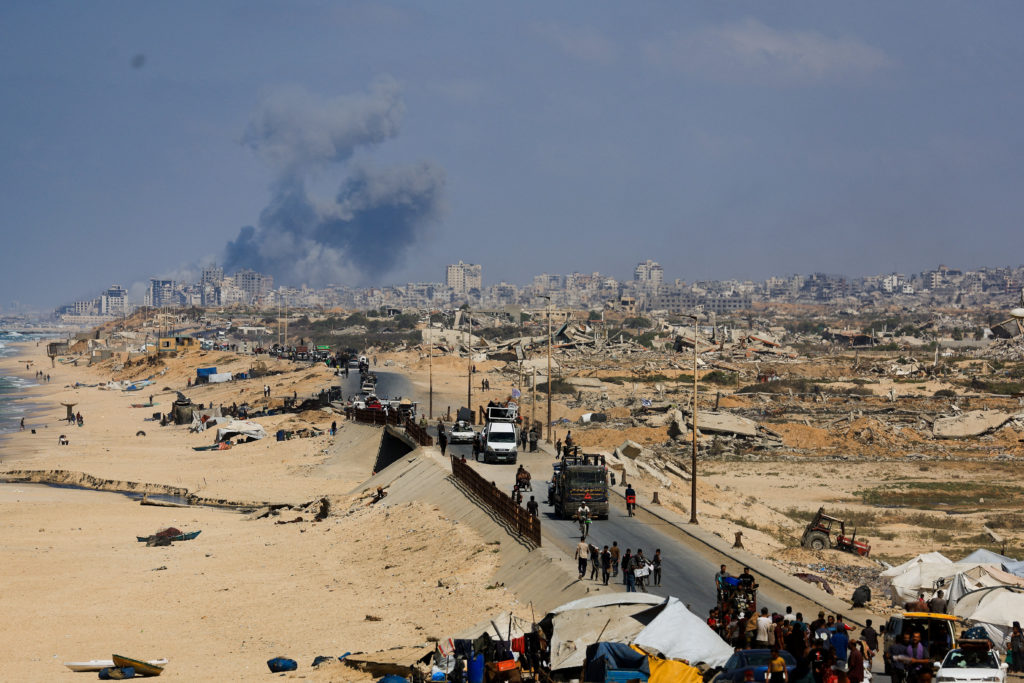
Exploitation Amid Crisis: Women’s Struggles in Gaza
As the humanitarian situation in Gaza deteriorates, reports have surfaced detailing troubling instances of sexual exploitation of women by men promising aid or employment. This desperate backdrop, characterized by near-total displacement and acute need, has made vulnerable populations particularly susceptible to manipulation.
A Notable Case of Exploitation
A distressed 38-year-old mother of six sought aid during the ongoing conflict in Gaza. Separated from her husband and unable to maintain her former business, she clung to hope when a friend mentioned a man who could provide assistance, including potential job opportunities. However, what began as a promise for support quickly turned into manipulation when the man drove her to an empty apartment instead of an office, leading to a coerced sexual encounter.
Widespread Account of Abuse
Similar narratives have emerged from multiple women in the region, who described being approached by local men, some claiming connections to aid organizations. These men would often make offers of food, financial support, or employment in exchange for sexual favors. Six women shared their experiences anonymously with The Associated Press, fearing backlash from their families or the perpetrators.
Patterns of Exploitation
- Dire needs during the conflict have put women in precarious situations.
- Assurances from men often masked ulterior motives, leading to exploitation.
- Men solicited women during critical humanitarian assistance activities.
Expert Insights on Humanitarian Crisis and Exploitation
Research from various humanitarian groups highlights that exploitation typically intensifies in crises, where individuals are displaced and reliant on aid. Heather Barr, from Human Rights Watch, emphasized, “Increased sexual violence is often a consequence of humanitarian crises.” The situation in Gaza, particularly for women and girls, is described as dire and untenable.
Responses from Psychological Experts
Local psychologists who have been working with affected women reported a notable increase in cases involving sexual exploitation. Many women are opting not to disclose their experiences due to cultural stigmas surrounding sexual issues. Reports indicate a growing trend in exploitation as the humanitarian need intensifies.
Documentation of Incidents
According to the Protection from Sexual Exploitation and Abuse (PSEA) network, anecdotal reports suggest that many instances of abuse remain unreported. Last year, 18 allegations surfaced that involved aid workers or affiliated individuals. However, a lack of thorough documentation hampers efforts to address the problem effectively.
Compounding Factors of Crisis
Displacement, hunger, and lack of access to essential services have compounded the challenges faced by women in Gaza. Amal Syam, director of the Women’s Affairs Center, stated, “The siege and restrictions are forcing women into desperate situations.” As food shortages and ongoing conflict prevail, many women find themselves facing impossible choices to care for their families.
Conclusion: The Importance of Action
The troubling reports from Gaza illustrate a critical need for humanitarian organizations to reinforce measures that protect vulnerable populations from exploitation. By acknowledging the reality and confronting these issues head-on, it may be possible to mitigate the impact of exploitation within a context of profound human suffering.
