


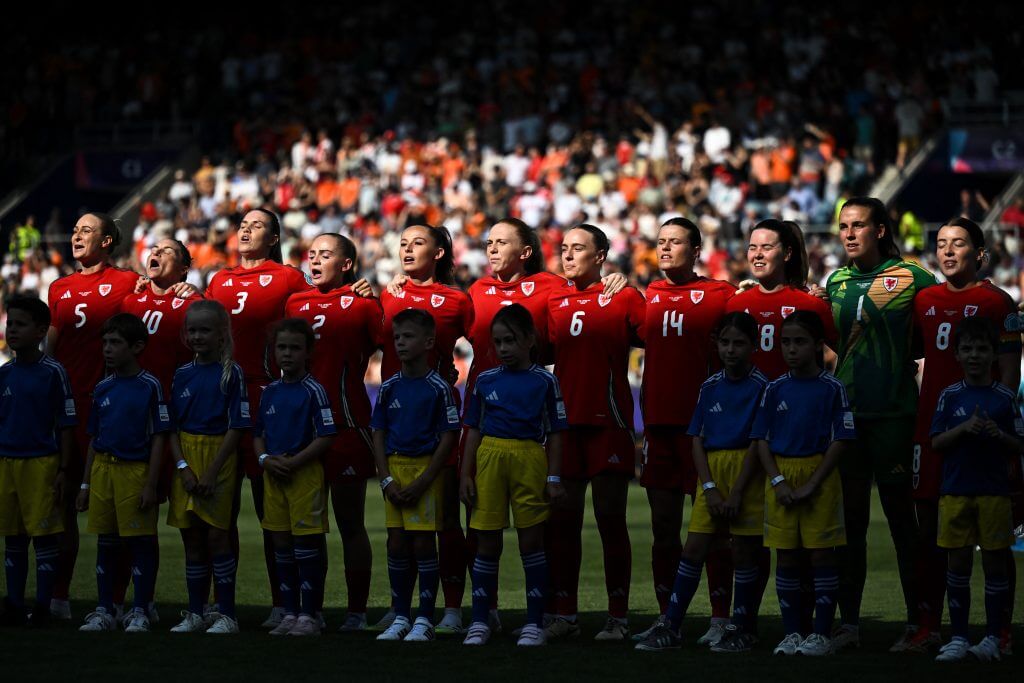
Wales Women’s football team faced a formidable challenge as they made their debut in a major tournament in Lucerne, Switzerland, set against the stunning backdrop of Mount Pilatus. The picturesque landscape contrasted starkly with the high stakes of the match, as Wales entered Euro 2025 ranked lowest among the 16 competing nations.
Group Dynamics and Tournament Facts
In what many consider the toughest group of the tournament, Wales was pitted against elite teams: the Netherlands and England, both past champions, alongside France, a semi-finalist in the last edition. Currently ranked 30th globally, Wales is the only team in Group D without a professional domestic league. Their odds of clinching the title stood at a mere 0.2%, according to Opta.
Historical Context and Fan Sentiment
As anticipation built leading up to Saturday’s kick-off, memories of the 2016 Euro run by the men’s team surfaced, where they reached the semi-finals in their first major tournament since 1958. Fans, donning red bucket hats, filled Lucerne with vibrant energy, bringing a sense of unity and hope to the national spirit amid historical struggles for women’s football in Wales.
Challenges on the Pitch
The match proved to be a harsh reality check for Wales as they confronted the skill and experience of their opponents. The Netherlands’ Vivianne Miedema scored just before halftime, marking her 100th international goal, and the floodgates opened. Additional goals from Victoria Pelova and Esmee Brugts sealed a tough 3-0 defeat for the Welsh side.
Lessons Learned
Post-match reflections from players highlighted key areas for improvement, including the need for greater tactical sharpness and the urgency to respond better in crucial moments. Full-back Lily Woodham humorously noted, “To run, a lot,” indicating the pace and stamina required at this level.
The Atmosphere and Community Support
Despite the loss, fans expressed pride in their team. The atmosphere within the stadium was electric, with waves of red contrasting against the Dutch supporters’ vibrant orange. At one point, a spontaneous rendition of the national anthem, “Hen Wlad Fy Nhadau,” echoed through the stands, uniting old and new fans alike.
Comparative Narrative: Evolution of Women’s Football
Wales faces a larger cultural journey in women’s football, as noted by manager Rhian Wilkinson. In December 2024, she remarked on the progress still needed within Welsh society to fully embrace and support women’s football. The Netherlands, benefiting from past successes including hosting the UEFA Women’s Euro 2017 and reaching the 2019 World Cup final, showcases a contrasting scenario, having made significant strides in a relatively short time.
Looking Ahead
As Wales continues its journey in this tournament, the experience gained will be invaluable. The hardships and triumphs ahead stand to benefit not just the players on the field but also the growth of women’s football across Wales.
This article originally appeared in The Athletic.
