


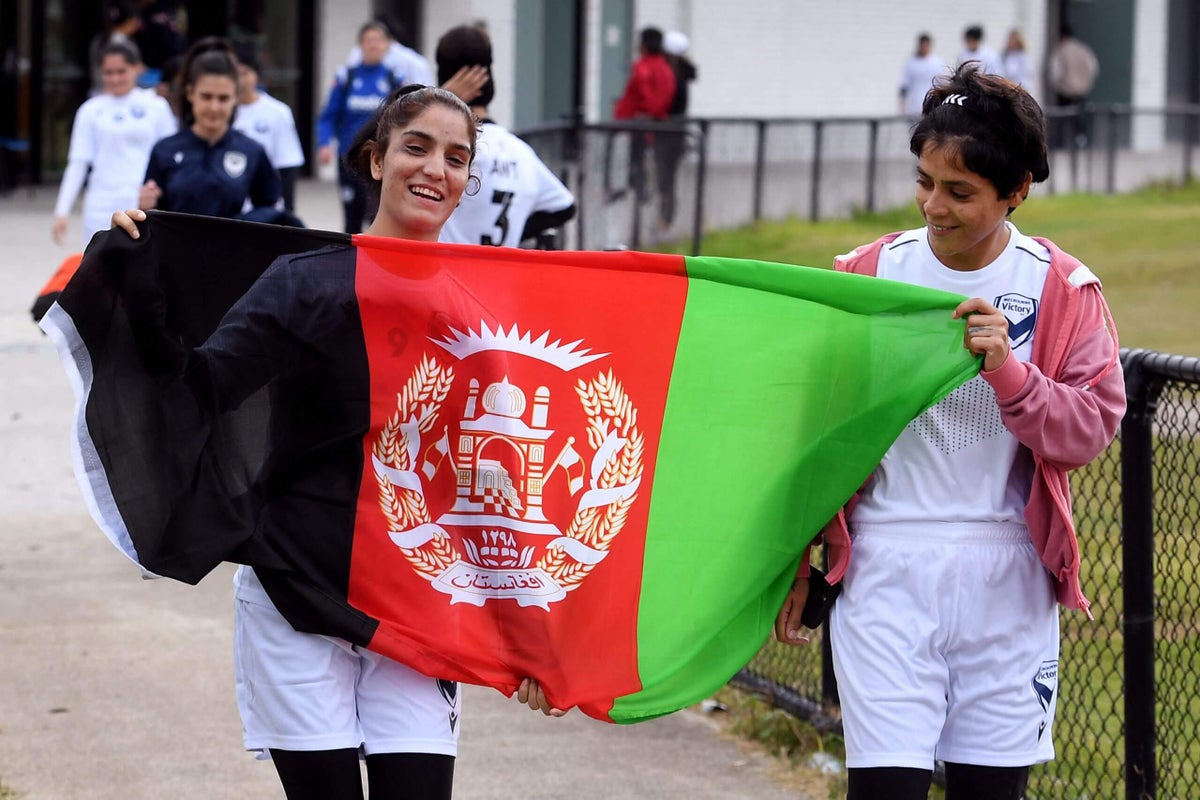
FIFA has initiated plans for an Afghanistan women’s refugee team, allowing evacuated female players with refugee status to engage in matches governed by the organization.
This innovative step aims to formally recognize a team comprised of Afghan women who have relocated abroad due to the dire circumstances in their home country. The team will operate under a one-year pilot program, serving as a trial period for assessing its long-term viability and potentially paving the way for other nationalities to establish similar teams.
Approval from the FIFA Council is required before the team can compete in officially recognized friendly matches and tournaments. FIFA has emphasized its commitment to ensuring a safe and supportive environment for these athletes.
The establishment of such a team has been described as a significant achievement by FIFA President Gianni Infantino, who stated, “FIFA is committed to giving every girl the possibility to play football.” This initiative aligns with FIFA’s fight for gender equality in sports, though it faces challenges due to the Taliban-controlled Afghan Football Federation (AFF), which does not recognize women’s teams and has imposed bans on women’s sports within Afghanistan.
Since 2018, Afghan women’s football has been increasingly marginalized, with the national team disappearing from FIFA’s 196-team women’s world rankings. Most recently, they were excluded from the 2026 AFC Women’s Asian Cup Qualifiers, which play a vital role in the qualification process for the Women’s World Cup in Brazil set for the following year.
The calls for recognition from FIFA have grown louder after multiple displaced Afghan players shared their stories and aspirations to represent their homeland. After the Taliban regained control in August 2021, women’s rights in the country faced severe restrictions, leading to accusations from the United Nations of “gender apartheid.”
Efforts to assist these athletes have been notable; over 75 individuals associated with Afghanistan’s women’s football team, including players and their families, managed to escape to Australia with the help of FIFPro, the global union for football players. Others found refuge in various European nations, including the United Kingdom. In total, FIFA has supported the evacuation of around 160 people from Afghanistan, with roughly 70% being women and children.
This unprecedented move represents not only a lifeline for Afghanistan’s female athletes but also underscores the global commitment to promoting women’s involvement in sports, regardless of the political landscape they find themselves in.
