


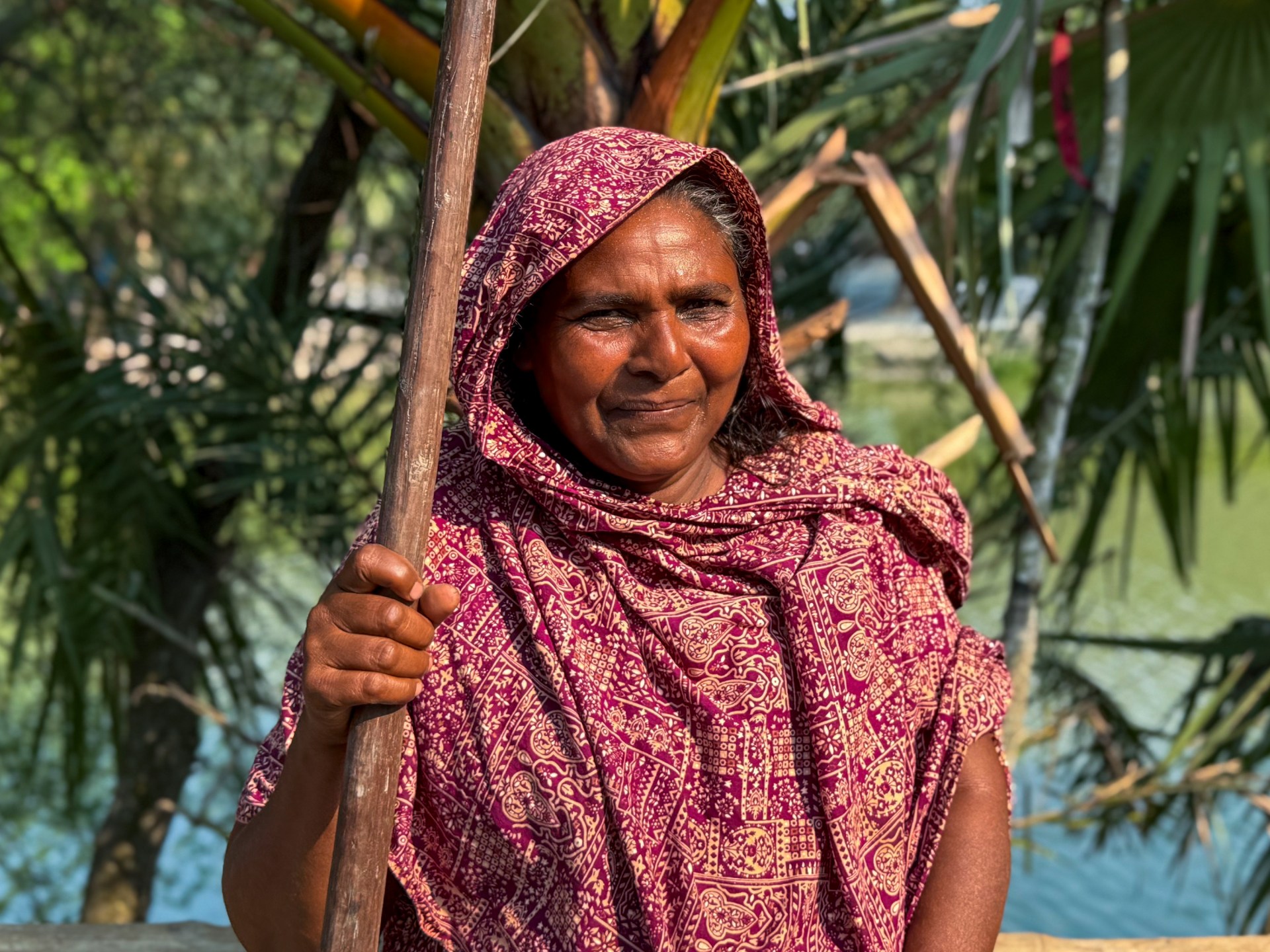
At the break of dawn, Mahfuza’s day starts around 5 a.m. Her mornings are a whirlwind as she prepares for the day ahead, often skipping a proper breakfast in favor of a quick cup of tea or some leftover fish if she’s fortunate. By the time the sun begins to rise, she is already on her boat, navigating the waters of the river.
After a long day of fishing, Mahfuza returns home with her hair dusted with sand and dirt. She often bathes in a nearby pond, where she sometimes indulges in swimming for leisure.
Each month, Mahfuza catches approximately five kilos of fish, retaining just one kilogram for her and her child, Lavlu, while selling the rest. This fishing endeavor yields her around 10,000 taka (approximately $10), a sum that must stretch to support her small family.
The types of fish she catches vary with the seasons. While sardines and mola carplet are available throughout the year, the warmer months bring shrimp and hilsa, and the colder months shift her focus to larger fish and crabs. “The seasons dictate everything,” Mahfuza remarks. “You have to keep up with the water, or you’ll fall behind.”
On good days, she earns a few hundred taka, sufficient to cover her various expenses, including the ongoing cost of boat rental. “Some days are good, some are empty,” she notes, reflecting on the unpredictable nature of her work.
Seasonal changes bring about additional challenges. Government-imposed bans during fish breeding seasons, lasting a total of five months, aim to prevent over-fishing but often leave Mahfuza and Lavlu in dire situations, sometimes resulting in borrowing food or money or even going hungry. “If the government wants to protect the species, then they should protect us too,” she asserts.
From May to October, the monsoon season poses further threats, including the risk of cyclones. Mahfuza has developed a knack for weather prediction, using natural cues like wind direction and wave patterns to determine if a storm is imminent. “The sky darkens, the wind shifts—then I know I need to get back to shore,” she explains. The urgency becomes palpable, especially when storm conditions change rapidly. “You can feel it in the air before you see it,” she adds, acknowledging the unpredictability of her environment.
Having faced numerous storms in her time, including the devastating Cyclone Aila in 2009, which resulted in significant loss of life and displacement, Mahfuza often finds herself fishing in less than ideal weather conditions. “The sea doesn’t wait for you to feel ready. I have to fish to survive—cyclone or no cyclone,” she states firmly.
Moreover, piracy represents an additional layer of danger for fishers navigating remote waterways. Small boats like Mahfuza’s are particularly vulnerable. Reports of pirates demanding money and fish create a sense of unease within her community. Mahfuza recounts, “They usually are here for money. They think that we have money. How foolish they are!”
Seven years prior, Mahfuza and her brother Alamgir were cornered by armed men while fishing. The pirates demanded 12,000 taka ($98), and when the siblings asserted they had no such amount, they were forcibly transferred to a nearby boat. “They are very dangerous. They kidnap and sometimes even kill people if they refuse to pay money. I was very scared,” she shared. Their ordeal ended when a coastguard vessel appeared, prompting the pirates to abandon them.
Instances of sudden disturbances in the water still startle her, a lingering reminder of that harrowing encounter. Yet, as the primary provider for her children since she was 30, fishing remains an essential duty, overshadowing her fears. “When my children cried for food, I did not care about the pirates,” she reflects.
Despite the challenges, Mahfuza has cultivated resilience over her 44 years of fishing, confronting not only the natural threats present in her environment but also the societal challenges she faces as a woman in her community. “I need no man. I row the boat on my own. I go to the forest alone. I can fish and bring wood from the forest. I need no man,” she asserts, her pride evident in her voice.
