


Nigel Farage’s Plans to Address Small Boat Crossings
Detention and Deportation Strategy
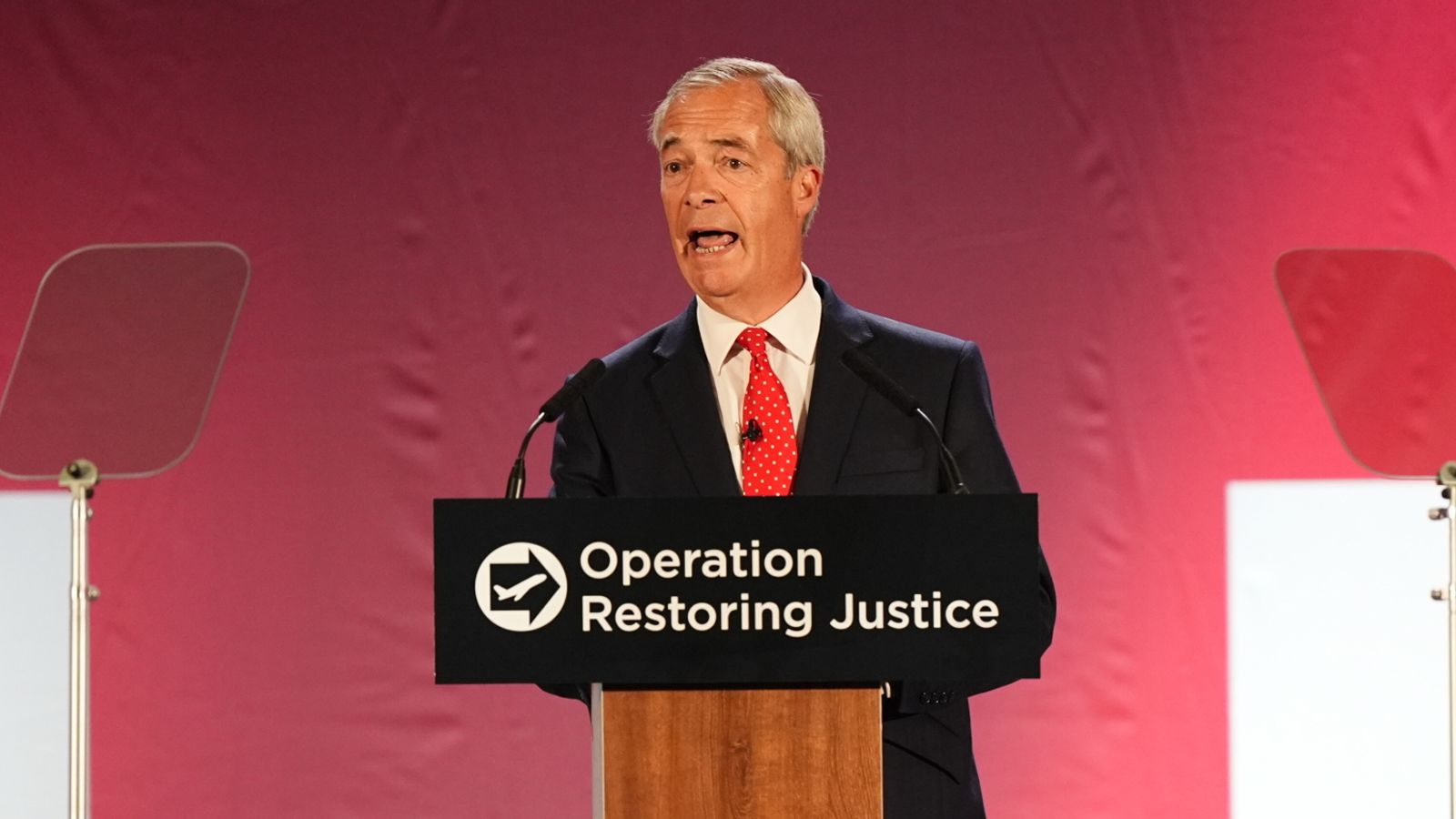
At a recent news conference in Oxford, Nigel Farage, leader of Reform UK, unveiled a controversial strategy aimed at curbing illegal crossings of small boats in the English Channel. Under Farage’s proposal, all women and children arriving via this route would be detained and subsequently deported.
Public Concerns and Political Context
Farage argued that the ongoing small boat crisis is generating significant public discontent and poses a “genuine threat to public order.” He believes that addressing this issue decisively is imperative to restore faith in governance.
“The only way we will stop the boats is by detaining and deporting absolutely anyone that comes via that route,” said Mr. Farage.
Immediate Action Proposed
Farage claims that if his plans are implemented, the arrival of small boats would cease within days due to diminished incentives for traffickers. He emphasized that anyone entering the UK illegally will face detention and deportation without exception.
Response from Labour and Opposition Parties
In contrast, the Labour Party has introduced a “one in, one out” pilot scheme with France, which is designed to manage the flow of asylum seekers and return individuals who crossed the Channel unlawfully. However, Reform UK and Conservative critics maintain that this initiative will have negligible impact, especially as over 28,000 migrants made the perilous journey in 2025 alone.
Predicted Impact of Reform UK Polices
Farage’s “operation restoring justice programme” has been met with criticism, labeled as “inflammtory” and “unworkable.” He estimates that under a potential Reform UK government, approximately 600,000 illegal immigrants could be deported within the first parliamentary term, at a projected cost of £10 billion.
Proposals for Legal Changes
To facilitate his deportation plans, Farage proposes significant legal changes including the repeal of the 1998 Human Rights Act and withdrawal from the European Convention on Human Rights. He argues that these laws hinder efforts to expel foreign offenders from the UK.
Detention Conditions and Controversial Return Agreements
The party’s proposed Illegal Migration (Mass Deportation) Bill aims to detain unauthorized migrants at alternative locations, such as spare RAF bases, rather than using government-funded hotels that have faced public protest. Furthermore, Reform UK seeks to establish return agreements with nations like Afghanistan, despite concerns regarding human rights violations in those countries.
Farage’s Stance on Human Rights
When pressed about the potential for human rights abuses for those returned under his plans, Farage emphasized his priority lies with ensuring the safety and security of British citizens.
“What really bothers me is what is happening on the streets of our country,” he stated.
Critique from Political Peers
The Prime Minister’s spokesperson responded to Farage’s assertions by affirming that the government intends to “ramp up returns,” while expressing skepticism of ripping up international agreements, which they argue will complicate matters further. Additionally, the Liberal Democrats criticized the mass deportation scheme as a potential infringement on human rights.
Conclusion
As the political landscape evolves ahead of the 2029 elections, Farage’s proposals for controlling illegal migration continue to spark intense debate. The future of the UK’s migrant policy remains a contentious issue, with varying opinions on the balance between national security and humanitarian obligations.
