


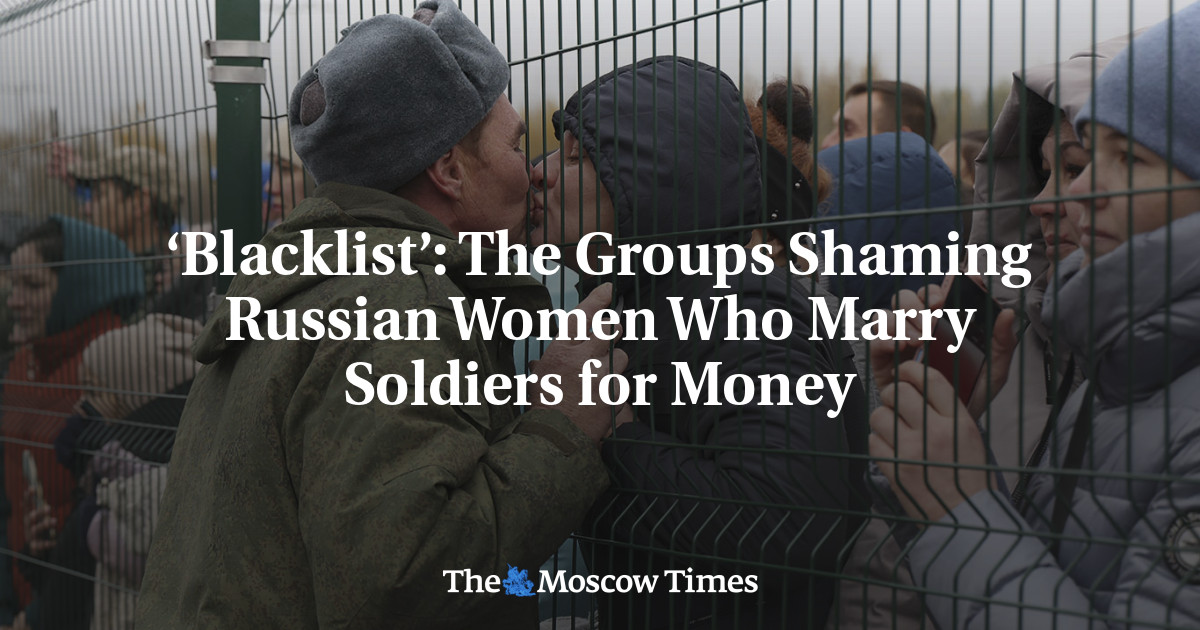
The Dark Side of Love: Online Backlash Against Women in Wartime Russia
Amid the ongoing conflict with Ukraine, a new group known as Blacklist SVO has emerged on the social media platform VKontakte. The group focuses on identifying women who allegedly engage in relationships with Russian soldiers primarily for financial gain rather than genuine affection.
The Context of Financial Enticement
As the conflict drags on, Russian soldiers, benefiting from substantial salaries and social perks, have become attractive prospects for some low-income women. Reports indicate that these women may take loans in the soldier’s name or, in tragic scenarios, claim payouts of 5 million rubles (approximately $63,111) if their partner is killed in action.
Reaction to these alleged intentions has evolved into a significant social discussion, with online vitriol directed at women viewed as “gold diggers.” The Blacklist SVO group originated from conversations encouraging soldiers to protect themselves against these perceived threats.
Cyberbullying and Social Commentary
The group has gained rapid traction, highlighting how cyberbullying against women is escalating in pro-war online environments. Conversations within these spaces reveal a rising sentiment against women seen as exploiting soldiers for financial motives. A high-profile pro-war blogger has gone as far as to call for punitive actions against women associated with soldiers based on accusations of mercenary intentions.
Gender Norms and Societal Backlash
Experts, such as Natalia Baranova from the Center for Women, Peace and Security, suggest that wartime behaviors reinforce rigid gender roles, portraying men as protectors and women as their supporters. This culture may lead to harmful justification of bullying against women falling outside these traditional roles.
Dasha Manzhura, a gender researcher, notes that aggressive responses toward women perceived as deviating from expected norms stem from a desire to maintain group cohesion among women, often leading to further ostracization and embarrassment.
Public Apologies and Media Coverage
In some instances, women have issued public apologies after public backlash, often coerced by societal pressure. Notably, a real estate agent faced legal consequences for her comments about using soldier compensation for personal gain.
Media scrutiny of these situations has intensified, with local reports on women accused of exploiting soldiers, further complicating the societal narrative toward women associated with military members.
Changing Perspectives in Online Spaces
In response to these societal pressures, many soldiers are now expressing desire for “pure” love in online dating contexts, distancing themselves from materialism. Posts emphasize looking for uncomplicated relationships, with soldiers sharing personal stories to connect with potential partners.
Conversely, many women assert their independence and financial self-sufficiency, actively rejecting the stigma attached to their relationships with soldiers.
Legislative Responses and Gender Expectations
In a notable legislative move, Russian lawmakers proposed measures aimed at preventing women from claiming military compensation in divorce cases that transpired after the onset of the fighting in Ukraine. This initiative is seen as an effort to curb perceived exploitation within marriages formed under the shadow of war.
Experts emphasize that threats to traditional gender norms can provoke backlash, resulting in heightened scrutiny and vilification of those who marry for construed selfish reasons.
