


Women’s Health and Beauty Supplements Market Analysis
Market Overview
The Women’s Health and Beauty Supplements Market is expected to experience significant growth, reaching approximately USD 91.1 billion by 2033, up from USD 55.4 billion in 2023. This growth represents a compound annual growth rate (CAGR) of 5.1% from 2024 to 2033.
Several factors are driving this market expansion, including:
- Increasing disposable incomes among women.
- A growing awareness of nutritional deficiencies.
- The rise of online retail channels for wider accessibility.
Vitamins dominate the product category, accounting for a considerable market share.
Regional Insights
As of 2023, North America holds the largest market share at 38.7%. However, the Asia-Pacific region is poised to grow the fastest due to urbanization and health consciousness. The 31-50 age group constitutes the largest consumer segment, reflecting a demand for products aimed at hormonal balance, skin health, and overall wellness.
Key Market Players
Several prominent companies are influencing the market landscape, including:
- Herbalife International
- Nestlé
- Pfizer Inc.
- GNC Holdings Inc.
- Bayer AG
- Nature’s Bounty Co.
- Blackmores
These organizations are actively innovating and expanding their product lines to meet the evolving needs of health-focused women around the globe.
Market Statistics
Consumer Preferences
Surveys indicate that approximately 76% of women in the United States regularly use dietary supplements. Key statistics include:
- Multivitamins are the most commonly consumed supplement.
- Vitamin D and Omega-3 fatty acids are included by over 58% of women, highlighting their focus on bone and cardiovascular health.
- Calcium and Vitamin C are taken by 39% and 31% of women, respectively.
- Probiotics and iron supplements are also popular, utilized by 18% and 22%, respectively.
Impact of U.S. Tariffs
Exemption of Key Ingredients
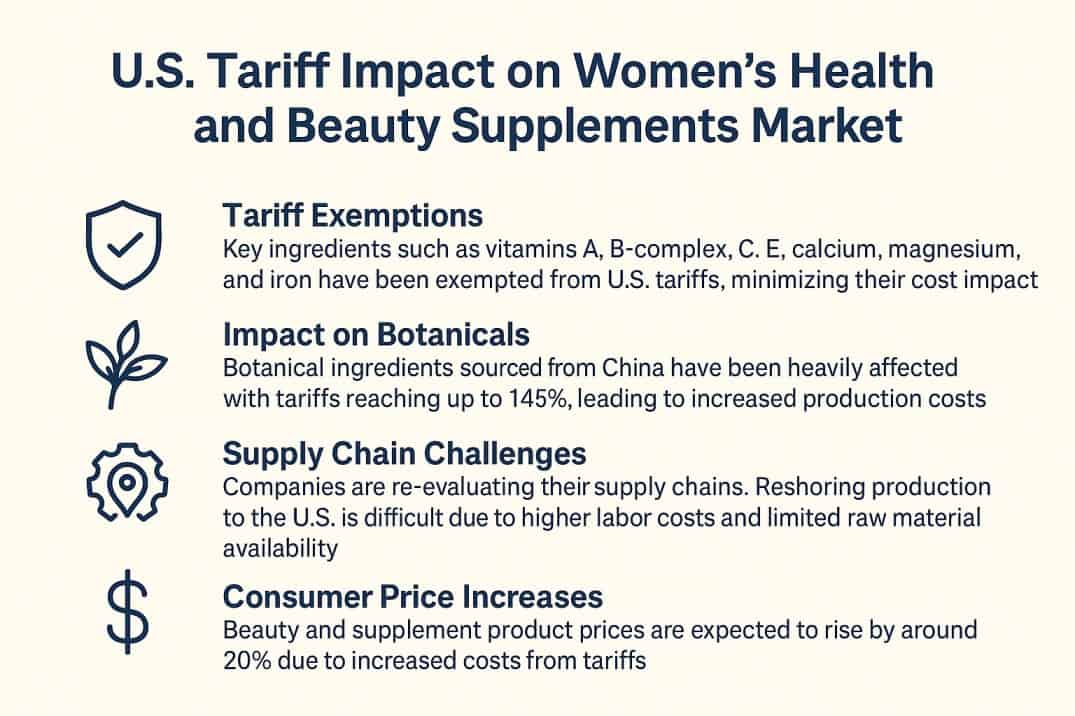
Recently, the U.S. administration announced exemptions for critical dietary supplement ingredients from new tariffs, including various vitamins and minerals. This decision aims to reduce costs for supplements that include these essential components.
Challenges with Botanical Ingredients
Conversely, increased tariff rates of up to 145% on botanical ingredients from China have caused supply chain disruptions and heightened production costs. This reliance creates challenges in sourcing alternatives that meet quality standards without incurring significant extra expenses.
Product Analysis
In 2023, the market is categorized into several segments, with vitamins taking a lead share of 32.8%. Other segments include:
- Minerals: Crucial for bone health and immunity.
- Enzymes: Support digestion.
- Botanicals: Increasingly popular for natural solutions.
- Probiotics and Proteins: Growing in demand for overall health benefits.
Emerging Trends
- Inclusive Beauty Products: Companies are focusing on diverse ingredients that cater to various skin tones.
- Clean Label Supplements: A trend towards more natural and transparent ingredient sourcing.
- Targeted Menopause Supplements: Increasing attention to supplements that address specific health stages.
- Sustainability in Packaging: A move towards environmentally responsible practices.
Conclusion
The future of the Women’s Health and Beauty Supplements Market is promising, driven by higher disposable incomes, a growing awareness of personal health, and the rise of online retail. With vitamins leading the market and a substantial consumer base in the 31-50 age group, innovation and tailored products will be key to meeting the needs of health-conscious women moving forward.
